
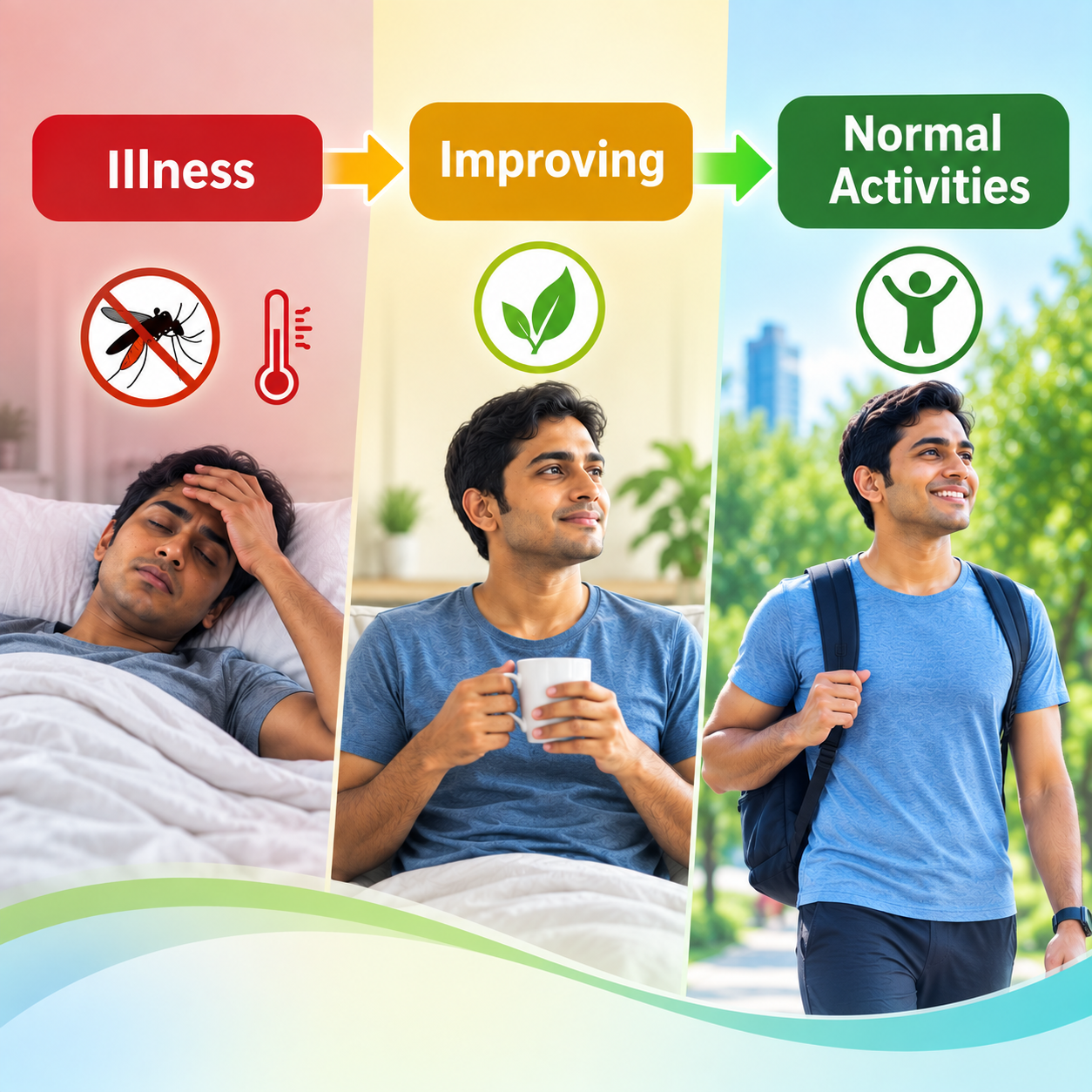
Many people believe that once the fever settles or they are discharged from the hospital, dengue fever is completely over. In reality, recovery from dengue often continues for days or even weeks after the infection itself has improved.
It is common for patients to feel weaker than usual during this period. Some notice that they become tired after simple daily activities, while others find that their appetite has not yet fully returned. These symptoms are usually part of the normal healing process rather than signs that the illness is returning.
Recovering from dengue is not simply about waiting for the platelet count to increase. True recovery involves the gradual return of normal strength, energy, appetite, hydration, and day-to-day function. Every person's recovery is different, and there is no single timetable that applies to everyone.
Understanding what is normal during recovery — and knowing which symptoms should prompt another medical review — can help patients recover with greater confidence and avoid unnecessary anxiety.
This article explains what usually happens after dengue fever, how to support recovery safely, when to return to normal activities, and when medical reassessment may be necessary.

Is It Normal to Feel Weak After Dengue?
Yes.
Feeling weak or unusually tired after dengue is common. The acute illness may have improved, but your body does not necessarily return to its previous level of strength immediately.
You may notice that activities that were easy before dengue now make you tired. For example, you may feel tired after:
- walking a short distance
- climbing stairs
- taking a shower
- doing household work
- shopping
- studying for a long period
- returning to a normal working day
This does not automatically mean that dengue is becoming severe again or that something is wrong with your platelet count. In many people, it is part of the recovery period.
The important feature is gradual improvement. If you are becoming a little stronger and able to do a little more as time passes, recovery is generally moving in the right direction.
If weakness is becoming worse rather than better, or if new symptoms appear, medical review may be necessary.
Why Do You Still Feel Weak or Tired After Dengue?
There is usually no single reason. Several things can contribute to weakness during recovery.
Your body has been through an acute illness
Dengue is a viral infection that can produce significant fever and systemic illness. Even after the acute phase has settled, the body needs time to return to its usual state. You may therefore feel better than you did during the illness but still not feel completely normal.
You may have eaten less than usual
Poor appetite, nausea or vomiting can reduce food intake during dengue. Some people eat much less than normal for several days. When the illness improves, appetite and normal eating may also take some time to return.
Your fluid intake may have been reduced
Fever, vomiting and reduced oral intake can affect hydration during the illness. Although this usually improves as dengue resolves, the period of illness can contribute to the feeling of being physically drained.
For detailed guidance about drinking during dengue, see our article on Fluids in Dengue.
You may have been much less active
A person who normally walks, works and exercises may spend several days mainly resting in bed or sitting. After this period of reduced activity, normal physical tasks may initially feel more demanding. This does not mean you should immediately push yourself back to full activity. Activity should return gradually.
Recovery differs between people
Age, severity of illness, previous physical fitness, nutrition and other health conditions can all influence how quickly someone feels completely normal again. That is why comparing your recovery with another person who had dengue is often not helpful.
How Long Does Recovery After Dengue Take?
There is no exact number of days that applies to everyone.
Some people feel much better within several days after the acute illness settles. Others continue to experience weakness, tiredness, reduced stamina or poor appetite for a longer period. For some patients, it may take a few weeks before they feel completely back to their usual level of energy.
The important point is that recovery should generally show an overall trend toward improvement.
You may not feel noticeably stronger every single day. One day may be better than another. But over time, you should generally notice that:
- ordinary activities become easier
- you can stay active for longer
- appetite improves
- you need less rest
- your normal energy gradually returns
Do not become alarmed simply because someone else recovered faster than you. Recovery time varies considerably between individuals.
At the same time, persistent symptoms should not automatically be blamed on dengue forever. If you are not gradually improving, if weakness remains severe, or if symptoms become worse, another medical assessment may be appropriate.
What Symptoms Can Continue During Dengue Recovery?
Recovery does not feel exactly the same for everyone. Some people have very few symptoms once the acute illness ends. Others continue to notice temporary symptoms while their strength returns.
Tiredness and reduced stamina
This is one of the most common complaints. You may be able to do your normal activities but become tired much sooner than before. Your stamina should gradually improve.
General weakness
Some people describe their legs or entire body as feeling weak. This can be particularly noticeable when walking, climbing stairs or standing for longer periods. Again, the expected pattern is gradual improvement.
Reduced appetite
Appetite may not return immediately when the fever settles. You may initially prefer smaller meals or find that you cannot eat your usual amount. As recovery progresses, appetite generally improves.
For detailed guidance on food choices, poor appetite and eating during dengue and recovery, see What to Eat During Dengue Fever.
Mild aches
Some people continue to notice mild muscle or body discomfort for a period after the acute illness. This should generally become less troublesome rather than progressively worse.
Difficulty concentrating
Physical tiredness can also make studying, reading or prolonged mental work feel more difficult. Returning gradually to demanding work or study may therefore be easier than attempting a full workload immediately.
How Should You Manage Tiredness During Recovery?
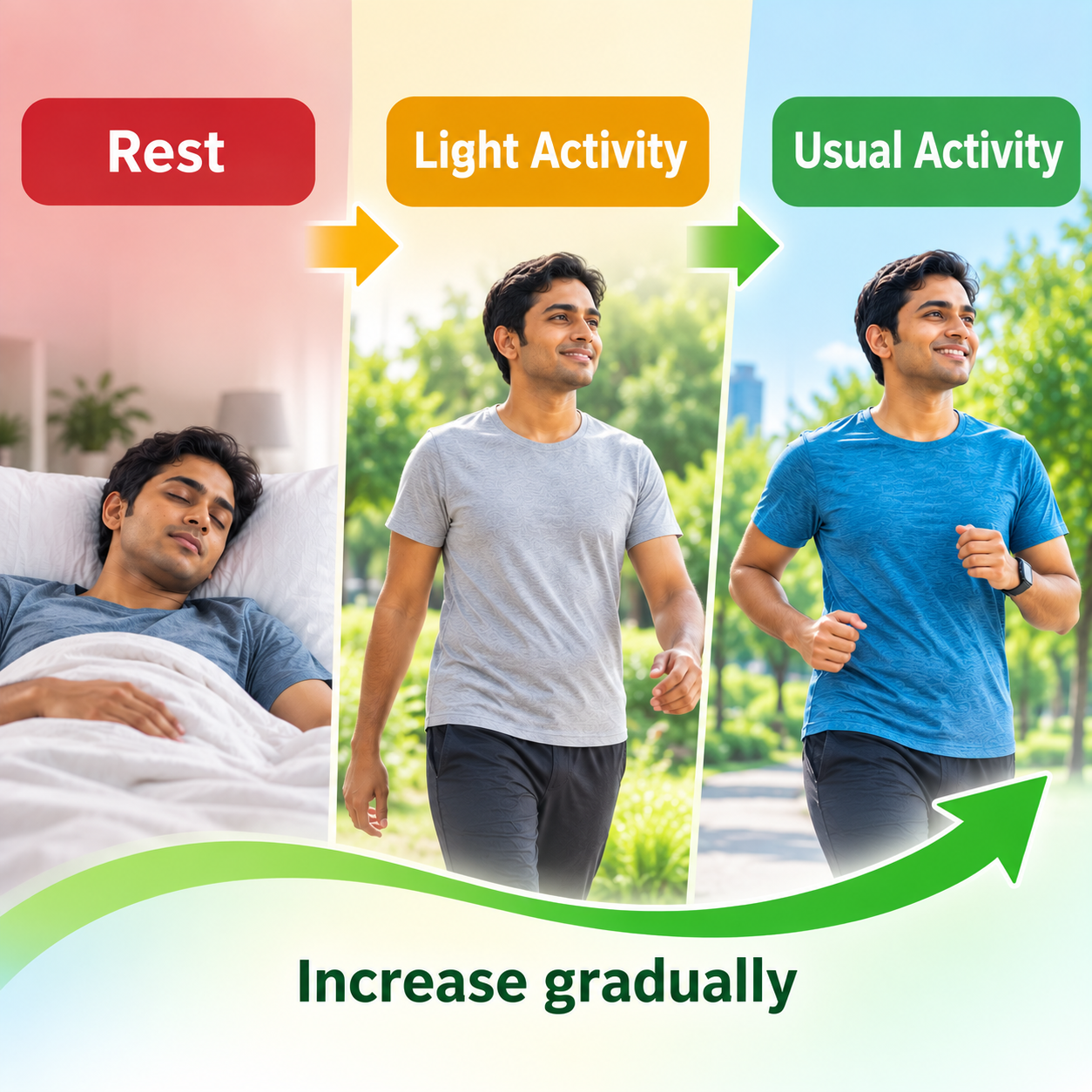
The aim is not to choose between complete bed rest and immediately returning to everything you did before dengue. A gradual approach is usually more practical.
Get enough rest
If you are tired, allow yourself time to rest. You do not need to prove that you have recovered by forcing yourself through exhaustion.
But do not assume you must stay in bed all day
Once you are medically stable and recovering, ordinary light activity can be resumed according to how you feel and any advice you have received from your healthcare team. For many people, this may begin with simple activities such as:
- walking around the house
- bathing and dressing
- sitting outside
- short periods of light household activity
- brief walks
Increase activity gradually
If a level of activity feels comfortable, you can gradually do more as your strength returns. If an activity leaves you excessively exhausted, you may have increased your activity too quickly. Reduce the intensity and progress more slowly.
Use your overall recovery as the guide
Do not use the platelet count alone to decide whether you are “recovered.” Being able to eat and drink, move around, perform ordinary activities and progressively regain strength gives important information about recovery too. Your healthcare professional may also use blood tests when clinically necessary, but recovery is not defined by a single laboratory number.
When Can You Return to Normal Daily Activities?
You do not need to wait until you feel absolutely perfect before beginning ordinary daily activities again.
However, returning immediately to your full pre-dengue routine may be difficult if you still have significant weakness or tiredness. A gradual return is usually more practical.
Start with activities that you can comfortably manage. As your strength improves, gradually increase how much you do.
For example, someone who still becomes tired easily may initially manage normal self-care and short periods of walking around the house. Later, longer walks, shopping, household work and other usual activities can be added.
There is no fixed schedule that everyone must follow. Use your symptoms and overall recovery as a guide. If increasing your activity causes marked exhaustion, you may need more time before progressing further.
The general direction should be:
rest when needed → resume light activities → gradually increase activity → return to your usual routine.
When Can You Return to Work or School After Dengue?
There is no single number of days after dengue when everyone should return to work or school. The right time depends on:
- how severe your illness was
- whether you were admitted to hospital
- how much weakness remains
- whether you are eating and drinking normally
- what your work or school day involves
- whether you can comfortably manage ordinary daily activities
Someone doing desk-based work may be able to return sooner than someone whose job involves heavy physical activity, prolonged standing, working outdoors or other physically demanding tasks. Similarly, a student may feel physically well enough to attend school but still become tired during a full day of classes.
If possible, a gradual return can be helpful when significant fatigue remains. You should generally be showing clear overall improvement and be able to manage the expected activity without becoming excessively exhausted.
If your doctor has given you specific instructions about returning to work or school, follow that advice.
When Can You Exercise Again After Dengue?
Exercise should also be restarted gradually. Do not assume that because the fever has settled, you should immediately return to your previous running, gym, sports or training routine. Your normal exercise tolerance may take time to return.
Begin with light activity that you can perform comfortably. If this is well tolerated and your recovery continues, activity can be increased gradually. The appropriate pace depends on your previous fitness, the severity of your illness and how you feel during recovery.
Avoid trying to “push through” marked weakness or exhaustion simply to regain fitness faster. Your body needs time to recover.
People who had severe dengue, significant complications, prolonged hospitalisation, ongoing symptoms, or another medical condition may need individual medical advice before returning to strenuous exercise or competitive sport.
If exercise causes concerning symptoms such as fainting, significant dizziness, unusual shortness of breath, chest pain or marked worsening of your condition, stop and seek medical advice.
What Should You Eat and Drink During Recovery?
You do not need a special “dengue recovery diet.” As your appetite returns, gradually return to a normal balanced diet that you can tolerate. Food provides the energy and nutrients needed during recovery, but no particular food can guarantee faster recovery or rapidly restore your platelet count.
If your appetite is still poor, smaller meals may be easier than large meals.
For detailed guidance on food choices, protein, fruits, poor appetite, nausea, papaya and foods claimed to increase platelets, see What to Eat During Dengue Fever.
Adequate fluid intake also remains important. For detailed guidance about fluids during dengue, see Fluids in Dengue.
What Happens to Platelet Counts During Recovery?
Many patients continue to worry about their platelet count even after they are otherwise feeling better.
During dengue, platelet counts commonly fall and later begin to recover as the illness resolves. The exact pattern differs between patients.
A rising platelet count can be reassuring when considered together with the patient's overall clinical improvement, but recovery from dengue should not be judged from the platelet count alone. Doctors also consider:
- how you feel
- whether warning symptoms are present
- your examination findings
- your ability to eat and drink
- your hydration
- other relevant blood-test results
- the overall course of the illness
You therefore do not need to spend the entire recovery period trying to “increase your platelets” with particular foods or drinks.
For a detailed explanation of platelet counts, why they fall and how doctors interpret them, see Platelets in Dengue: What Platelet Counts Mean and When to Worry.
Do You Need Repeat Blood Tests After Dengue?
Not everyone needs repeated blood tests until every result has returned to a particular number. Whether another Full Blood Count or another test is necessary depends on your individual situation. Your healthcare professional may consider factors such as:
- your previous blood-test results
- how severe the illness was
- whether results were already improving
- whether you still have symptoms
- whether new symptoms have developed
- your overall clinical recovery
- whether another medical condition needs monitoring
Some patients will need repeat testing. Others who are recovering normally may not require repeated testing simply for reassurance. Do not arrange repeated platelet counts solely because you are worried about the number unless your healthcare professional has advised continued monitoring.
A blood-test result should always be interpreted together with the clinical situation.
When Should You See a Doctor Again During Recovery?
Most people gradually improve after dengue. However, do not assume that every symptom occurring after dengue is simply part of normal recovery.
Medical reassessment is appropriate if your recovery is not progressing as expected or if new concerning symptoms develop. Seek medical advice if:
- weakness is becoming worse rather than gradually improving
- fever returns after it had settled
- you have persistent or repeated vomiting
- you cannot maintain adequate food or fluid intake
- you develop new bleeding
- significant abdominal pain develops or worsens
- you experience severe dizziness or fainting
- you develop unusual shortness of breath
- you become unusually drowsy, confused or difficult to wake
- you develop another significant new symptom
- persistent symptoms are preventing you from returning toward your normal daily activities
Some of these symptoms may have causes other than dengue. That is another reason not to automatically attribute persistent or worsening symptoms to “post-dengue weakness.”
If symptoms are severe or rapidly worsening, seek urgent medical assessment rather than waiting for a routine follow-up appointment.
For a dedicated explanation of symptoms requiring urgent attention during dengue, see Dengue Warning Signs: When Should You Go to Hospital?
What If Weakness Continues for a Long Time?
Some people recover more slowly than others. Therefore, continuing to feel somewhat tired after dengue does not automatically mean that something is wrong. What is more important is whether you are gradually improving.
If weakness remains significant, does not show a clear trend toward improvement, interferes substantially with normal activities, or is accompanied by other persistent symptoms, medical review is reasonable.
A previous dengue infection should not prevent doctors from considering other possible causes of prolonged tiredness. The aim is not to assign every symptom after dengue to the previous infection, but to make sure recovery is progressing appropriately.
Recovery After Dengue Fever — Quick Summary
- Weakness and tiredness are common during recovery from dengue
- Recovery does not necessarily finish when the fever settles or when you leave hospital
- Some people regain their usual energy within days, while others may take longer
- The most useful sign is an overall trend toward improvement rather than a fixed number of recovery days
- Resume normal activities gradually according to how you feel
- Return to work or school depends on your recovery and the physical demands involved
- Restart exercise gradually rather than immediately returning to strenuous training
- You do not need a special dengue recovery diet or a particular food to increase platelets
- Not everyone needs repeated blood tests throughout recovery
- Worsening weakness, returning fever, bleeding, persistent vomiting, inability to eat or drink, fainting, breathing difficulty or other concerning new symptoms require medical assessment
Most Important Message
Recovery after dengue is usually gradual.
It is common to feel weaker or more tired than usual even after the fever has settled. Do not judge your recovery only by your platelet count or by comparing yourself with someone else who recovered more quickly.
Instead, look for steady overall improvement in your strength, appetite, ability to eat and drink, and ability to return to normal daily activities.
Give your body time to recover and increase activity gradually. If you are becoming worse instead of better, develop new concerning symptoms, or your recovery is not progressing as expected, seek medical advice.
Frequently Asked Questions
Related Articles
Medical Guidelines & References
- • Sri Lanka Ministry of Health — National Guidelines for Management of Dengue Fever
- • World Health Organization — Dengue: Guidelines for Diagnosis, Treatment, Prevention and Control
- • CDC — Dengue Clinical Guidance for Healthcare Providers
For the usual course of the illness, see the dengue timeline.