
What Is Dengue Fever?
Dengue fever is a viral infection spread through the bite of infected Aedes mosquitoes. The disease is caused by the dengue virus and is common in tropical countries, including Sri Lanka, where outbreaks occur regularly throughout the year.
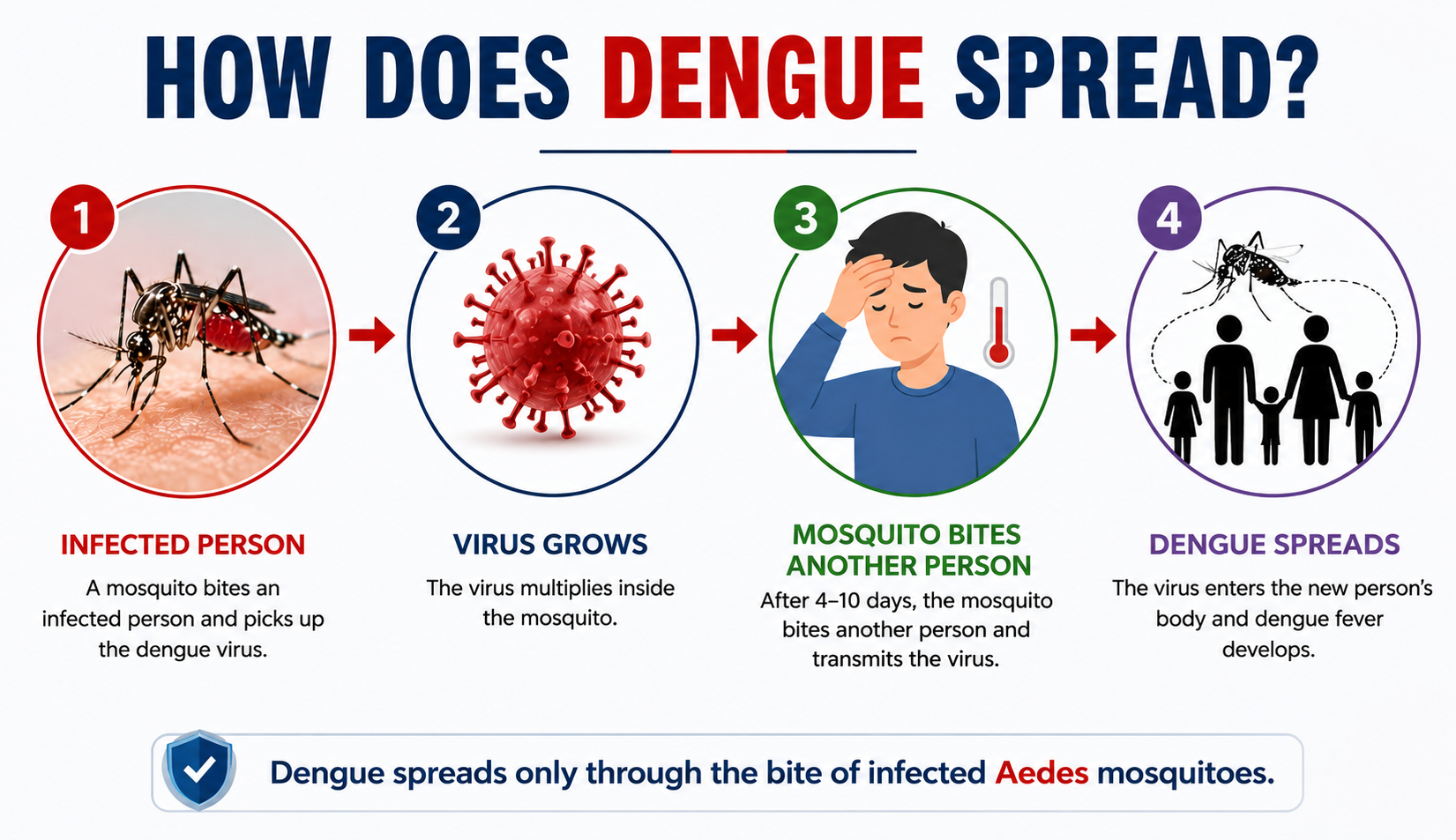
The virus is transmitted when an Aedes mosquito bites an infected person and then bites another person. Dengue is not contagious from person to person — it can only be spread through infected mosquito bites.
Many patients recover completely with supportive care. However, some develop serious complications, particularly during the critical phase, that require close medical monitoring and hospital care.
- 🦟Dengue is caused by the dengue virus — there are four different serotypes (DENV-1 to DENV-4).
- 🇱🇰Sri Lanka reports thousands of dengue cases annually. The illness is common and should be taken seriously.
- âš ï¸A second dengue infection (with a different serotype) can carry a higher risk of severe disease.
Symptoms of Dengue Fever
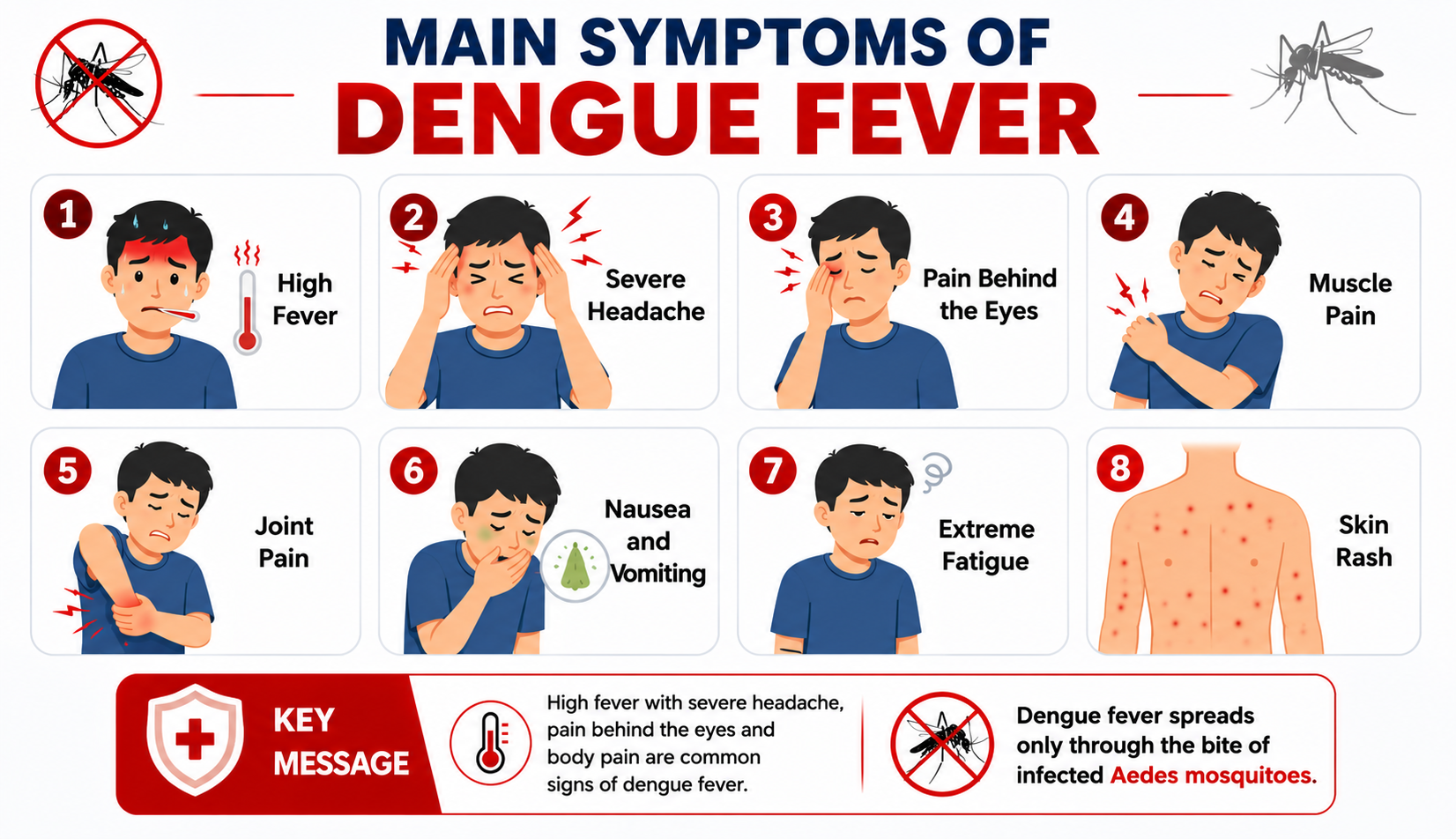
Symptoms usually begin 4–10 days after being bitten by an infected mosquito. The onset is typically sudden, with fever developing rapidly.
Some patients develop only mild symptoms, while others can become seriously ill. The severity of symptoms can change during the course of the illness, especially around the critical phase.
Dengue vs Common Viral Fever
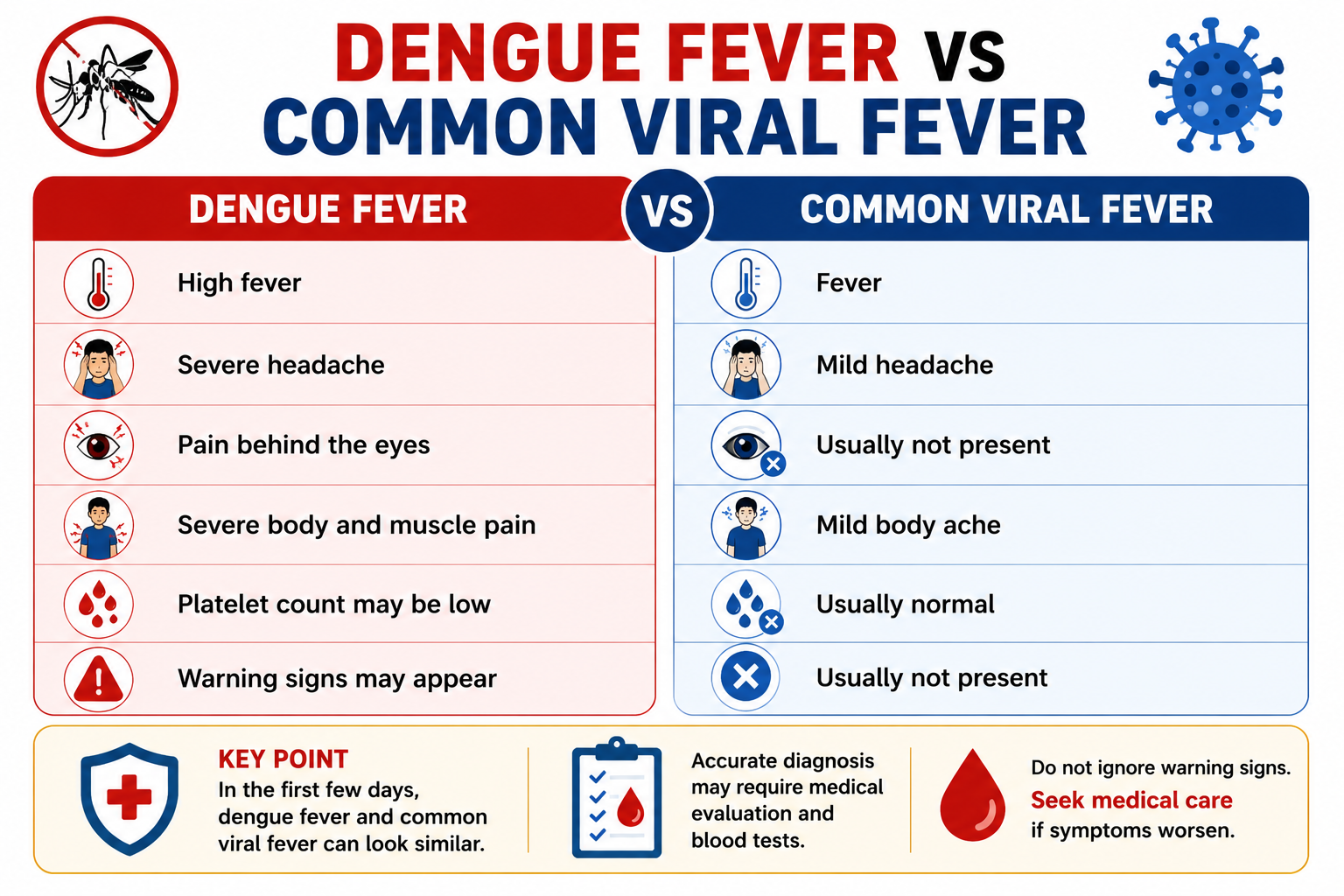
Early dengue can look very similar to many other viral illnesses. This is one reason why dengue is sometimes missed or diagnosed late. The following features may help distinguish dengue from a general viral fever, though only a doctor can make a diagnosis.
| Feature | Dengue Fever | Common Viral Fever |
|---|---|---|
| Fever | High, often sudden onset | Mild to moderate |
| Body pain | Severe — muscles, joints, bones | Mild body aches |
| Pain behind eyes | Common — a characteristic feature | Uncommon |
| Rash | Skin rash often appears days 3–5 | Rash uncommon |
| Warning signs | Can develop — require urgent review | Not typically present |
| Blood count changes | Falling platelets and white cells | Usually normal or mildly abnormal |
The Three Phases of Dengue
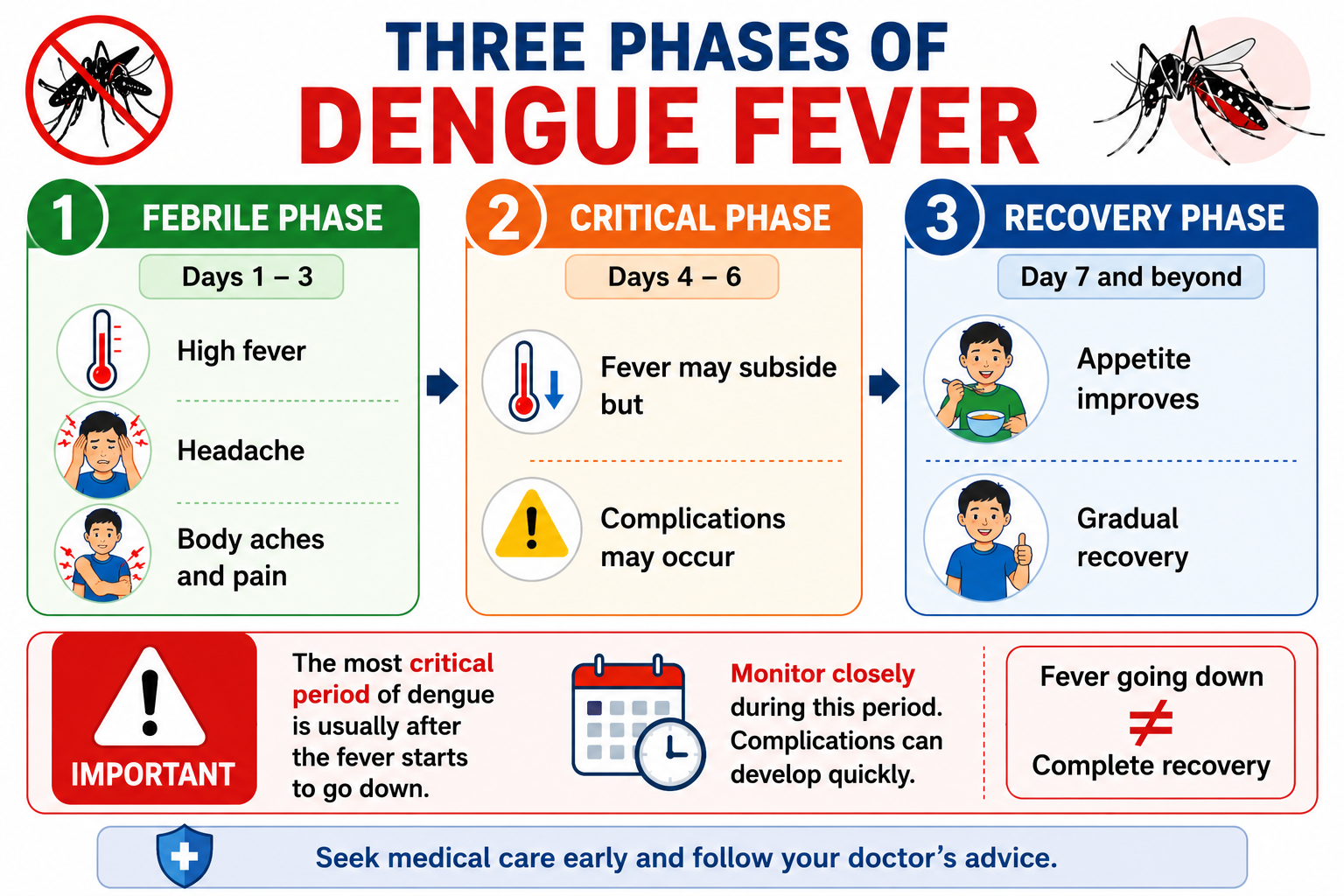
Understanding the three phases of dengue is essential for patients and their families. The course of dengue follows a predictable pattern — and knowing what to expect in each phase helps you act at the right time.
Why the Critical Phase Is Dangerous
The critical phase of dengue is the period when serious complications are most likely to develop. This usually occurs around days 4–6 of illness.
Many patients and families make a dangerous mistake during this time: they think the patient is getting better because the fever starts to come down. In reality, this is precisely when the patient needs the closest monitoring.
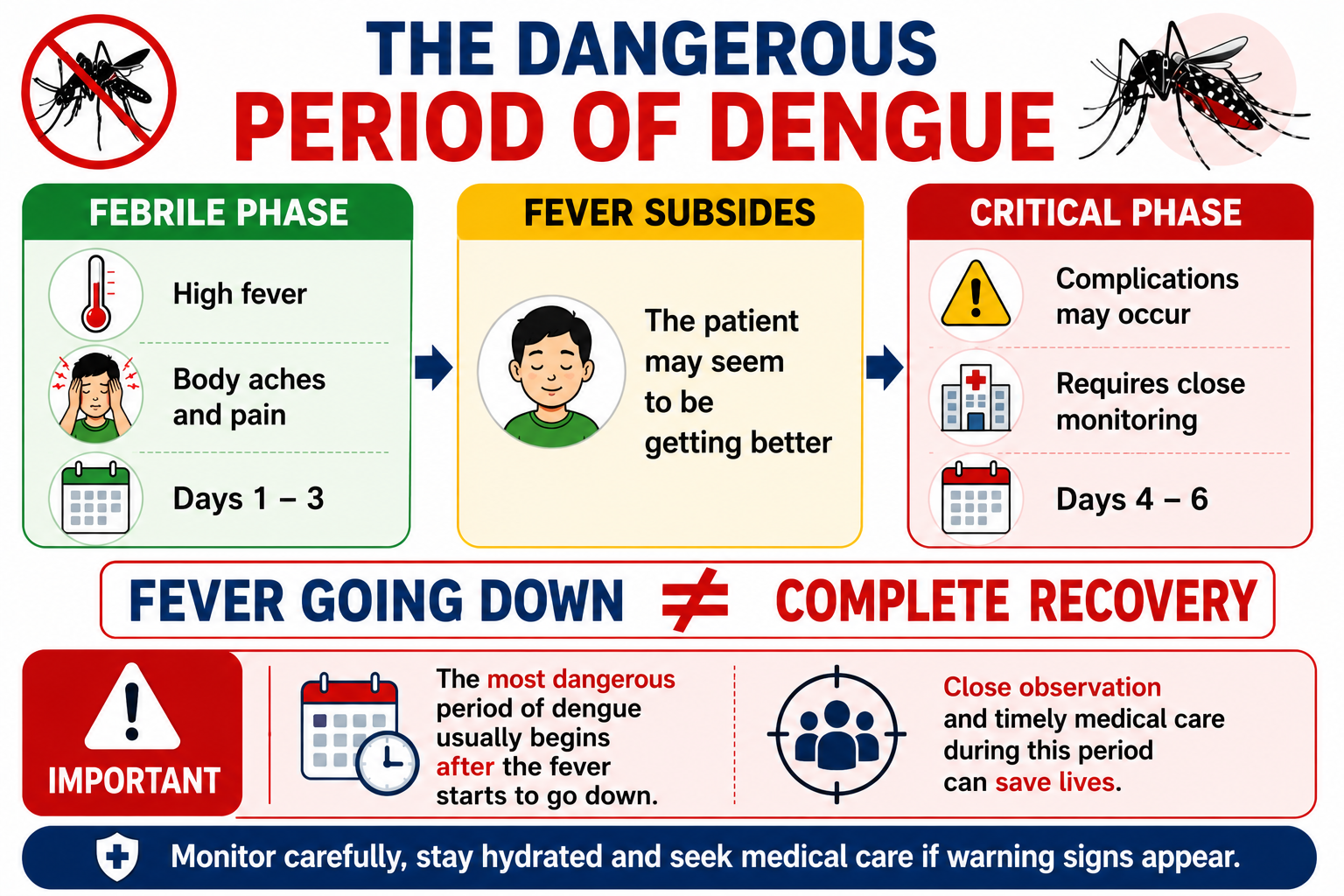
During the critical phase, the following can occur:
- Plasma leakage — fluid leaks from blood vessels into surrounding tissues, causing complications including respiratory distress
- Falling platelet count — increases the risk of bleeding
- Bleeding — from gums, nose, skin or internal organs
- Shock — severe plasma leakage can lead to dengue shock syndrome, which is life-threatening
- Fluid accumulation — in the lungs or abdomen
Most patients pass through the critical phase without serious complications when they are monitored appropriately and receive supportive care. The key is early recognition and appropriate medical review.
Warning Signs of Severe Dengue
Warning signs indicate that the patient may be developing serious complications and requires immediate medical assessment. Do not wait to see if these signs improve on their own.
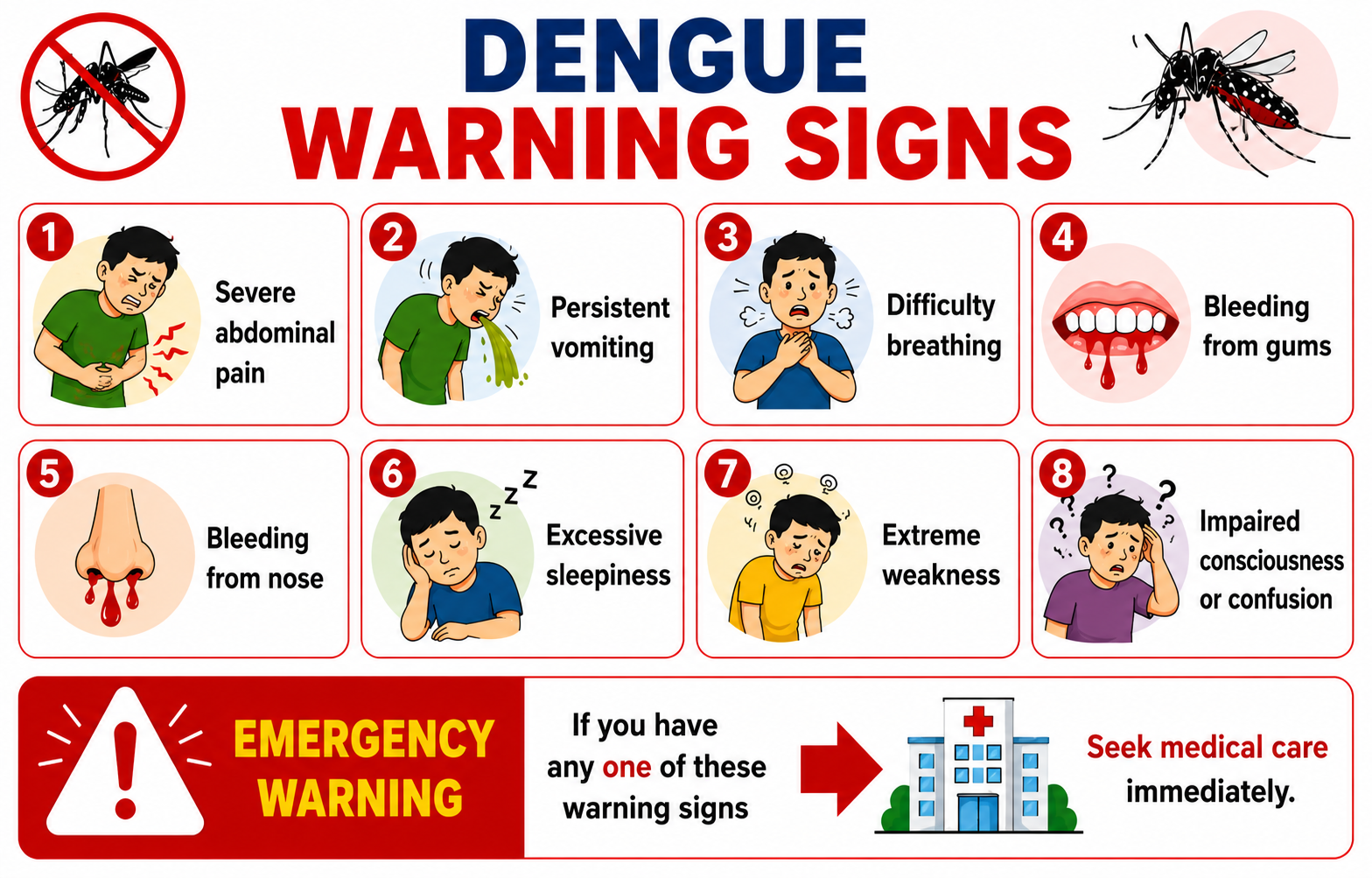
- Severe abdominal pain or tenderness
- Persistent vomiting — unable to keep fluids down
- Difficulty breathing or rapid breathing
- Bleeding from gums
- Nose bleeding that does not stop easily
- Blood in vomit or dark-coloured vomit
- Blood in stool or black, tarry stools
- Extreme weakness or inability to stand or walk
- Confusion, irritability or drowsiness — altered level of consciousness
- Skin that is cold, pale or clammy
Blood Tests Used in Dengue
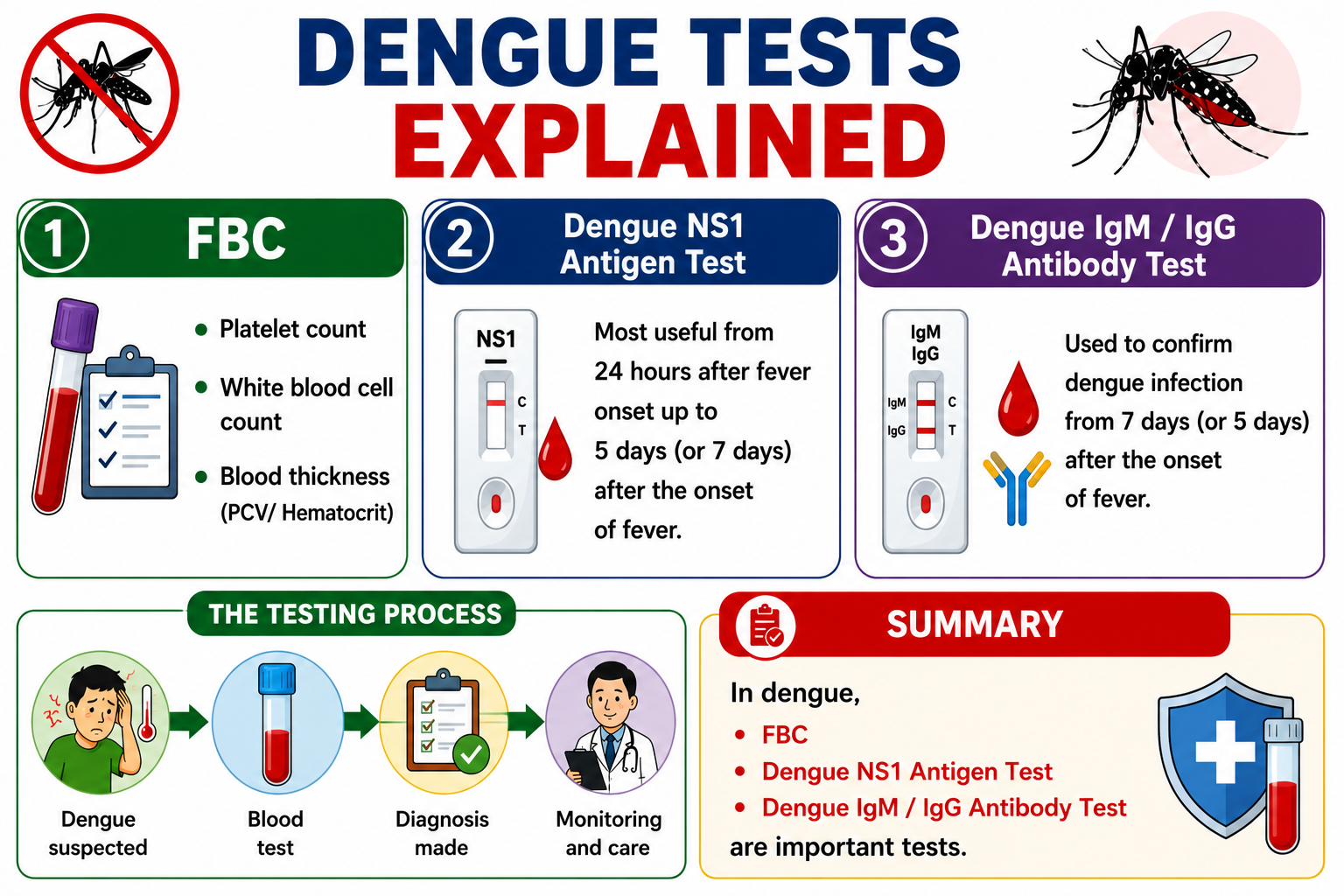
Blood tests are an essential part of diagnosing dengue and monitoring the illness. Your doctor will advise which tests are needed and how often to repeat them based on your clinical situation.
Full Blood Count (FBC)
The Full Blood Count (FBC) is the most important monitoring test in dengue. It is used to track:
NS1 Antigen Test
The NS1 antigen test detects a dengue virus protein directly in the blood. It is most useful in the first 1–5 days of illness (febrile phase), before the body has produced antibodies. A positive NS1 test confirms dengue infection. A negative result in the early days does not completely rule it out.
Dengue IgM and IgG Antibody Tests
These antibody tests become useful from around day 5 of illness onwards. IgM antibodies appear first and indicate recent infection. IgG antibodies appear later and can indicate a previous dengue infection. A positive IgM confirms dengue. Rising IgG alongside IgM can suggest a second dengue infection, which carries a higher risk of complications — see Can You Get Dengue Twice?
What Happens to Platelets in Dengue?
Platelets are blood components that help stop bleeding by forming clots at the site of injury. In dengue, platelet counts often fall — sometimes significantly — during the critical phase.
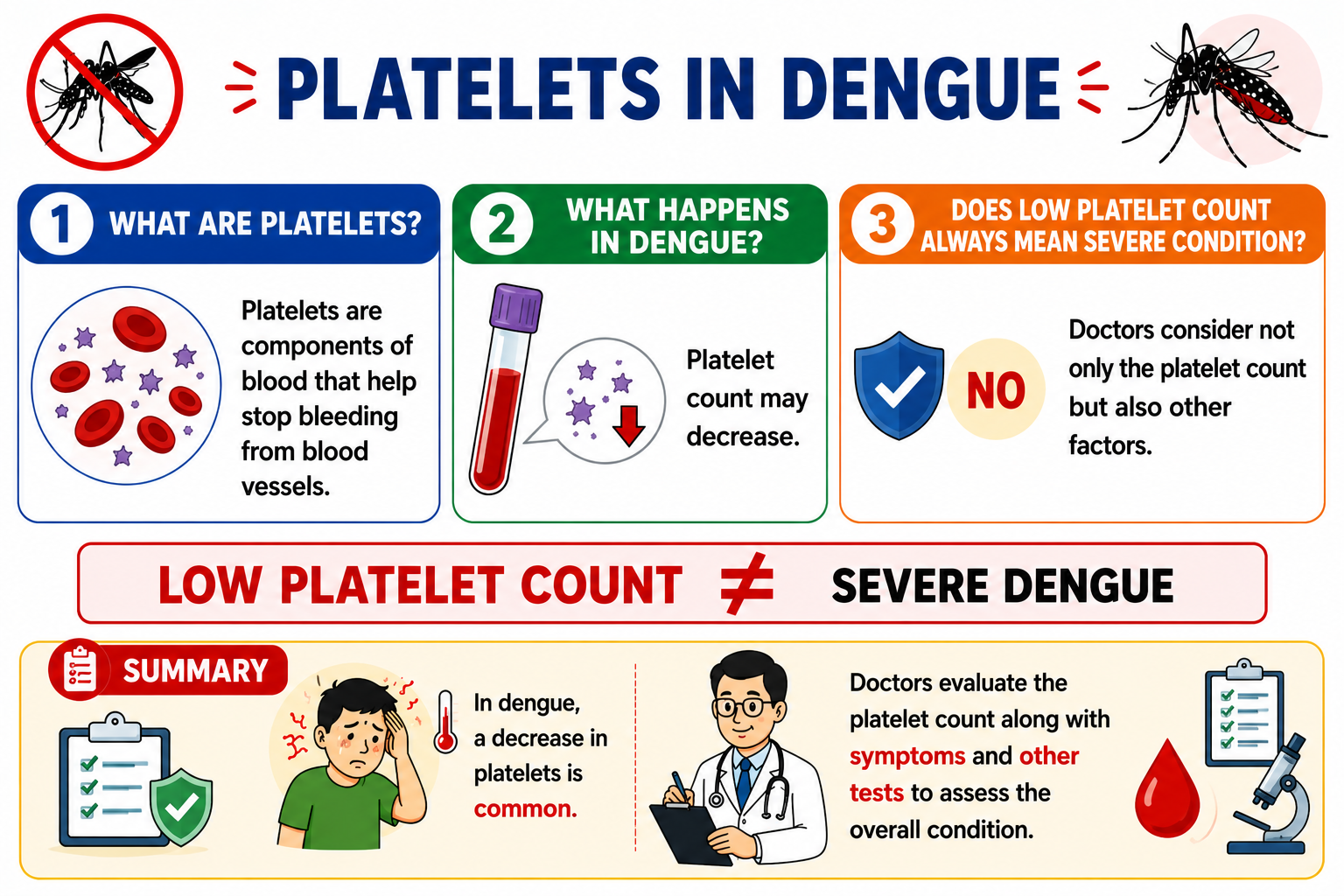
The normal platelet count in adults is approximately 150,000 to 400,000 per microlitre. In dengue, counts can fall well below 100,000 — or even below 20,000 in severe cases.
What matters most is the rate of change — how rapidly the count is falling — and whether the patient has any bleeding symptoms or warning signs. Your doctor will advise how frequently to recheck your blood count based on your situation.
Treatment of Dengue Fever
There is no specific antiviral medicine that cures dengue. Treatment is supportive — meaning it focuses on managing symptoms, maintaining hydration and monitoring closely for complications.
Maintaining good fluid intake is one of the most important aspects of dengue management. Adequate hydration helps the body cope with the illness and reduces the risk of complications from plasma leakage.
What Should Be Avoided in Dengue?
Certain medicines and substances can make dengue worse and must be strictly avoided. This is one area where the wrong decision can have serious consequences.
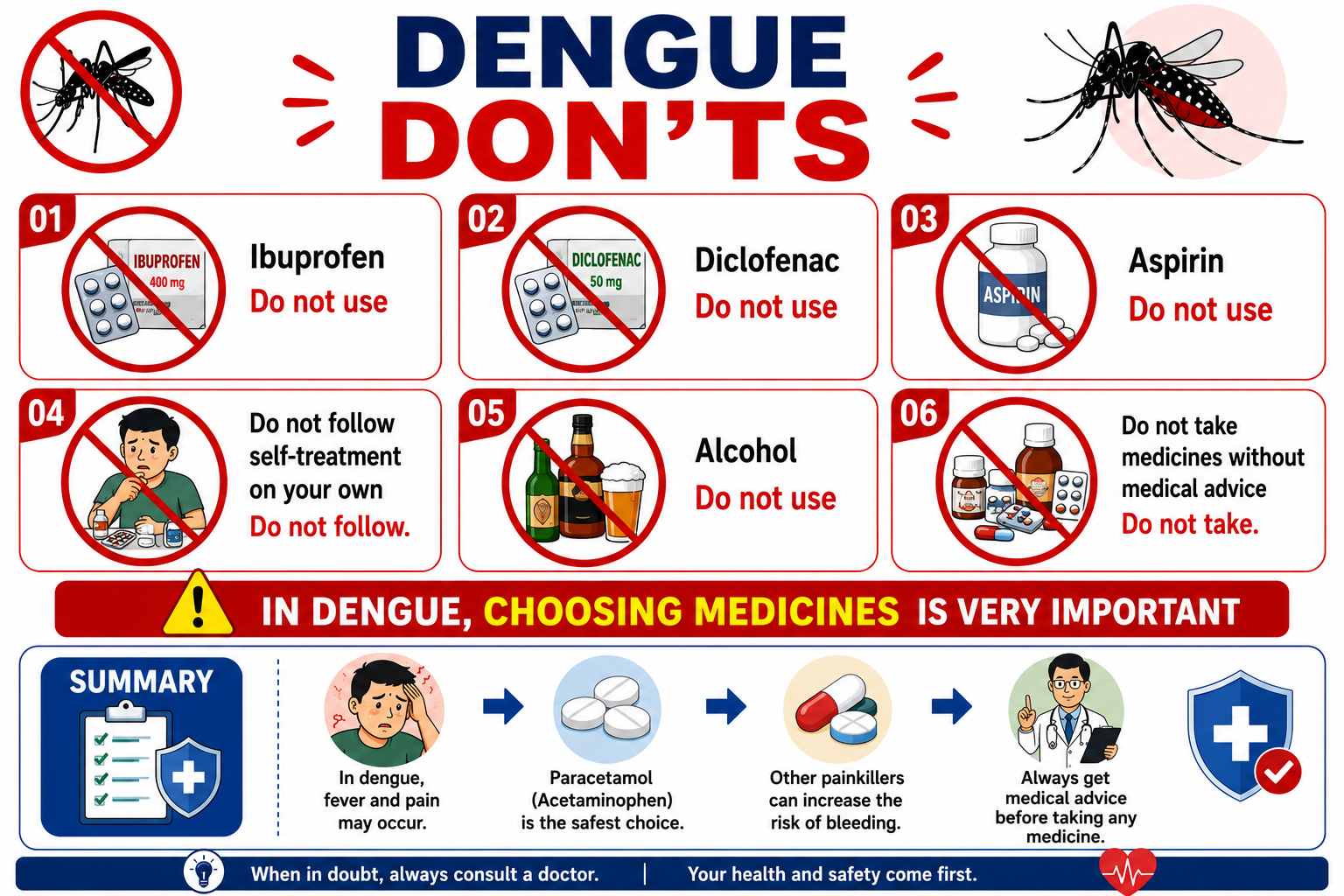
- Ibuprofen — a common painkiller that increases the risk of bleeding in dengue
- Diclofenac (Voltaren) — an anti-inflammatory medicine that also increases bleeding risk
- Aspirin — thins the blood and significantly increases bleeding risk in dengue
- Self-medication — taking any medicines not prescribed by your doctor
- Alcohol — can worsen dehydration and affect liver function
- Steroids — not indicated in dengue and can cause harm
- Antibiotics — dengue is viral; antibiotics are not effective and should not be taken unless a specific bacterial complication is diagnosed
When Should You Go to Hospital?
Not every dengue patient needs hospital admission, but you must seek immediate medical review if any of the following apply:
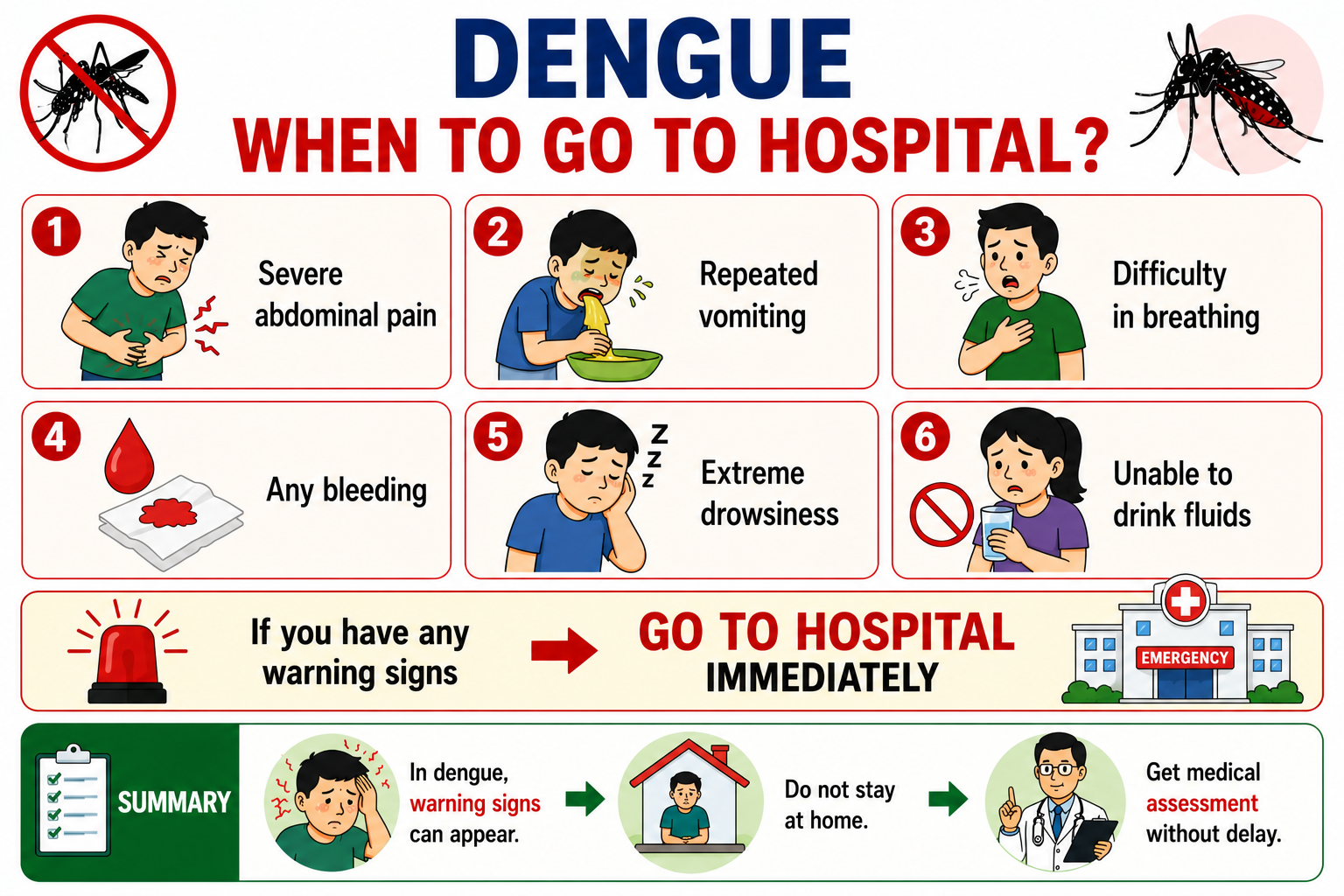
- Any warning signs listed above
- Unable to drink fluids due to vomiting or severe nausea
- Persistent vomiting for more than 24 hours
- Difficulty breathing
- Any bleeding — from gums, nose, skin, urine or stool
- Severe weakness — unable to walk or stand
- Pregnancy — pregnant women with dengue need closer monitoring
- Infants and young children — they can deteriorate rapidly
- Elderly patients or those with other medical conditions such as diabetes, kidney or heart disease
- Rapidly falling platelet count or significantly abnormal blood results
Frequently Asked Questions
- 🦟Dengue is a mosquito-borne viral illness — it cannot spread from person to person.
- 🌡ï¸High fever, severe headache, pain behind the eyes and body aches are common symptoms.
- âš ï¸The critical phase often begins when the fever starts to settle.
- 🚩Warning signs such as severe abdominal pain, persistent vomiting, bleeding or drowsiness require urgent medical review.
- 🧪Blood tests help diagnose dengue and monitor platelet count, white cells and haematocrit.
- 🚫Ibuprofen, diclofenac and aspirin should generally be avoided unless advised by a doctor.
- ✅Most patients recover completely with proper monitoring and supportive care.
For parents and caregivers, read our guide to dengue in children, including symptoms, monitoring and when to seek medical help.
For pregnancy-specific information, read our guide to dengue in pregnancy, including possible risks, warning signs and when to seek medical care.
For the usual course of the illness, see the dengue timeline.