
When you have dengue fever, eating may become difficult. Fever, nausea, tiredness and loss of appetite can make even your usual meals unappealing.
This often leads to questions such as:
- What should I eat during dengue?
- Is there a special dengue diet?
- Should I eat more fruit?
- Can I eat eggs, fish or meat?
- Are there foods that increase platelets?
- Should I eat papaya, kiwi or pomegranate?
- Are there foods I should avoid?
The most important point is simple:
There is no special food that cures dengue.
Food is important because your body still needs energy and nutrients while you are ill and recovering. However, you do not need an expensive or unusual “dengue diet.”
For most people who are able to eat, the aim is to continue eating a reasonably balanced diet using foods they can tolerate.
If your appetite is poor, smaller meals more frequently may be easier than trying to finish a large meal.
Adequate fluid intake is also particularly important during dengue. That is discussed separately in our Fluids in Dengue guide.
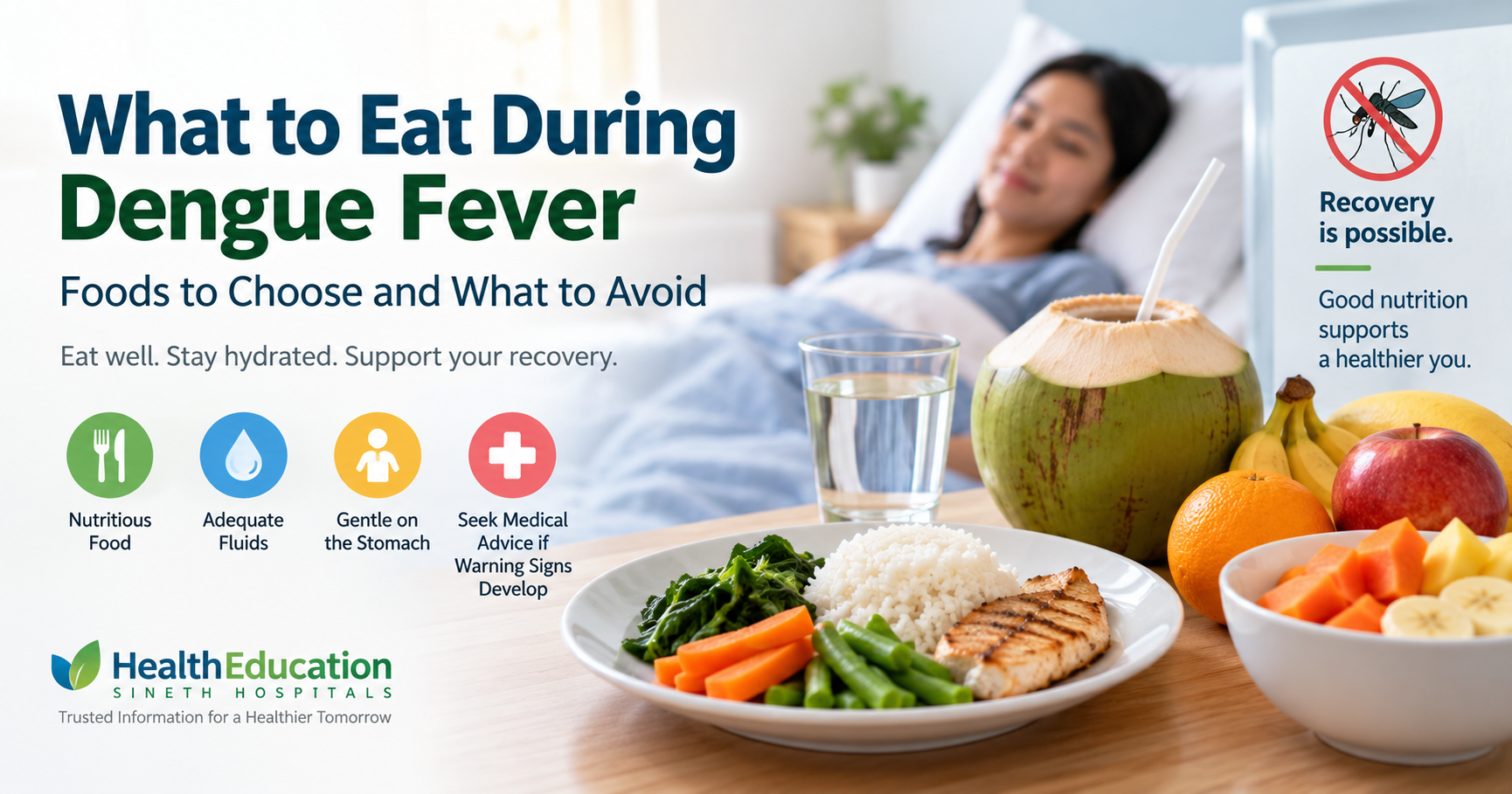
Does Dengue Require a Special Diet?
No specific diet has been shown to cure dengue.
Dengue is caused by a virus. Eating a particular fruit, vegetable, soup or other food does not remove the dengue virus from the body.
Food instead plays a supportive role.
Eating helps provide the energy, protein, vitamins and minerals your body normally needs. This remains useful when you are ill and while you recover.
Therefore, rather than searching for one “best dengue food,” it is usually more helpful to think about three practical questions:
Can the patient eat?
What foods can the patient tolerate comfortably?
Is the patient getting reasonable nutrition and adequate fluids?
If the answer to the first question becomes no because the patient is repeatedly vomiting or becoming more unwell, the solution is not simply to search for another food. Medical assessment may be needed.
What Should You Eat During Dengue?
There is no single menu that every person with dengue must follow.
If you can eat normally, you can usually continue with familiar foods that you tolerate well.
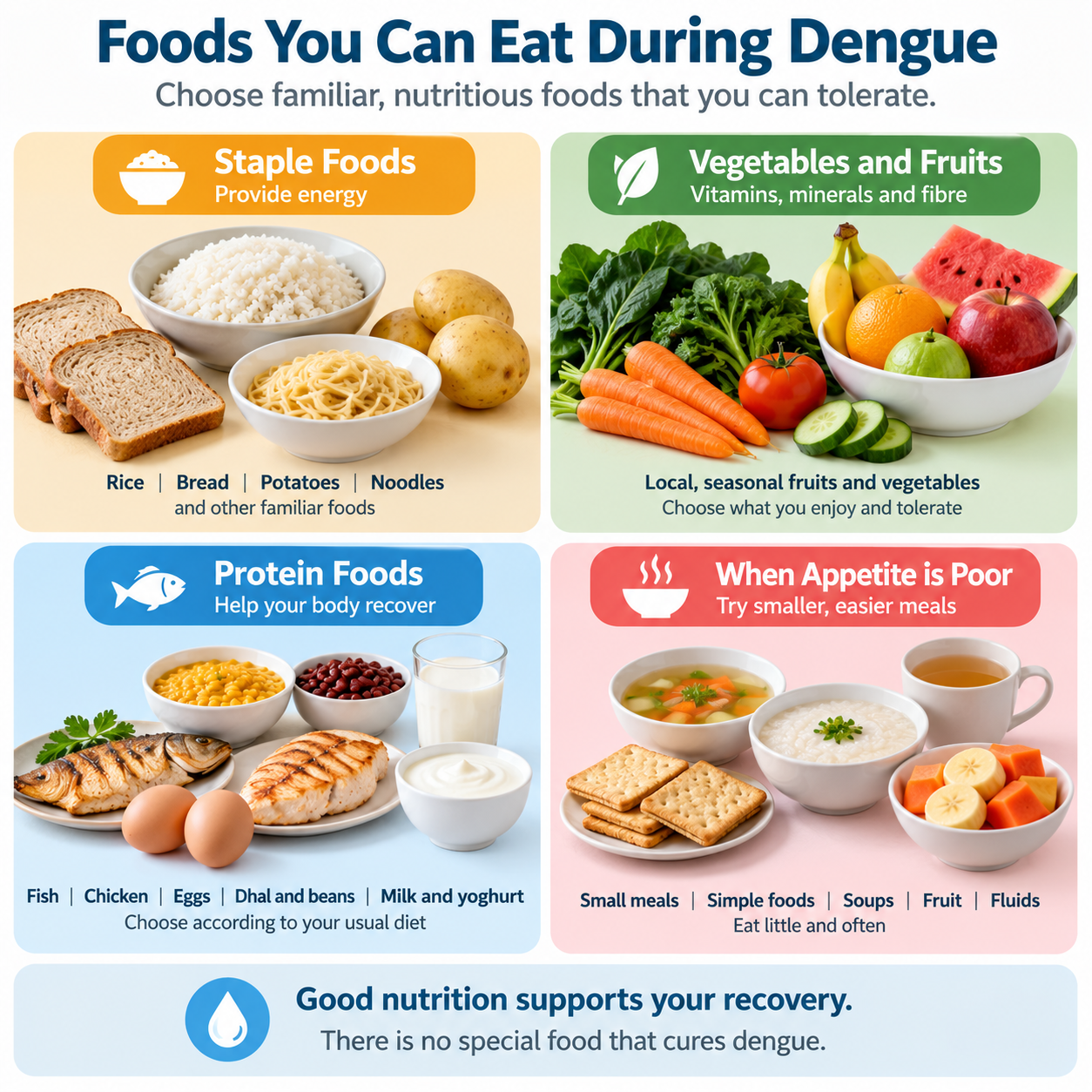
A balanced diet can include a combination of:
- rice, bread, potatoes, cereals or other usual staple foods;
- vegetables;
- fruits;
- eggs;
- fish, chicken or other meats;
- dhal, beans and other pulses;
- milk, yoghurt or other dairy foods if you normally tolerate them.
You do not need to eat all of these at every meal.
The exact foods will naturally differ according to your usual diet, culture, appetite and personal preferences.
During the first few days of illness, appetite may be much lower than normal. At that stage, a simple meal that you can comfortably eat may be more useful than trying to force yourself to eat a large “perfect” meal.
As your appetite improves, gradually return towards your usual balanced diet.
What if You Have No Appetite During Dengue?
Loss of appetite is common during many febrile illnesses, including dengue.
If you do not feel like eating a normal-sized meal, try smaller amounts more frequently.
For example, instead of trying to finish three large meals, you may find it easier to have several smaller meals or snacks during the day.
Choose foods that are familiar and that you feel able to eat.
There is usually no benefit in forcing down a particular food simply because someone has told you that it is “good for dengue.”
For a short period, your food intake may be less than usual.
However, drinking adequately remains very important, particularly when you have fever or reduced food intake. See our separate Fluids in Dengue guide for detailed advice about hydration.
Poor appetite alone is different from being unable to keep anything down.
If repeated vomiting prevents you from keeping down fluids or food, or if you develop other dengue warning signs, seek medical attention rather than continuing to manage the problem only by changing your diet. Current dengue guidance considers persistent vomiting and inability to tolerate oral intake important reasons for clinical reassessment.
What Should You Eat if You Feel Nauseated?
When nausea is present, large or heavy meals may be difficult to tolerate.
Try smaller portions.
Simple foods may be easier to manage than a large rich meal.
Depending on what you normally eat, this could include foods such as:
- rice or other familiar staple foods;
- bread or toast;
- simple soups;
- yoghurt if tolerated;
- fruit;
- eggs;
- other light meals that you normally tolerate.
There is no requirement to eat only bland foods.
The important question is whether the food makes you feel comfortable enough to continue eating.
If a particular food makes your nausea worse, leave it for the time being and choose something you tolerate better.
Avoid turning this into an unnecessarily restrictive diet. A person with dengue does not need to survive on only soup, fruit or one particular type of food.
If nausea progresses to repeated vomiting, especially when you cannot keep fluids down, seek medical advice.
Protein During Dengue and Recovery
Protein is part of a normal balanced diet and remains useful while recovering from illness.
You do not need a special protein product simply because you have dengue.
Common protein-containing foods include:
- eggs;
- fish;
- chicken and other meats;
- milk and yoghurt;
- dhal;
- beans and other pulses.
Choose according to your normal diet and what you can tolerate.
If your appetite is poor, you do not need to force yourself to eat a large serving of protein at one sitting. Smaller portions can be spread across meals.
As your appetite returns during recovery, gradually returning to a balanced diet that includes adequate protein is reasonable.
Dengue itself does not mean that eggs, fish or meat must automatically be avoided.
Can You Eat Fruit During Dengue?
Yes.
Fruit can be part of a normal balanced diet during dengue.
There is no need to avoid ordinary fruits simply because you have dengue, unless there is another medical or dietary reason for doing so.
Choose fruits that you normally eat and tolerate.
Fruit can provide carbohydrates, vitamins, minerals and other nutrients. But this does not mean that fruit acts as a treatment for the dengue virus.
You may hear claims that particular fruits are especially powerful for dengue or that they can rapidly increase the platelet count.
That is a different question.
Eating nutritious fruit is reasonable.
Claiming that a particular fruit can cure dengue or reliably restore a low platelet count requires much stronger evidence.
We will address papaya, kiwi, pomegranate and other commonly promoted “platelet foods” separately later in this article.
For an explanation of what platelet counts actually mean during dengue, see Platelets in Dengue: What Platelet Counts Mean and When to Worry.
Are There Foods and Drinks You Should Limit or Avoid During Dengue?
Dengue does not require a long list of forbidden foods.
In most cases, the practical approach is to avoid or limit things that make it more difficult to eat, drink or recover comfortably.
Avoid Alcohol
It is best to avoid alcohol while you are ill with dengue.
Alcohol is not useful for hydration or recovery. It may contribute to dehydration, and dengue can sometimes affect the liver.
There is no benefit in drinking alcohol during the illness.
Limit Foods That Make Nausea Worse
If you feel nauseated, very rich, oily or spicy meals may be difficult to tolerate.
This does not mean that everyone with dengue must completely avoid these foods.
If a particular food worsens your nausea or makes eating uncomfortable, choose something simpler until your appetite improves.
Do Not Rely on Sugary Drinks as Your Main Source of Fluids
Soft drinks and heavily sweetened beverages should not become your main method of hydration.
For detailed guidance on water, ORS, king coconut water and other drinks, see Fluids in Dengue.
You Do Not Need to Avoid Food Simply Because it is Red or Dark
People sometimes worry that red or dark-coloured foods should not be eaten during dengue because vomiting or stools might then be confused with bleeding.
There is no general rule that every patient with dengue must avoid all red or dark foods.
More importantly, suspected bleeding should not be diagnosed at home simply by comparing colours. Vomiting blood, passing black stools or other suspected significant bleeding requires medical assessment.
For other important symptoms that should prompt medical attention, see Dengue Warning Signs: When Should You Go to Hospital?
Can Papaya, Kiwi, Pomegranate or Other Foods Increase Platelets?
This is one of the most common questions about food and dengue.
When a patient's platelet count falls, family members may understandably look for something that can bring it back up quickly.
You may hear recommendations for:
- papaya;
- papaya leaf preparations;
- kiwi fruit;
- pomegranate;
- beetroot;
- dragon fruit;
- guava;
- various juices;
- herbal preparations;
- other foods advertised as “platelet boosters.”
There are two separate questions that should not be confused:
Is this a nutritious food that someone with dengue can eat?
and
Has it been proven to reliably increase platelets or treat dengue?
These are not the same thing.
Many fruits and vegetables are nutritious and can form part of a normal balanced diet.
That does not make them dengue treatments.
What About Papaya Leaf?
Papaya leaf preparations have received particular attention in dengue.
Some clinical studies and systematic reviews have reported possible increases in platelet counts after papaya leaf preparations. However, the evidence has important limitations, including differences between preparations and studies, and uncertainty about whether changes in platelet counts translate into meaningful improvements in important clinical outcomes.
For that reason, papaya leaf should not be presented as a proven cure for dengue or as a replacement for standard medical care.
There is also a difference between eating ripe papaya as an ordinary fruit and using concentrated papaya-leaf juice, extracts, capsules or other preparations as a treatment.
They should not be treated as the same thing.
What About Kiwi or Pomegranate?
Kiwi and pomegranate are nutritious fruits and can be eaten as part of a normal diet if you tolerate them.
However, they should not be promoted as treatments that reliably correct dengue-related thrombocytopenia.
The same principle applies to other foods advertised as platelet boosters.
Why Does This Distinction Matter?
Platelet counts commonly change during the course of dengue.
A platelet count may continue to fall for a period and later recover as the illness evolves.
Therefore, seeing the platelet count rise after someone starts eating a particular food does not by itself prove that the food caused the improvement.
More importantly, doctors do not assess dengue severity from the platelet count alone.
Symptoms, warning signs, examination findings and other investigations also matter.
For a detailed explanation, see Platelets in Dengue: What Platelet Counts Mean and When to Worry.
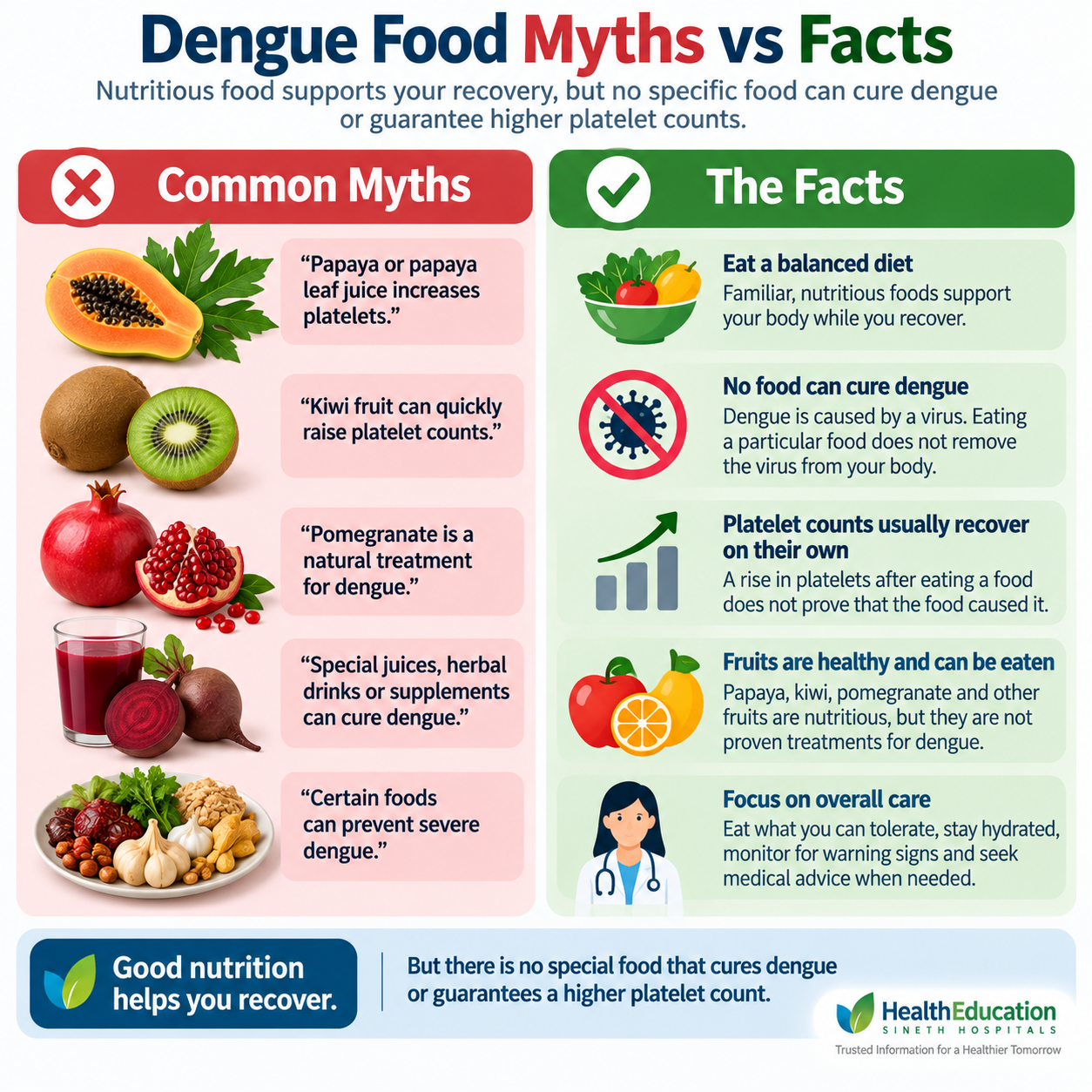
Eat nutritious foods because they support normal nutrition and recovery—not because you expect one particular food to cure dengue or guarantee that your platelet count will rise.
Should You Force Yourself to Eat During Dengue?
No.
If your appetite is reduced, forcing yourself to eat a large meal may make nausea worse.
Try smaller amounts more frequently and gradually increase your food intake as your appetite improves.
For many patients, being able to maintain adequate fluid intake is particularly important during the acute illness.
However, there is an important difference between:
not feeling hungry
and
being unable to eat or drink because you are repeatedly vomiting or becoming more unwell.
The second situation deserves more attention.
Do not continue trying different foods at home if repeated vomiting prevents you from keeping fluids down.
Seek medical advice.
Similarly, poor appetite should not distract you from other dengue warning signs.
Severe or persistent abdominal pain, persistent vomiting, significant bleeding, marked drowsiness or restlessness, difficulty breathing, or other concerning deterioration requires medical assessment.
See Dengue Warning Signs: When Should You Go to Hospital? for the dedicated warning-sign guide.
What Should You Eat While Recovering From Dengue?
Appetite often begins to improve as you recover.
There is usually no need for a special “post-dengue diet.”
Gradually return to your normal balanced meals according to your appetite and tolerance.
Your diet can include your usual sources of:
- carbohydrates;
- protein;
- vegetables;
- fruits;
- dairy products or suitable alternatives.
You do not need expensive supplements or special recovery foods simply because you have had dengue.
If you lost your appetite during the illness, it may take some time before your normal eating pattern returns.
Start with amounts you can comfortably manage and increase them as you feel better.
Adequate protein from foods such as eggs, fish, meat, milk, yoghurt, dhal, beans or other foods in your usual diet can form part of recovery.
Continue adequate fluid intake as well.
Recovery is not judged by appetite alone. Some people may still feel weak or tired even after their fever has settled.
For more information about the recovery period, see Recovery After Dengue Fever.
Do You Need Vitamin Supplements After Dengue?
Most people do not automatically need a special vitamin or mineral supplement simply because they have had dengue.
A balanced diet normally provides a range of nutrients.
Supplements may be appropriate for some people because of a specific nutritional deficiency, another medical condition, pregnancy, dietary restrictions or advice from their healthcare professional.
That is different from routinely taking supplements as a treatment for dengue.
Do not assume that high-dose vitamins, herbal preparations or nutritional products will make dengue resolve faster.
If you are considering a supplement or herbal product while you are ill, particularly if you have other medical conditions or take regular medicines, discuss it with an appropriate healthcare professional.
Eating During Dengue — Quick Summary
- There is no special food that cures dengue
- Eat familiar, nutritious foods that you can tolerate
- If your appetite is poor, try smaller meals more frequently
- A balanced diet can include staple foods, vegetables, fruits and protein-containing foods
- Eggs, fish and meat do not need to be routinely avoided simply because you have dengue
- Ordinary fruits can be eaten, but no particular fruit should be considered a dengue cure
- Do not rely on papaya, kiwi, pomegranate or another food to guarantee an increase in platelets
- Avoid alcohol while you are ill
- Adequate hydration remains important even when your appetite is poor
- If repeated vomiting prevents you from keeping fluids down, or if other warning signs appear, seek medical care
The Most Important Message
You do not need to find a perfect “dengue diet.”
During the illness, concentrate on foods you can comfortably tolerate, smaller meals when necessary, adequate hydration and appropriate medical follow-up.
As your appetite improves, gradually return to your normal balanced diet.
Nutritious food supports your body while you recover.
But food is supportive care—not a substitute for monitoring dengue properly and seeking medical attention when warning signs develop.
Related Articles
Medical Guidelines & References
- • Sri Lanka Ministry of Health — National Guidelines for Management of Dengue Fever
- • World Health Organization — Guidelines for Clinical Management of Dengue
- • CDC — Dengue Clinical Guidance for Healthcare Providers