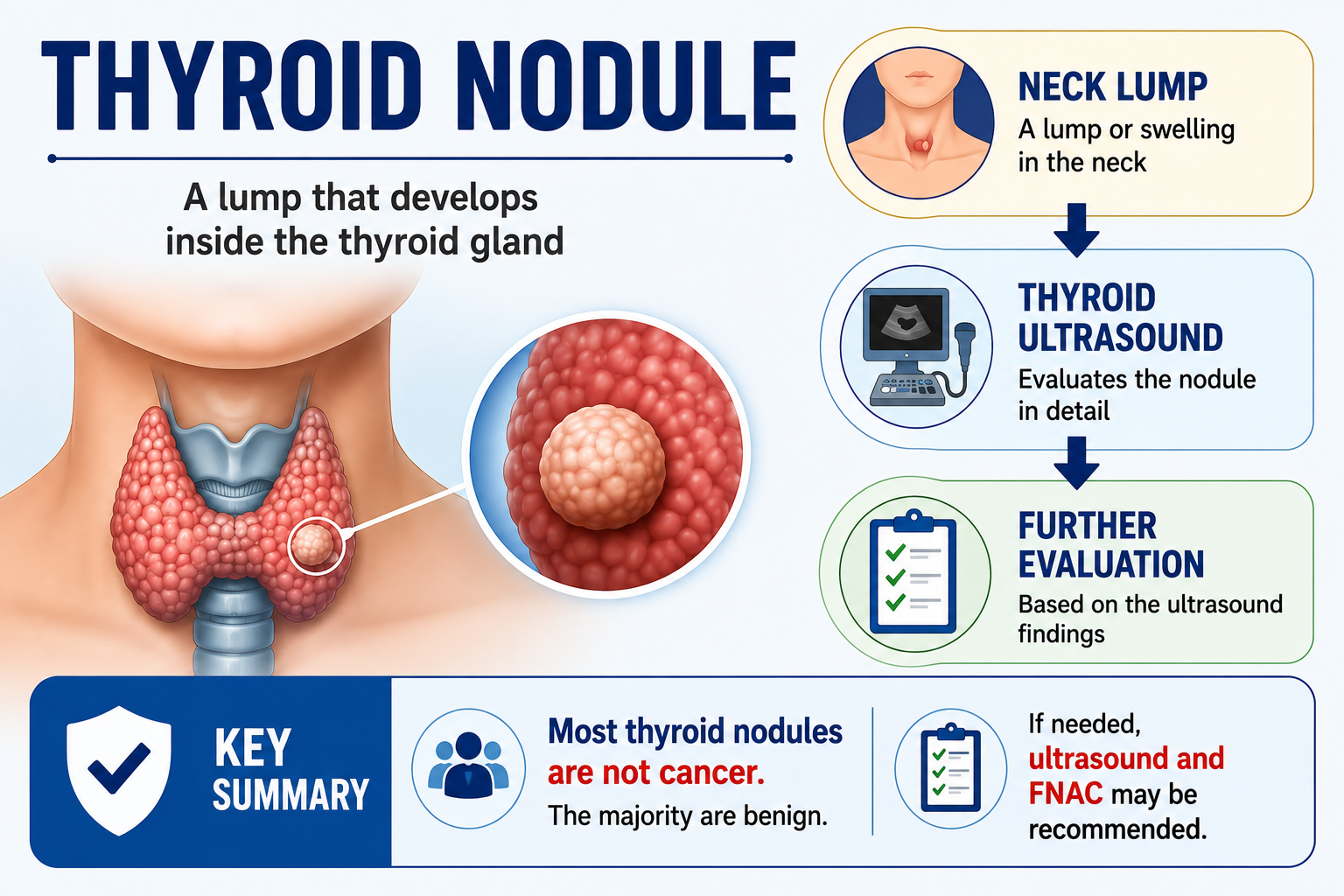
What Is a Thyroid Nodule?
A thyroid nodule is a lump that develops within the thyroid gland. The thyroid gland sits at the front of the neck and is responsible for producing thyroid hormones.
Some thyroid nodules can be felt in the neck as a lump or swelling. Others are too small to detect by touch and are discovered incidentally during an ultrasound scan performed for another reason.
Thyroid nodules are common. They occur more frequently in women than in men, and their prevalence increases with age.
What Causes Thyroid Nodules?
In many people, the exact cause of a thyroid nodule is not known.
A thyroid nodule can develop for several different reasons. Most causes are benign and are not related to cancer.
Who Is More Likely To Develop Thyroid Nodules?
Thyroid nodules can occur in anyone, but some people are more likely to develop them.
Having one or more risk factors does not mean you will develop a thyroid nodule. These factors only increase the likelihood.
What Symptoms Can a Thyroid Nodule Cause?
Many thyroid nodules cause no symptoms at all and are discovered incidentally during an ultrasound or other neck imaging.
When symptoms do occur, they may include:
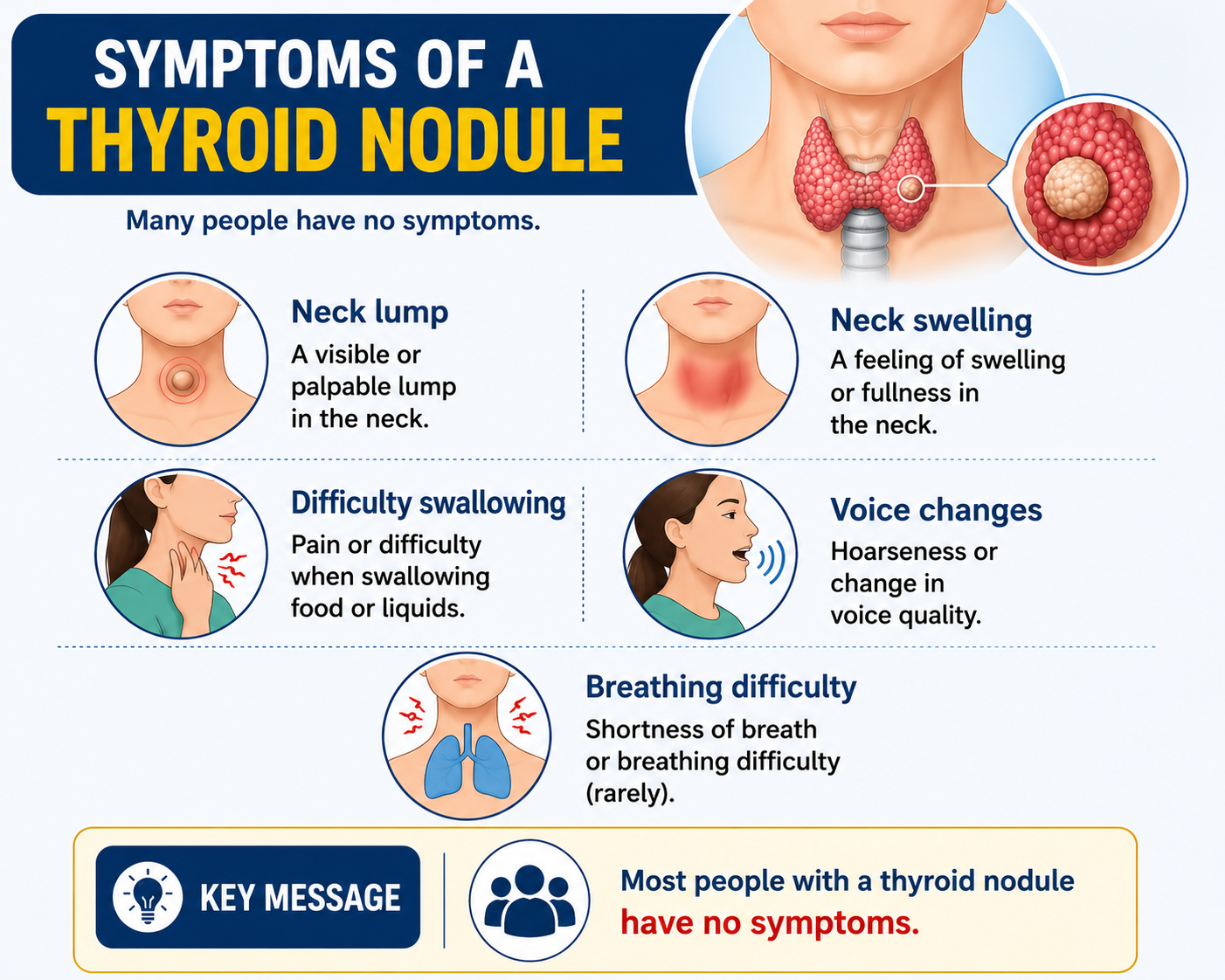
Large nodules are more likely to cause pressure symptoms such as difficulty swallowing or a sensation of something pressing on the throat. Very large nodules may occasionally affect the voice or breathing.
Does a Thyroid Nodule Mean Cancer?
No. A thyroid nodule does not automatically mean thyroid cancer.
The majority of thyroid nodules are benign. However, a small proportion of nodules — approximately 5 to 15 percent depending on clinical features and ultrasound findings — may be malignant. This is why further assessment is commonly recommended after a thyroid nodule is discovered.
The purpose of tests such as ultrasound and FNAC (Fine Needle Aspiration Cytology) is to identify the small number of nodules that may require treatment, while confirming that the majority are harmless.
Certain features increase the suspicion of cancer in a thyroid nodule. These include a solid or irregular nodule on ultrasound, rapid growth, associated lymph node swelling, or a family history of thyroid cancer. Your doctor will use a combination of clinical information and test results to assess the risk in your individual case.
What Tests Are Needed?
When a thyroid nodule is found, doctors typically recommend one or more of the following tests:
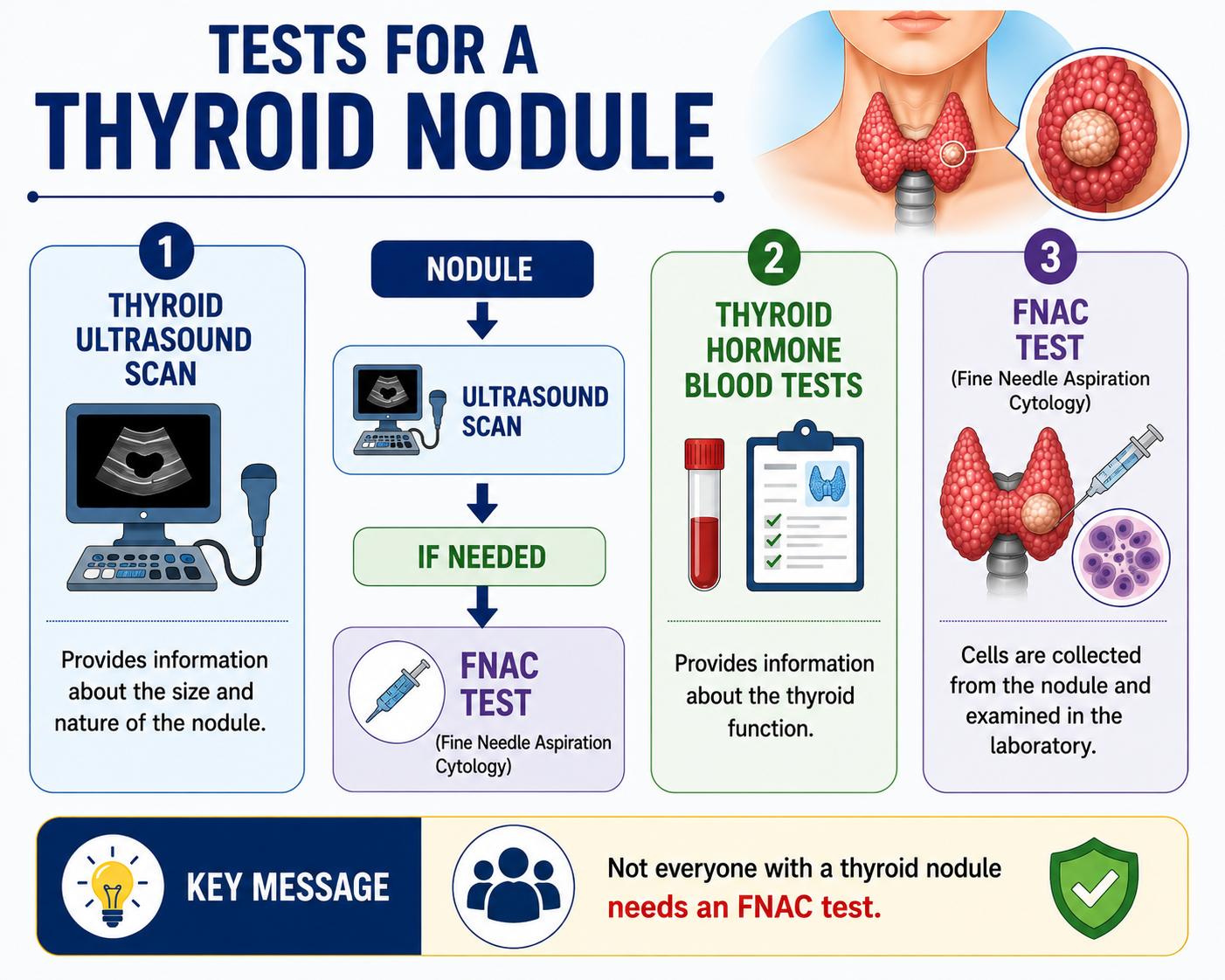
Not every person with a thyroid nodule needs all three tests. The decision about which tests are required depends on the size, appearance and clinical features of the nodule. Your doctor will advise which investigations are appropriate in your situation.
What Is an Ultrasound Scan?
Thyroid ultrasound is usually the first and most important test when a thyroid nodule is found. It is a safe, painless imaging procedure that uses sound waves to produce images of the thyroid gland.
The ultrasound scan helps doctors assess:
- The size of the nodule
- The appearance of the nodule — whether it is solid, fluid-filled, or mixed
- The borders and internal features of the nodule
- Whether the nodule has features that suggest it may need further testing
- Whether there are any nearby lymph node changes
Based on the ultrasound findings, the radiologist or clinician will categorise the nodule and advise whether FNAC or further surveillance is recommended.
What Is FNAC?
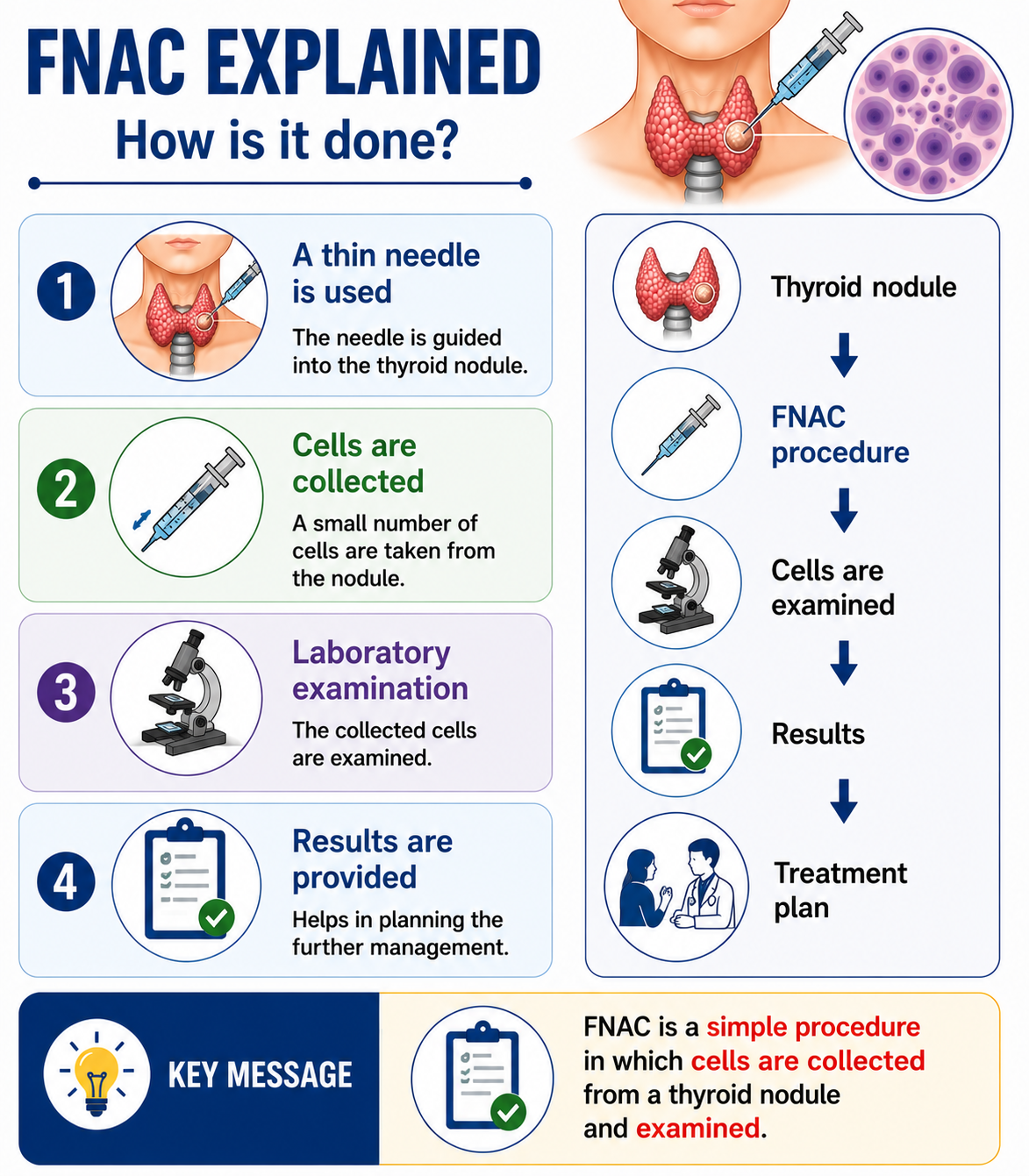
FNAC stands for Fine Needle Aspiration Cytology. It uses a thin needle to collect cells from a thyroid nodule so they can be examined under a microscope. FNAC is not required for every thyroid nodule; the decision depends mainly on factors such as the nodule's ultrasound appearance, size and overall clinical assessment.
When Is Surgery Needed?
Only a minority of patients with thyroid nodules eventually require surgery.
Surgery is not required for most thyroid nodules. It is generally recommended in specific situations where the nodule poses a confirmed or likely risk, or is causing significant problems.
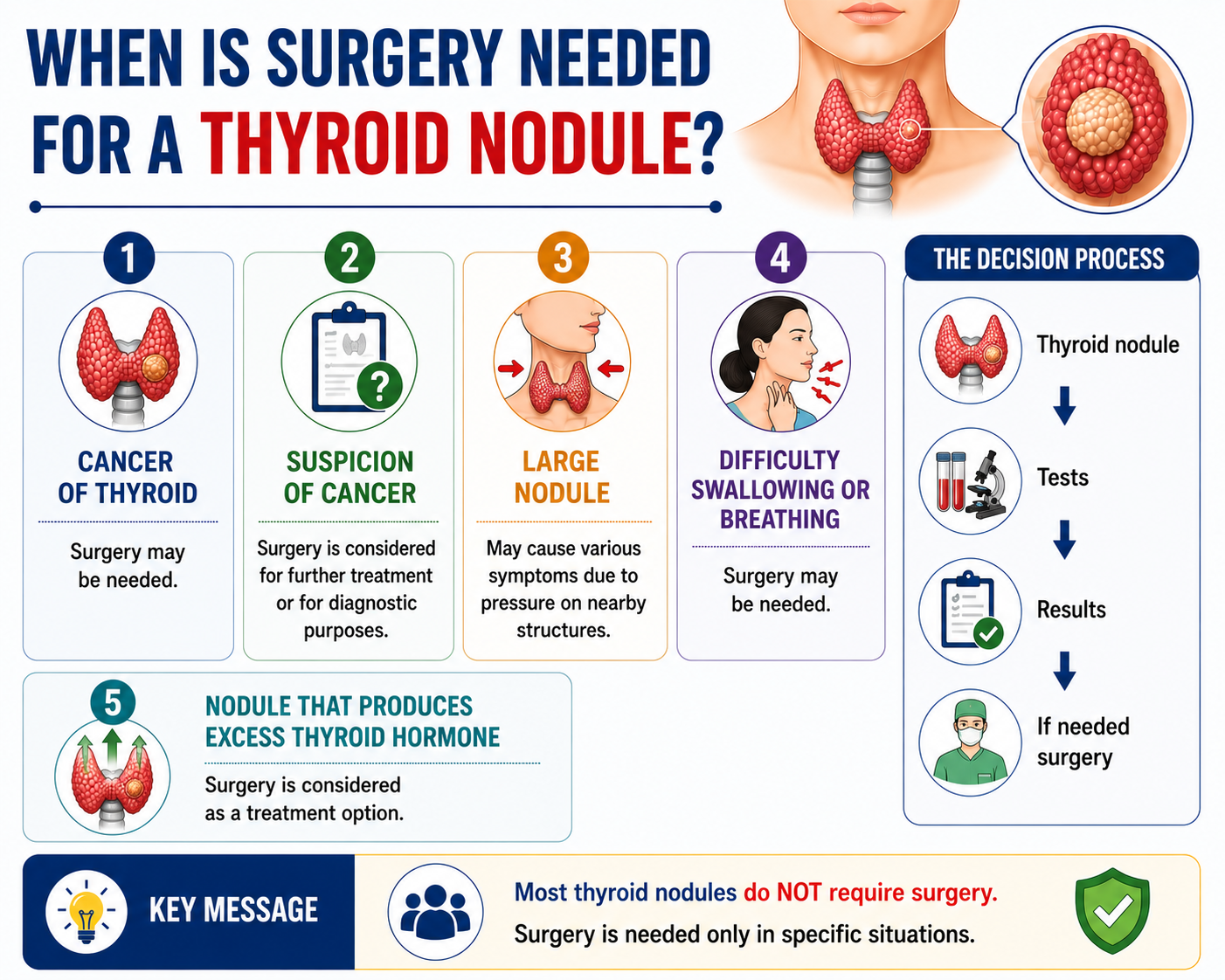
Surgery may be recommended when:
- Cancer is confirmed on FNAC or surgical biopsy
- Cancer is strongly suspected based on FNAC results and ultrasound features
- The nodule is very large and is compressing surrounding structures
- The nodule causes pressure symptoms such as difficulty swallowing or breathing difficulty
- The nodule is producing excessive thyroid hormone (a toxic or autonomously functioning nodule) and other treatments are not suitable or preferred
The type of surgery depends on the size and number of nodules and whether cancer is present. Options include removal of one lobe of the thyroid gland (hemi-thyroidectomy) or removal of the entire thyroid gland (total thyroidectomy).
Can Thyroid Nodules Be Treated Without Surgery?
Yes. The majority of thyroid nodules do not require surgery.
If tests confirm that a nodule is benign and it is not causing symptoms, surgery is generally not necessary. In this situation, the most common management approach is periodic ultrasound monitoring — typically every 12 to 24 months — to ensure the nodule remains stable in size and appearance.
Many people live with a benign thyroid nodule for years or their entire life without needing any treatment.
Some other approaches that may be used in selected cases include:
- Radioactive iodine — for nodules that are producing excess thyroid hormones (toxic nodules)
- Ethanol ablation or radiofrequency ablation — minimally invasive techniques that can reduce the size of a benign nodule in selected patients
- Thyroid hormone suppression — rarely used in current practice and not routinely recommended
When Should I See a Doctor?
Arrange a medical review if you notice any of the following:
- Thyroid nodules are common.
- Most thyroid nodules are benign.
- A thyroid nodule does not automatically mean cancer.
- Ultrasound is usually the first test.
- Some nodules require FNAC.
- Most thyroid nodules do not require surgery.