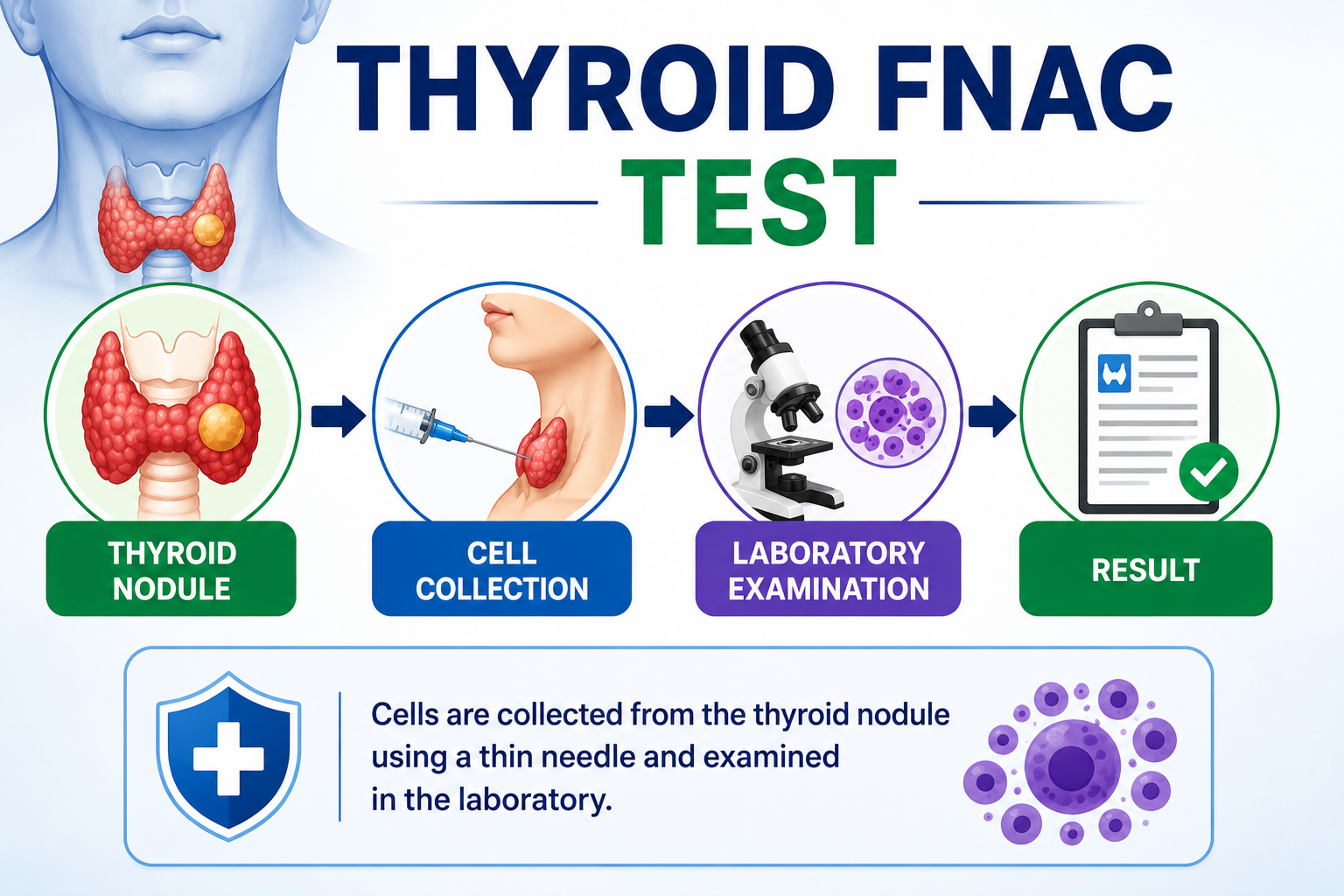
What Is a Thyroid FNAC Test?
FNAC stands for Fine Needle Aspiration Cytology. It is a simple outpatient procedure in which a thin needle is used to collect a small number of cells from a thyroid nodule. The collected cells are then sent to a laboratory where a pathologist examines them under a microscope.
The purpose of FNAC is to help determine whether a thyroid nodule is benign (harmless) or whether it may need further assessment or treatment.
Why Is Thyroid FNAC Needed?
Not every thyroid nodule requires surgery. FNAC helps determine whether a thyroid nodule appears benign or whether it has features that may require further assessment or treatment.
FNAC is typically recommended when:
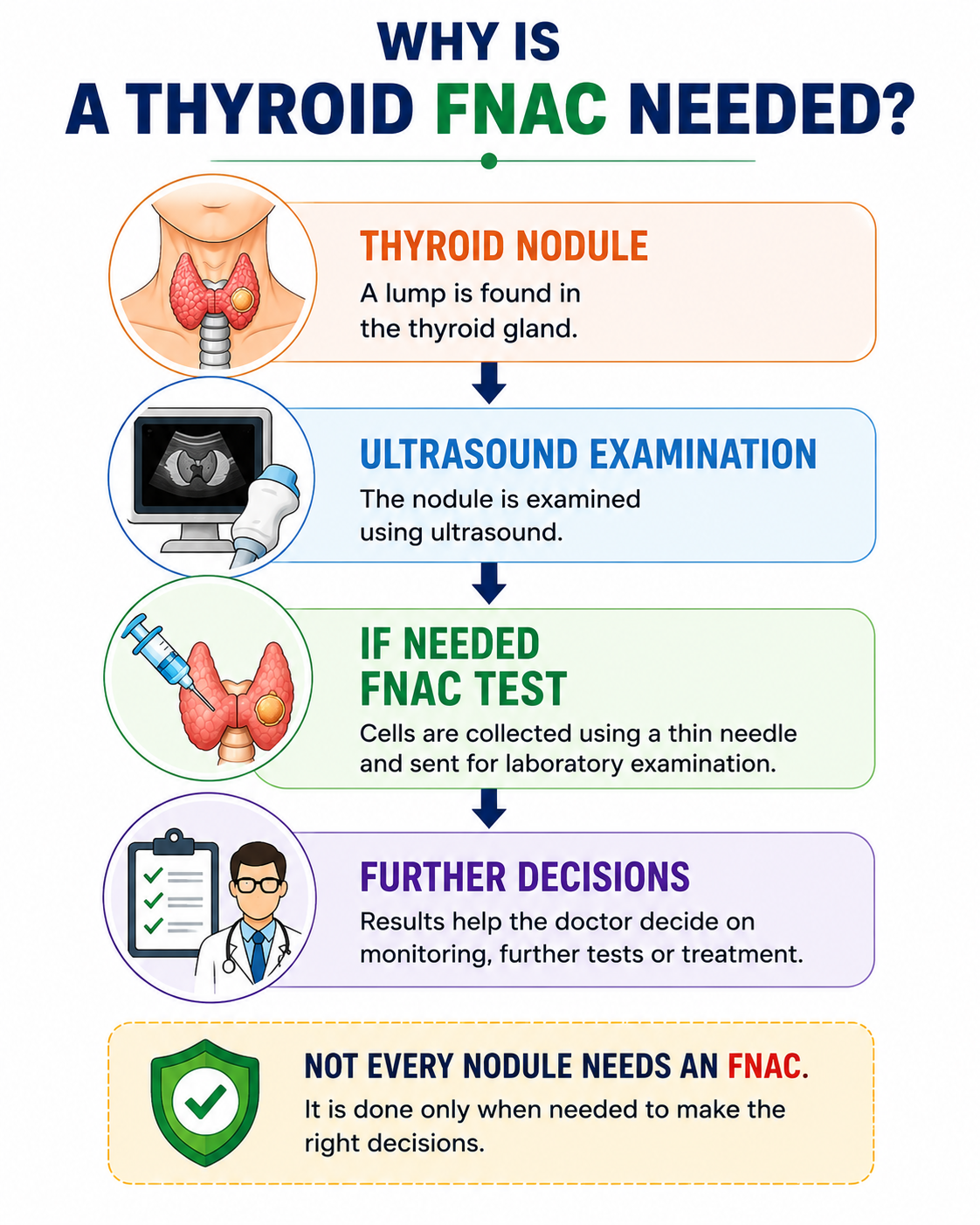
Not all thyroid nodules require FNAC. Your doctor will decide whether FNAC is appropriate based on the ultrasound findings, nodule size, and your individual clinical situation.
How Is Thyroid FNAC Performed?
Thyroid FNAC is typically performed as an outpatient procedure. It does not require a hospital stay. The procedure follows a straightforward sequence of steps:
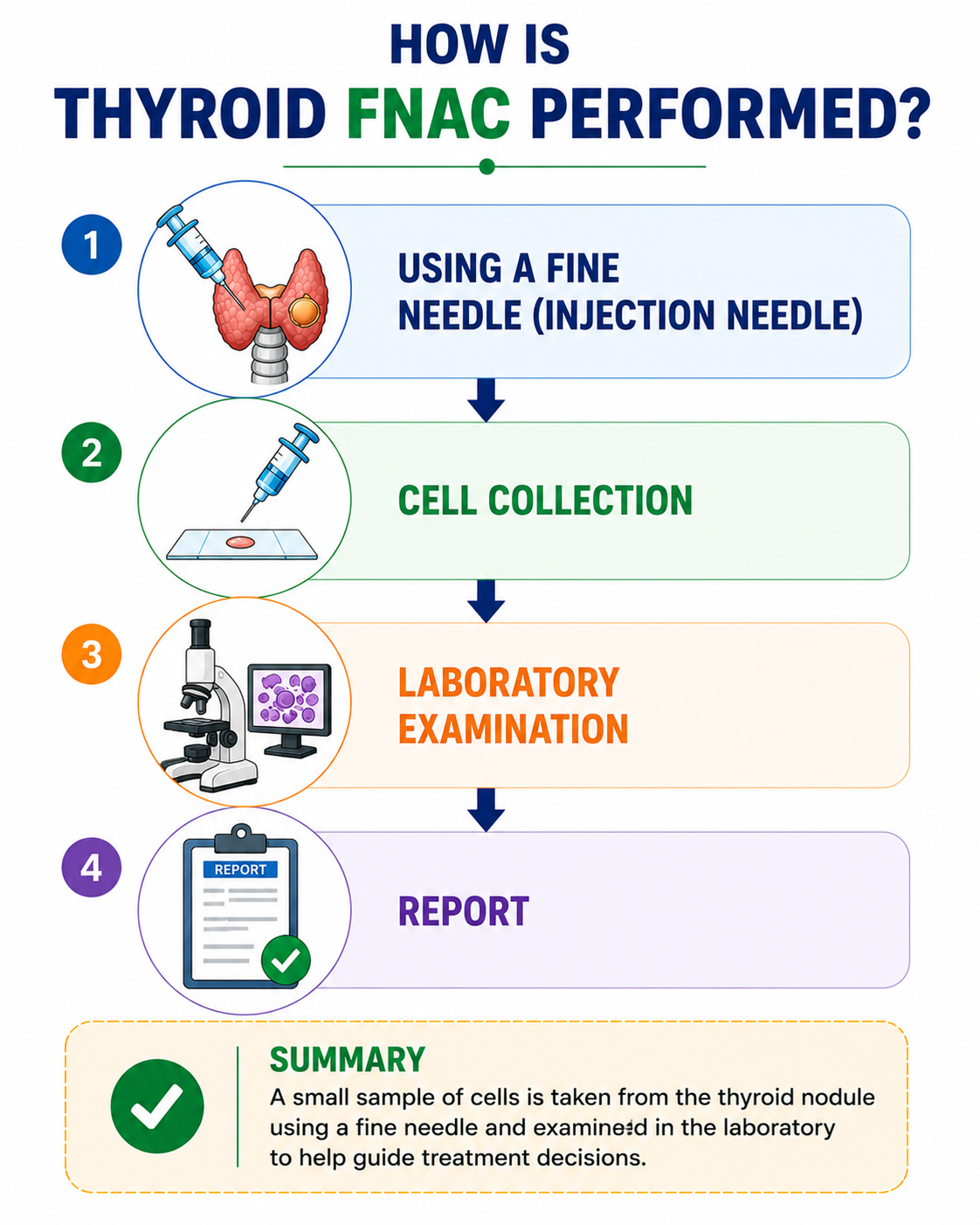
- The skin over the nodule is cleaned.
- A thin needle is inserted into the thyroid nodule — often guided by ultrasound to ensure accurate placement.
- A small sample of cells is collected by gentle suction or capillary action.
- The needle is withdrawn and gentle pressure is applied to the puncture site.
- The collected sample is placed on slides and sent to the laboratory.
- A pathologist examines the cells and prepares a written report.
The procedure typically takes only a few minutes from start to finish. Ultrasound guidance is commonly used to improve the accuracy of the sample and to reduce the chance of a non-diagnostic result.
Is a Local Anaesthetic Used?
A local anaesthetic is sometimes applied to the skin before FNAC, particularly in clinics that routinely use it or when the patient requests it. In many centres, the procedure is performed without local anaesthetic because the needle is very thin and the procedure is brief. Your doctor will discuss this with you beforehand.
Is Thyroid FNAC Painful?
Most patients experience only mild discomfort during thyroid FNAC. The needle used is very thin — thinner than the needles typically used for blood tests — and the procedure is completed quickly.
A brief stinging or pressure sensation is common when the needle enters the skin. Some patients experience a dull ache in the neck for a short period after the procedure. Significant pain is uncommon.
How Should I Prepare for Thyroid FNAC?
Most patients do not need any special preparation before thyroid FNAC.
Your doctor may ask about medicines you take, especially blood thinning medicines such as warfarin, apixaban, rivaroxaban, aspirin or clopidogrel.
If FNAC was recommended because of a thyroid lump, you may also want to read our Thyroid Nodule Guide.
What Can the Results Show?
The FNAC result is reported by a pathologist after examining the collected cells. Results are categorised to guide the next clinical decision. In patient-friendly terms, the result may indicate one of the following:
A benign result is the most common outcome of thyroid FNAC.
Some thyroid nodules are also assessed with blood tests such as the TSH test, especially when thyroid hormone imbalance is suspected.
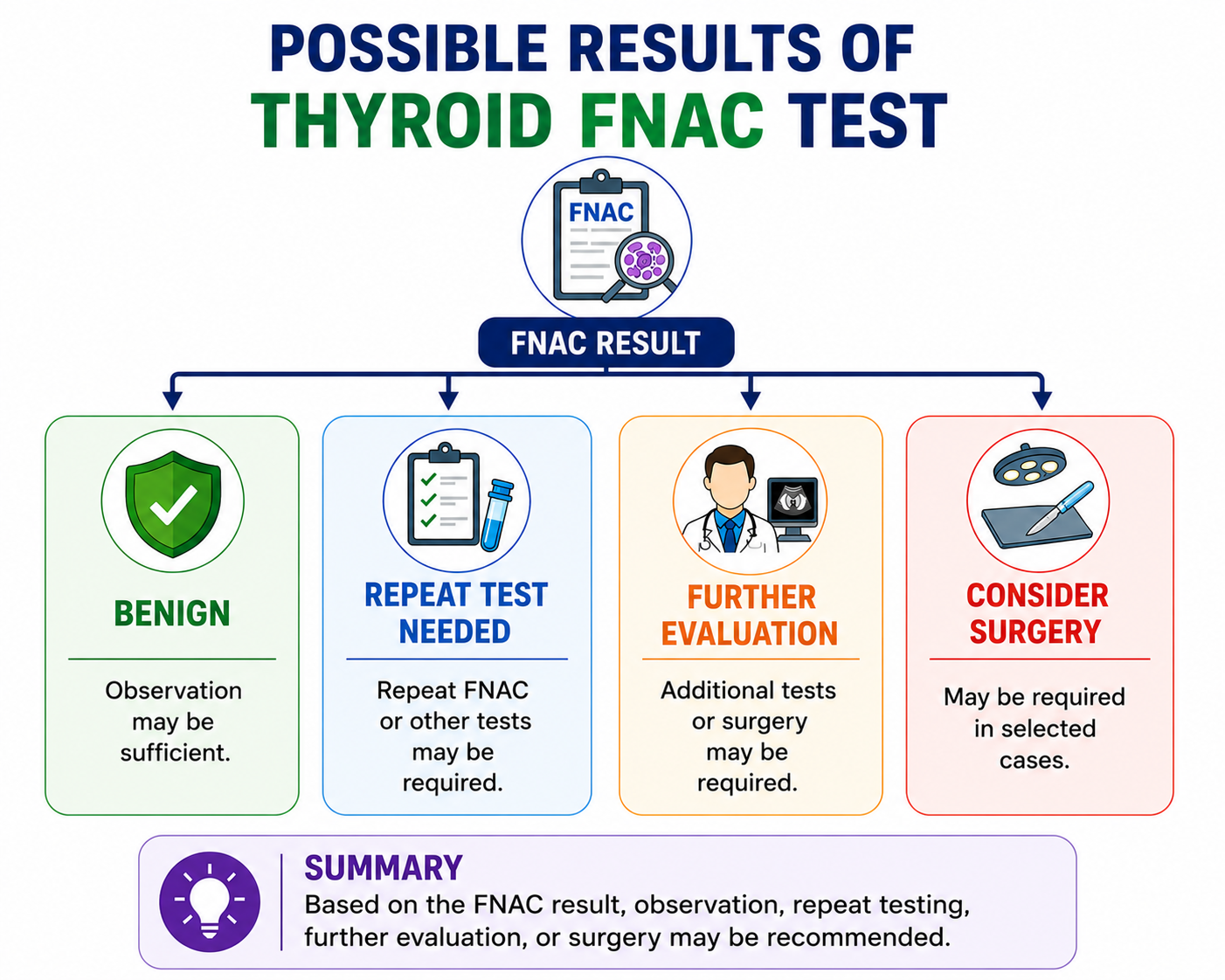
A benign result means the cells examined did not show features of cancer. This is the most common FNAC outcome. In this case, monitoring with periodic ultrasound is usually all that is recommended.
Sometimes the sample collected is insufficient to give a definitive result. In this situation, a repeat FNAC may be recommended to obtain a more adequate sample.
Some results indicate that further evaluation is needed — for example, additional imaging or a surgical procedure to obtain a larger tissue sample. Your doctor will explain what your specific result means and what the next step is for your individual situation.
What Happens After Thyroid FNAC?
Most patients are able to return to normal activities immediately after thyroid FNAC. There is no recovery period required.
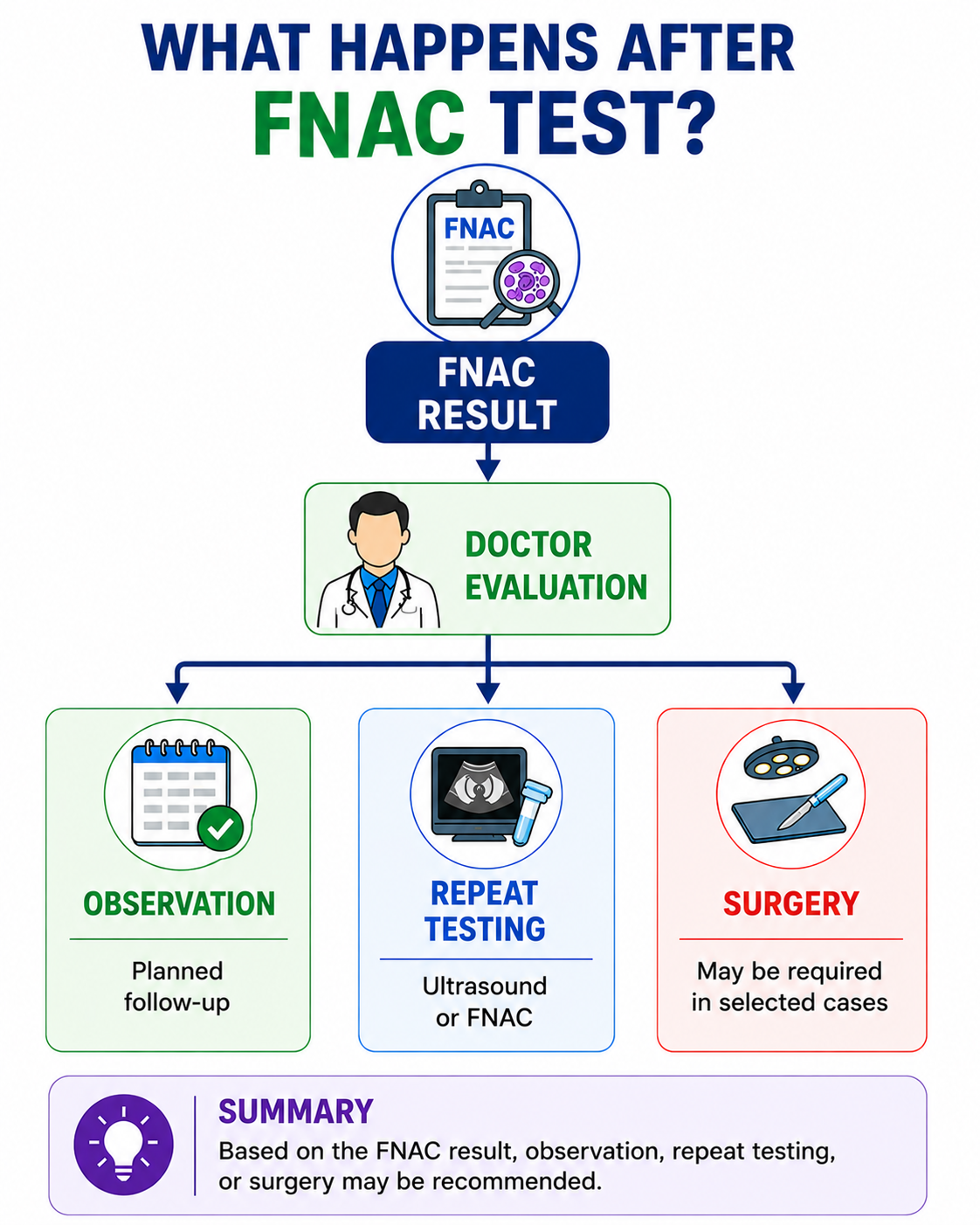
Depending on the result, your doctor may recommend one of the following:
- Observation and monitoring — if the result is benign, periodic ultrasound follow-up is usually all that is needed
- Repeat ultrasound — to check whether the nodule has changed in size or appearance over time
- Repeat FNAC — if the initial sample was inadequate or if the result is indeterminate
- Surgery — if the result suggests cancer or a high suspicion of malignancy
- Additional investigations — such as molecular testing or further imaging in selected cases
Are There Any Risks?
Thyroid FNAC is generally a safe procedure with a very low risk of significant complications. Serious adverse events are uncommon.
Possible minor effects after FNAC include:
Significant bleeding, infection or nerve injury are very rare. FNAC does not carry an established risk of spreading cancer cells along the needle track.
- FNAC collects cells from a thyroid nodule — it does not remove the nodule.
- Most patients experience only mild discomfort.
- The procedure takes only a few minutes.
- Not all thyroid nodules need FNAC.
- Most FNAC results are benign.
- Most patients can return to normal activities immediately after.