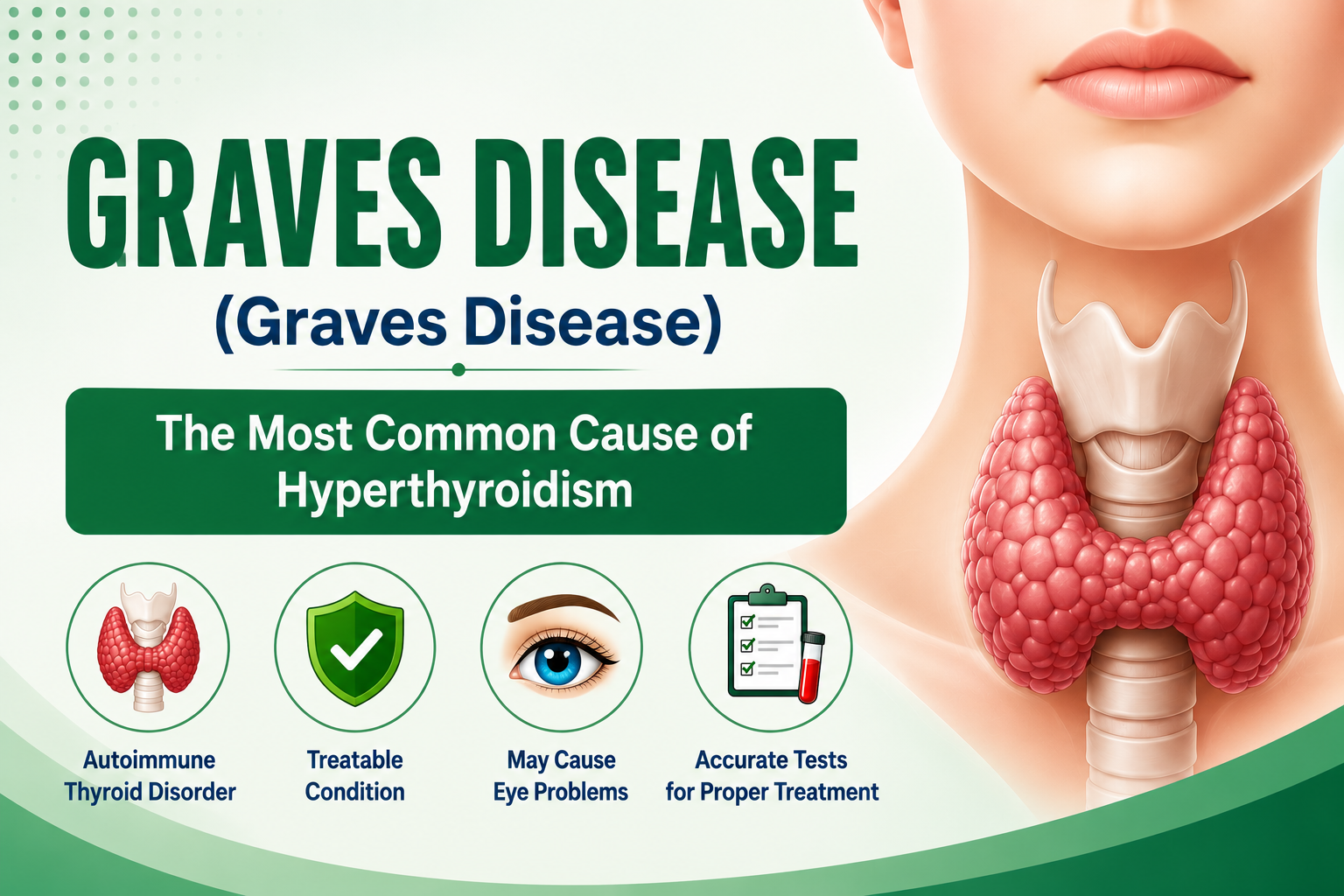
What Is Graves Disease?
Graves disease is an autoimmune disorder that causes the thyroid gland to become overactive.
The condition occurs when antibodies stimulate the thyroid gland in a way that mimics the action of thyroid stimulating hormone (TSH). As a result, the thyroid gland continuously produces excessive amounts of thyroid hormones.
Graves disease is the most common cause of hyperthyroidism and accounts for the majority of cases of low TSH with elevated thyroid hormones. It can affect people of any age, but it most commonly develops in women of reproductive age.
How Does Graves Disease Develop?
In Graves disease, the immune system produces abnormal antibodies that bind to receptors on the thyroid gland.
The antibodies involved in Graves disease are commonly called TSH receptor antibodies (TRAb). These antibodies attach to the thyroid gland and continuously stimulate hormone production, even when the body does not need additional thyroid hormones.
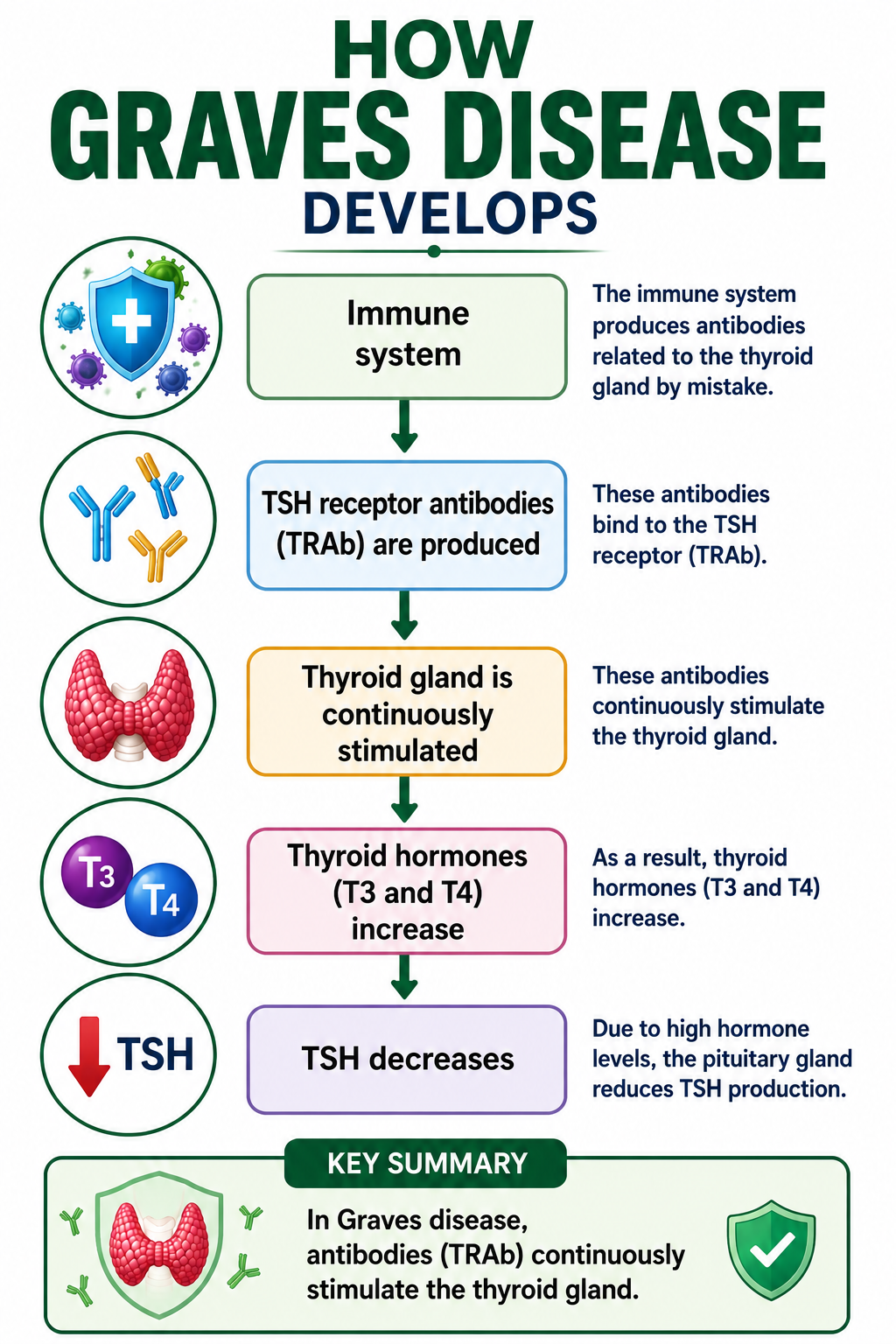
Because the thyroid is constantly stimulated, TSH levels fall very low. This is why most blood tests in Graves disease show a low TSH with an elevated Free T4 and Free T3.
Why Does TSH Become Low?
As thyroid hormone levels rise, the pituitary gland reduces TSH production through the body’s normal feedback regulation system.
This is why most people with Graves disease have a low or suppressed TSH level.
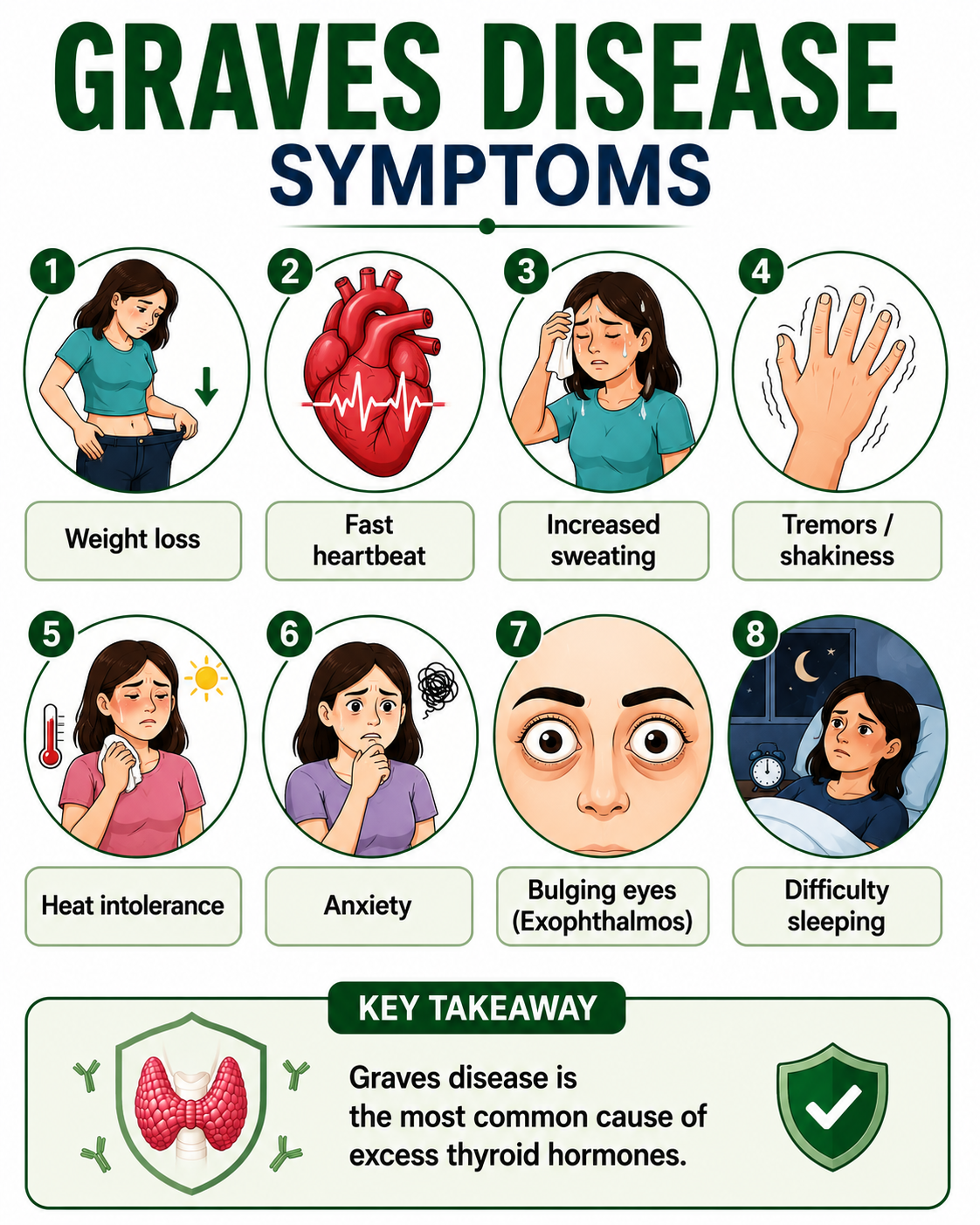
Common Symptoms of Graves Disease
The symptoms of Graves disease are caused by excess thyroid hormones speeding up the body’s functions. They overlap significantly with other causes of hyperthyroidism.
Goitre (Thyroid Enlargement)
Many people with Graves disease develop an enlarged thyroid gland, known as a goitre.
The enlargement may be visible as a swelling in the front of the neck and may move when swallowing.
Not every patient develops a noticeable goitre, and the size of the thyroid does not always reflect the severity of the disease.
Graves Ophthalmopathy (Thyroid Eye Disease)
Some people with Graves disease develop inflammation around the eyes. This condition is called Graves ophthalmopathy or thyroid eye disease.
Thyroid eye disease occurs because TRAb can also affect the tissues around the eyes, causing swelling and inflammation of the muscles and fat behind the eye socket.
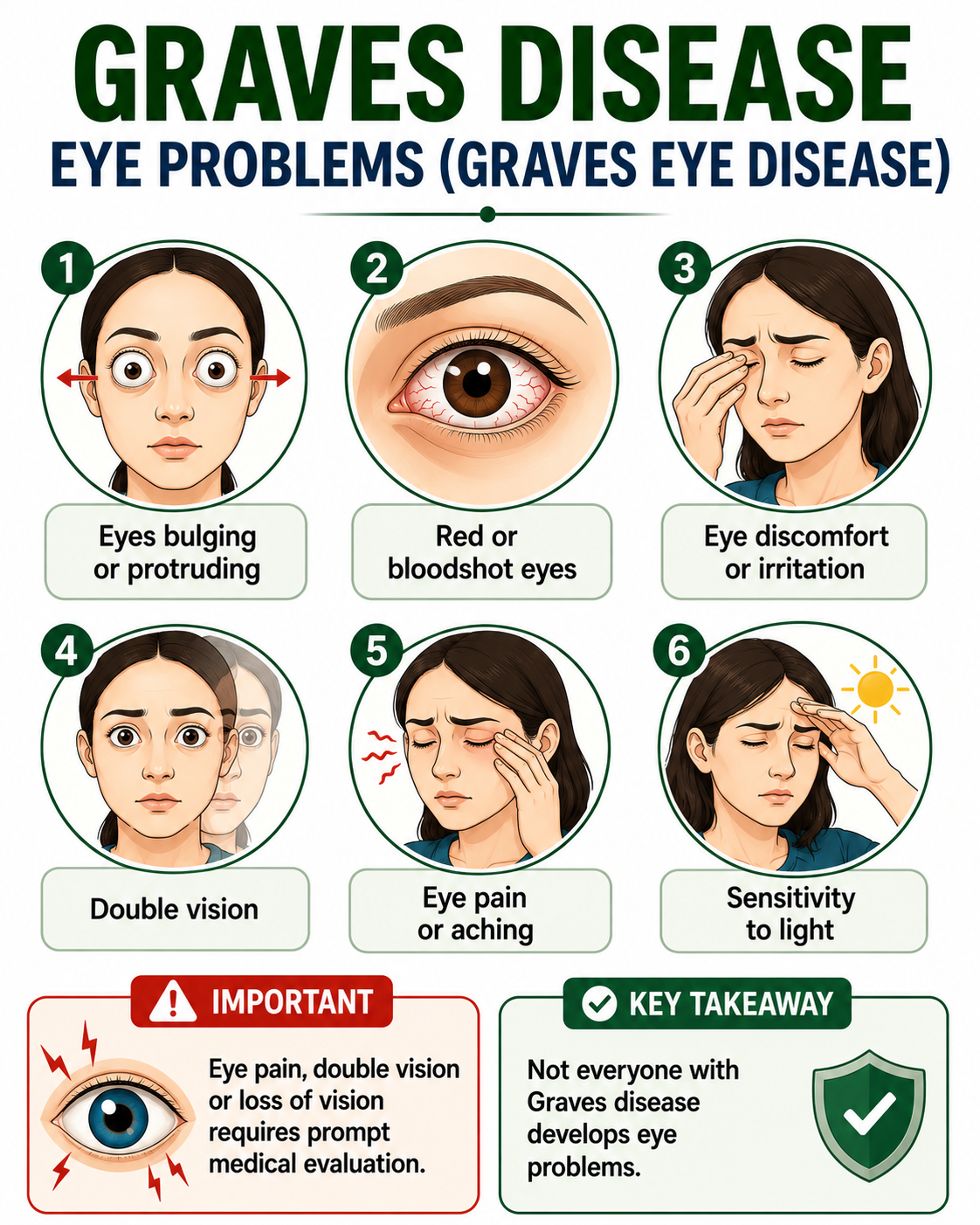
Eye symptoms that may occur
- Bulging eyes (proptosis)
- Eye redness
- Eye irritation or grittiness
- Double vision
- Eye pain
- Sensitivity to light
- Reduced vision (in severe cases)
Not all patients with Graves disease develop eye involvement, and the severity of eye disease does not always parallel the severity of thyroid disease. Eye symptoms may appear before, during or after the thyroid condition is treated.
Eye disease may occasionally occur even when thyroid hormone levels are normal.
Smoking and Graves Disease
Smoking significantly increases the risk and severity of thyroid eye disease in people with Graves disease.
People with Graves disease are strongly encouraged to stop smoking. Smoking is one of the most important modifiable risk factors for Graves ophthalmopathy.
How Is Graves Disease Diagnosed?
Graves disease is diagnosed based on a combination of clinical features, blood tests and sometimes imaging. Blood tests typically show a suppressed TSH with elevated Free T4 and Free T3.
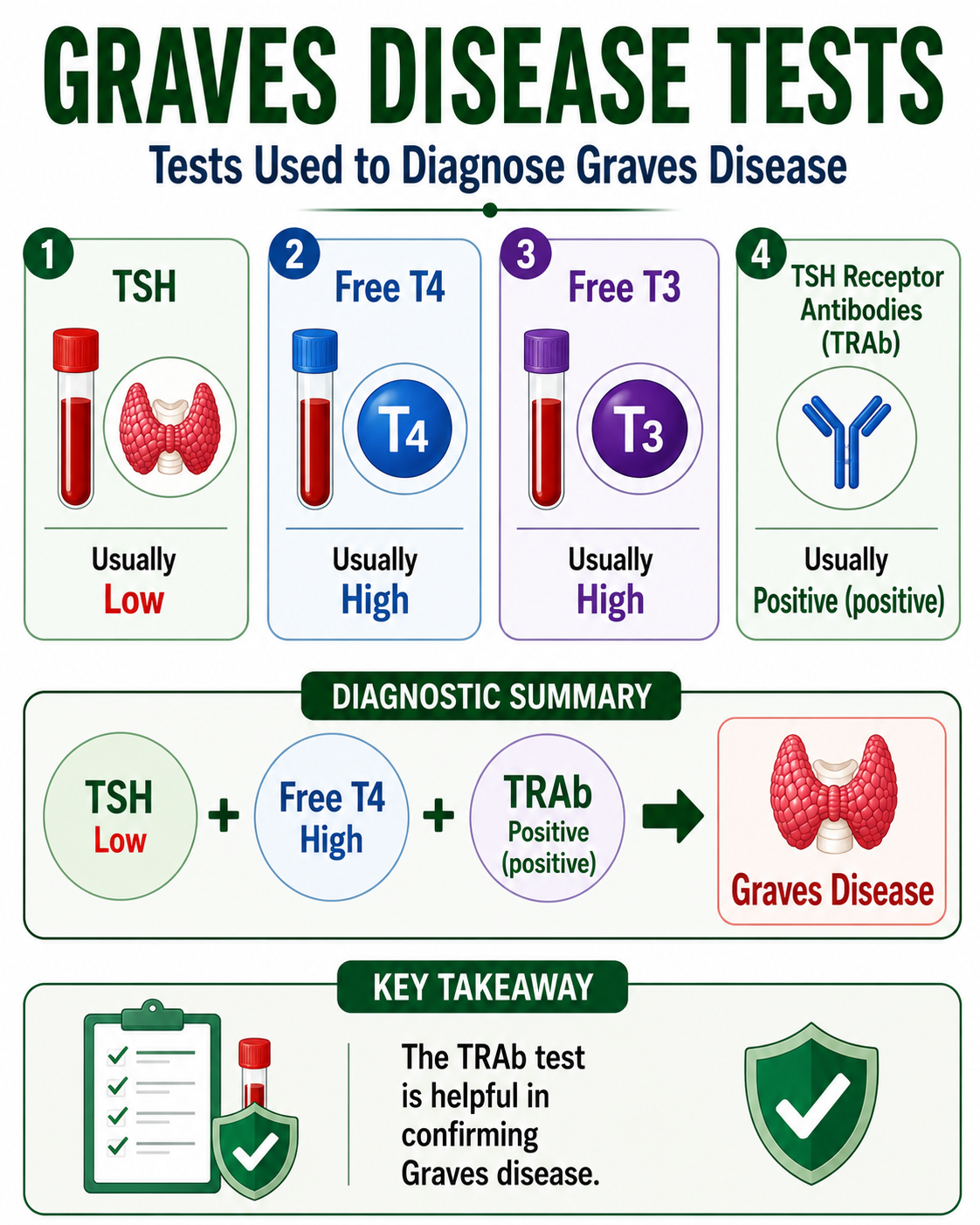
| Test | Typical Finding in Graves Disease |
|---|---|
| TSH | Low |
| Free T4 | High |
| Free T3 | High |
| TRAb | Positive |
TSH receptor antibody (TRAb) testing helps confirm Graves disease as the cause of hyperthyroidism. A positive TRAb result strongly supports the diagnosis. However, not every patient requires TRAb testing, and your doctor will decide which tests are appropriate in your individual case.
Graves Disease During Pregnancy
Graves disease during pregnancy requires careful management because thyroid hormones affect both the mother and the developing baby.
Some women with Graves disease may experience improvement in their thyroid overactivity during pregnancy, particularly in the second and third trimesters, because the immune system is naturally suppressed during pregnancy. However, the condition can worsen again after delivery.
Treatment decisions should be individualized. Some antithyroid medications are safer than others during different stages of pregnancy. Specialist review by an endocrinologist or obstetric physician is usually recommended.
Treatment of Graves Disease
There are three main treatment options for Graves disease. Each has advantages and disadvantages depending on the individual patient.
Antithyroid medications
Medications such as carbimazole or propylthiouracil (PTU) reduce the production of thyroid hormones. They are often used as the first treatment and may lead to remission in some patients after a course of 12–18 months. Regular blood monitoring is required.
Radioactive iodine treatment
Radioactive iodine is given as a drink or capsule. It is absorbed by the thyroid gland and gradually reduces its activity. It is effective and widely used, but is not suitable during pregnancy. After treatment, many patients require long-term thyroid replacement therapy (thyroxine).
Surgery (thyroidectomy)
Removal of all or most of the thyroid gland is an option when other treatments are not suitable or preferred. It provides rapid and permanent control of hyperthyroidism. After surgery, thyroid replacement therapy is usually required.
Can Graves Disease Be Cured?
Many patients achieve long-term control of their condition with appropriate treatment.
Some patients remain in remission after a course of antithyroid medications and do not require further treatment. Others may experience recurrence and need additional or alternative treatment. Radioactive iodine and surgery can produce permanent remission in most cases.
Even after successful thyroid treatment, eye disease may persist and sometimes requires separate management by an ophthalmologist.
Thyroid Storm
Thyroid storm is a rare but life-threatening complication of severe untreated hyperthyroidism.
Symptoms may include very high fever, severe agitation, confusion, rapid heartbeat and low blood pressure.
When Should You Seek Medical Advice?
See your doctor promptly if you notice any of the following:
- Rapid or unexplained weight loss
- Persistent palpitations or irregular heartbeat
- Visible neck swelling
- Eye symptoms — bulging, pain, double vision or reduced vision
- Pregnancy with thyroid disease or thyroid symptoms
- New thyroid test abnormalities