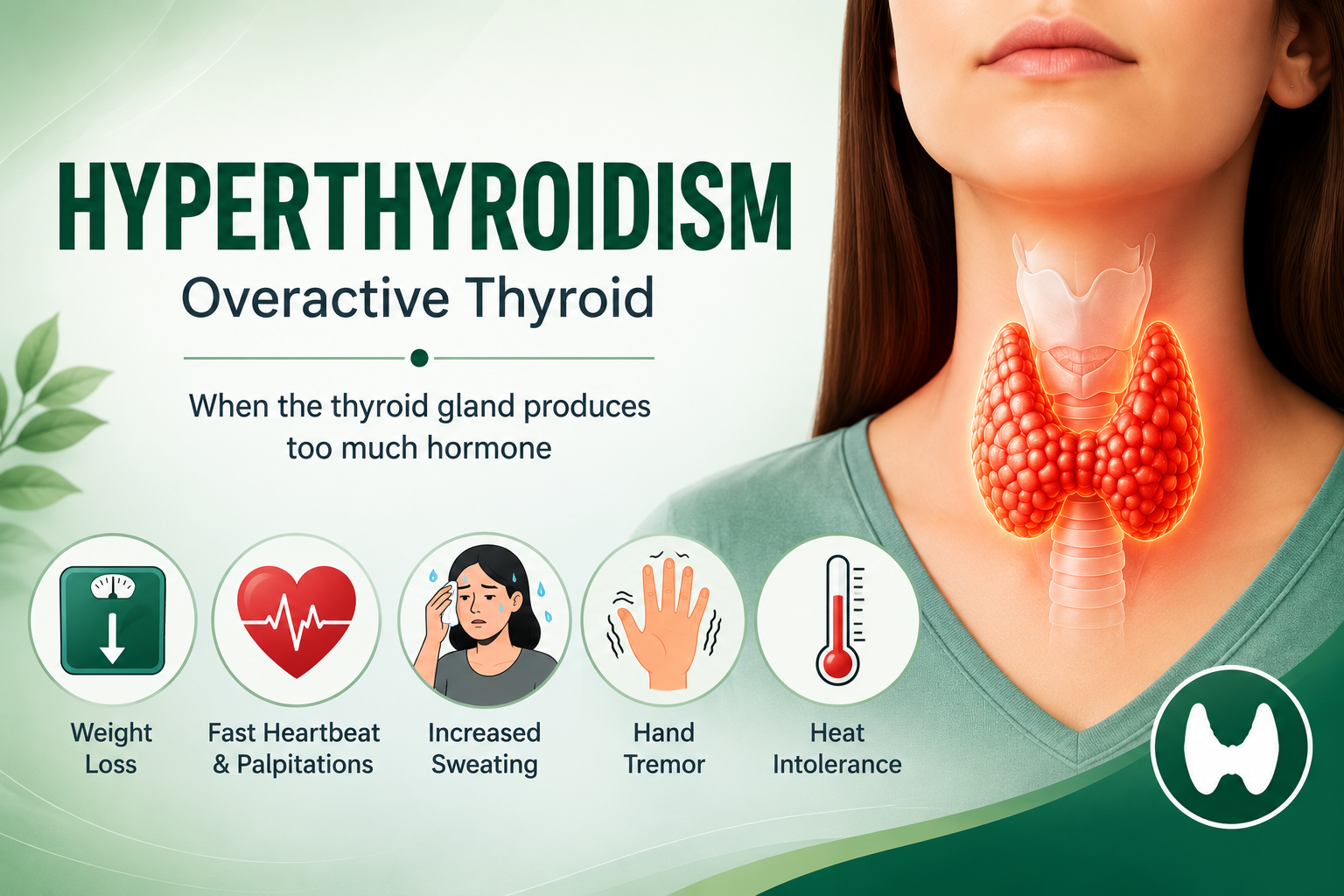
What Is Hyperthyroidism?
Hyperthyroidism is a condition in which the thyroid gland produces excessive amounts of thyroid hormones (T4 and T3).
Because thyroid hormones regulate metabolism, excess hormone causes many body systems to work faster than normal. This is why hyperthyroidism produces such a wide range of symptoms — from weight loss and palpitations to anxiety and tremor.
Hyperthyroidism is less common than hypothyroidism, but it remains one of the most common endocrine disorders worldwide. Women are affected more often than men, and the condition can occur at almost any age. Although hyperthyroidism is most commonly diagnosed in adults, it can also occur in adolescents and older adults.
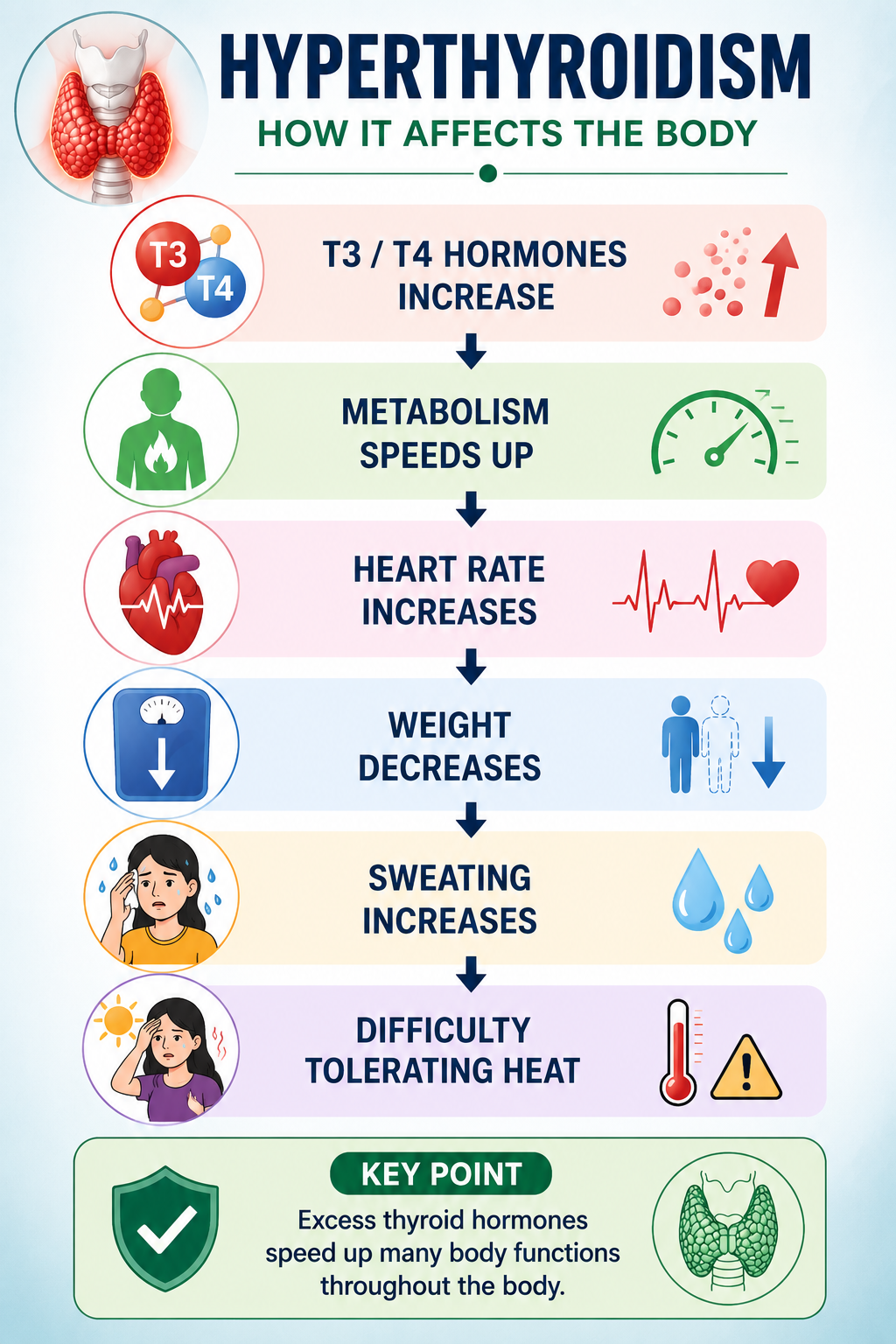
How Does Hyperthyroidism Affect the Body?
Excess thyroid hormones increase metabolic activity throughout the body. This explains why many people experience weight loss, increased sweating, palpitations and anxiety.
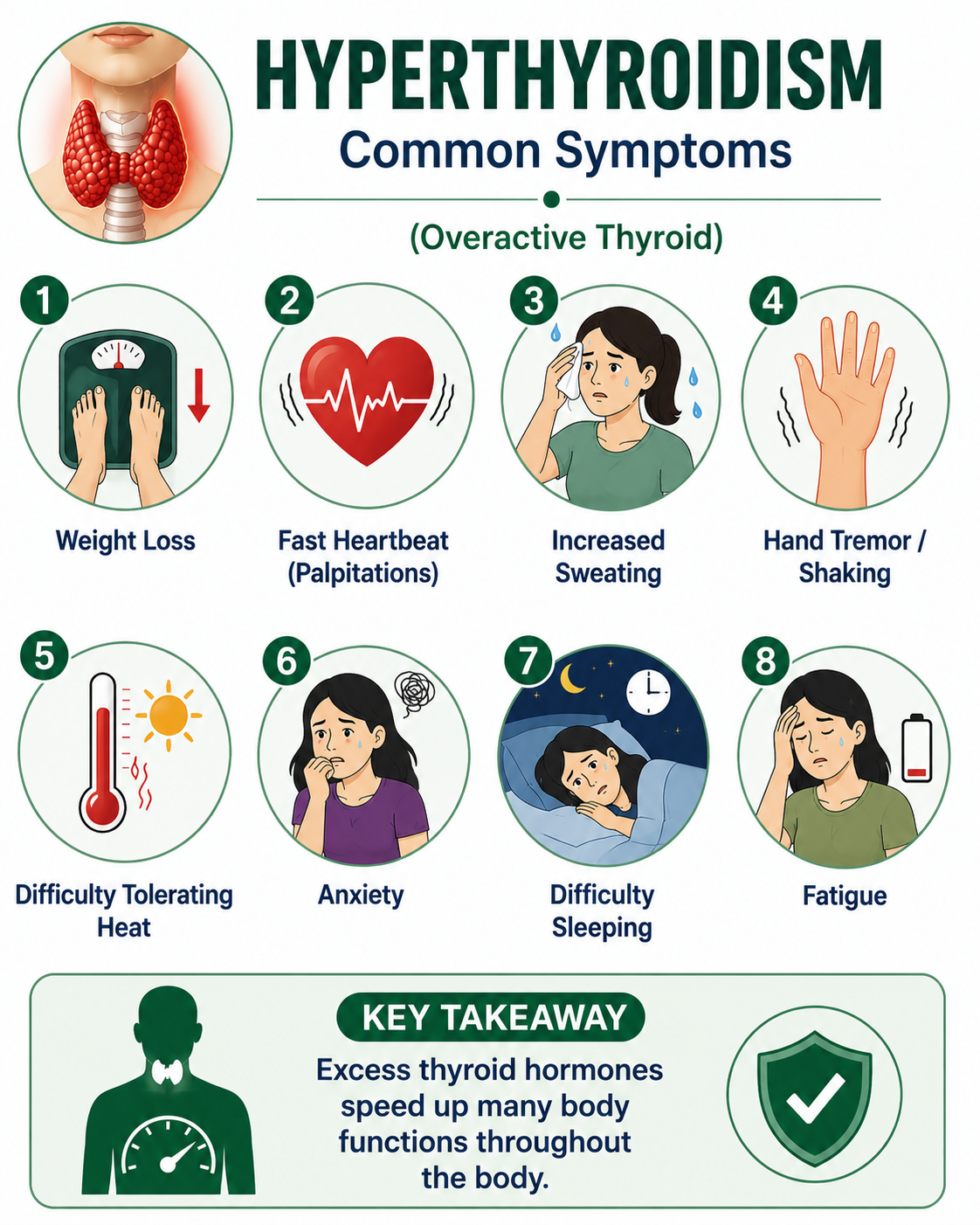
Common Symptoms of Hyperthyroidism
Symptoms of hyperthyroidism reflect the widespread effects of excess thyroid hormone on the body.
For a complete overview of thyroid symptoms — covering both overactive and underactive thyroid — read our Thyroid Symptoms Guide.
Can Hyperthyroidism Cause Neck Swelling?
Yes. Some causes of hyperthyroidism can enlarge the thyroid gland and produce a visible swelling at the front of the neck. This enlargement is called a goitre.
Neck symptoms associated with thyroid enlargement may include:
- Neck swelling visible at the front of the throat
- Pressure sensation in the neck
- Difficulty swallowing
- Voice changes or hoarseness
Eye Changes in Hyperthyroidism
Some people with hyperthyroidism develop changes in the appearance of the eyes.
Common findings include:
- A wide-eyed or staring appearance
- Eyelid retraction (upper eyelids appear higher than normal)
- Lid lag (the upper eyelid moves slowly when looking downward)
These changes occur because excess thyroid hormones increase sympathetic nervous system activity.
Importantly, these findings are different from Thyroid Eye Disease.
Hyperthyroidism Eye Signs vs Thyroid Eye Disease
Some eye changes associated with excess thyroid hormone, such as lid retraction or a staring appearance, are not the same as Thyroid Eye Disease (TED). TED is an autoimmune disorder involving the tissues around the eyes and may cause features such as proptosis, inflammation or double vision. It can persist even when thyroid hormone levels are controlled.
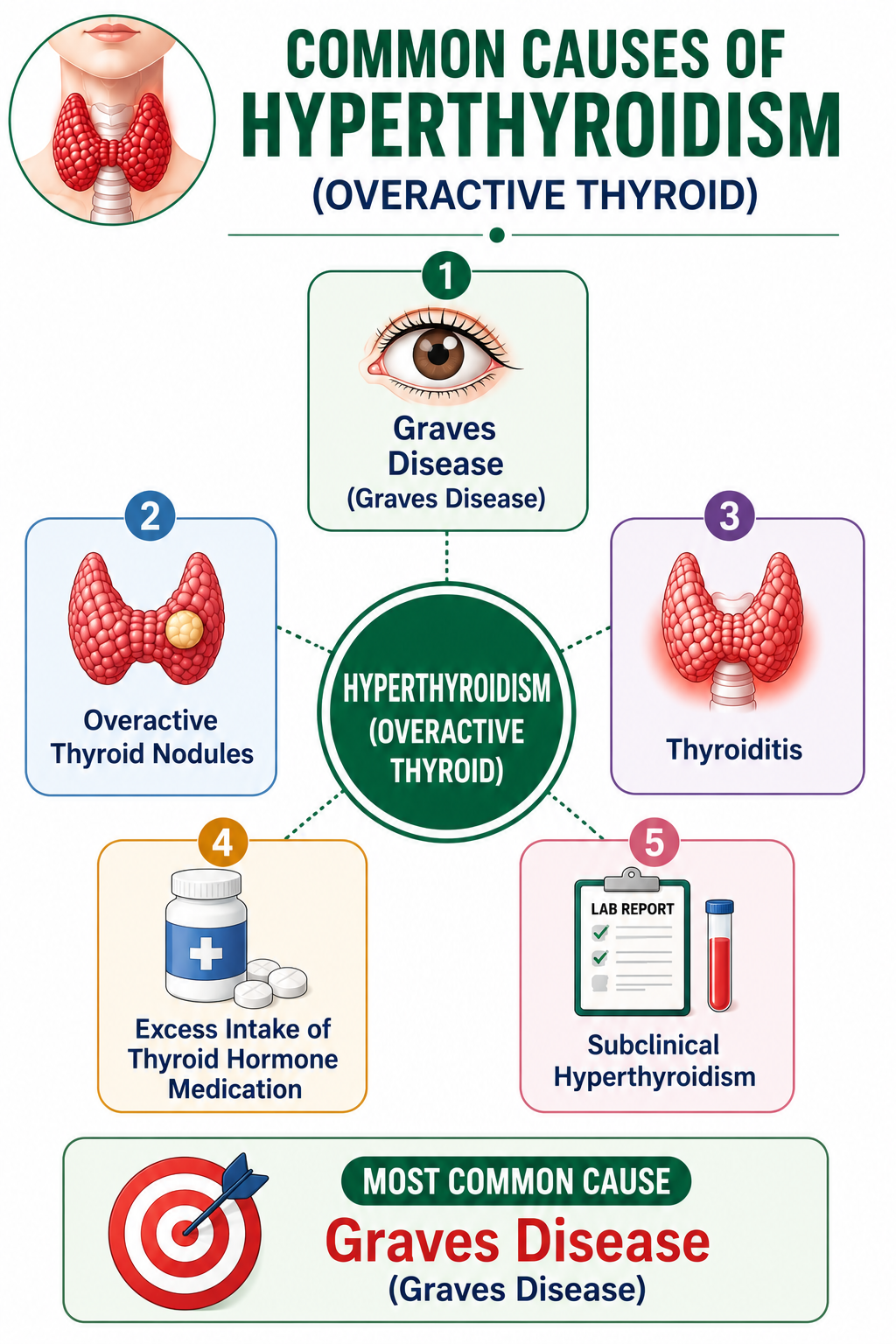
Common Causes of Hyperthyroidism
The most common causes of hyperthyroidism include Graves disease, overactive thyroid nodules and thyroiditis.
Graves Disease
The most common cause of hyperthyroidism.
Graves disease is an autoimmune condition that stimulates the thyroid gland to produce excess hormone. The immune system produces antibodies (called TSH receptor antibodies) that bind to and activate thyroid cells, causing the gland to produce excess T4 and T3 continuously.
Unlike other autoimmune thyroid conditions that damage the gland, Graves disease stimulates it — which is why it causes persistent hyperthyroidism and a suppressed TSH.
Overactive Thyroid Nodules
Some thyroid nodules produce thyroid hormones independently and may cause hyperthyroidism. These are sometimes called toxic thyroid nodules. They act autonomously — producing hormone regardless of what TSH is doing — which suppresses TSH production by the pituitary.
Thyroiditis
Inflammation of the thyroid gland may temporarily release stored thyroid hormones into the bloodstream. This can cause a transient episode of hyperthyroidism, which may be followed by a period of hypothyroidism as the gland recovers.
Hyperthyroidism and Eye Symptoms
Some patients with Graves disease develop eye symptoms. This is called Graves ophthalmopathy (or thyroid eye disease). Eye symptoms may appear before, during or after the thyroid condition is diagnosed.
- Bulging eyes (proptosis)
- Redness or irritation of the eyes
- Eye irritation or grittiness
- Double vision
- Eye pain or pressure
What Blood Tests Are Used?
Hyperthyroidism is diagnosed using thyroid blood tests. The pattern of results — not a single value alone — guides diagnosis.
| Test | Why It Is Used |
|---|---|
| TSH | Usually low or suppressed in hyperthyroidism — the key screening test |
| Free T4 | Often high in overt hyperthyroidism; may be normal in subclinical cases |
| Free T3 | May be elevated; particularly useful when Free T4 is borderline |
| Thyroid antibodies | Confirms Graves disease (TSH receptor antibodies); also thyroid peroxidase antibodies |
For more detail on each thyroid test, read our related guides:
Hyperthyroidism vs Subclinical Hyperthyroidism
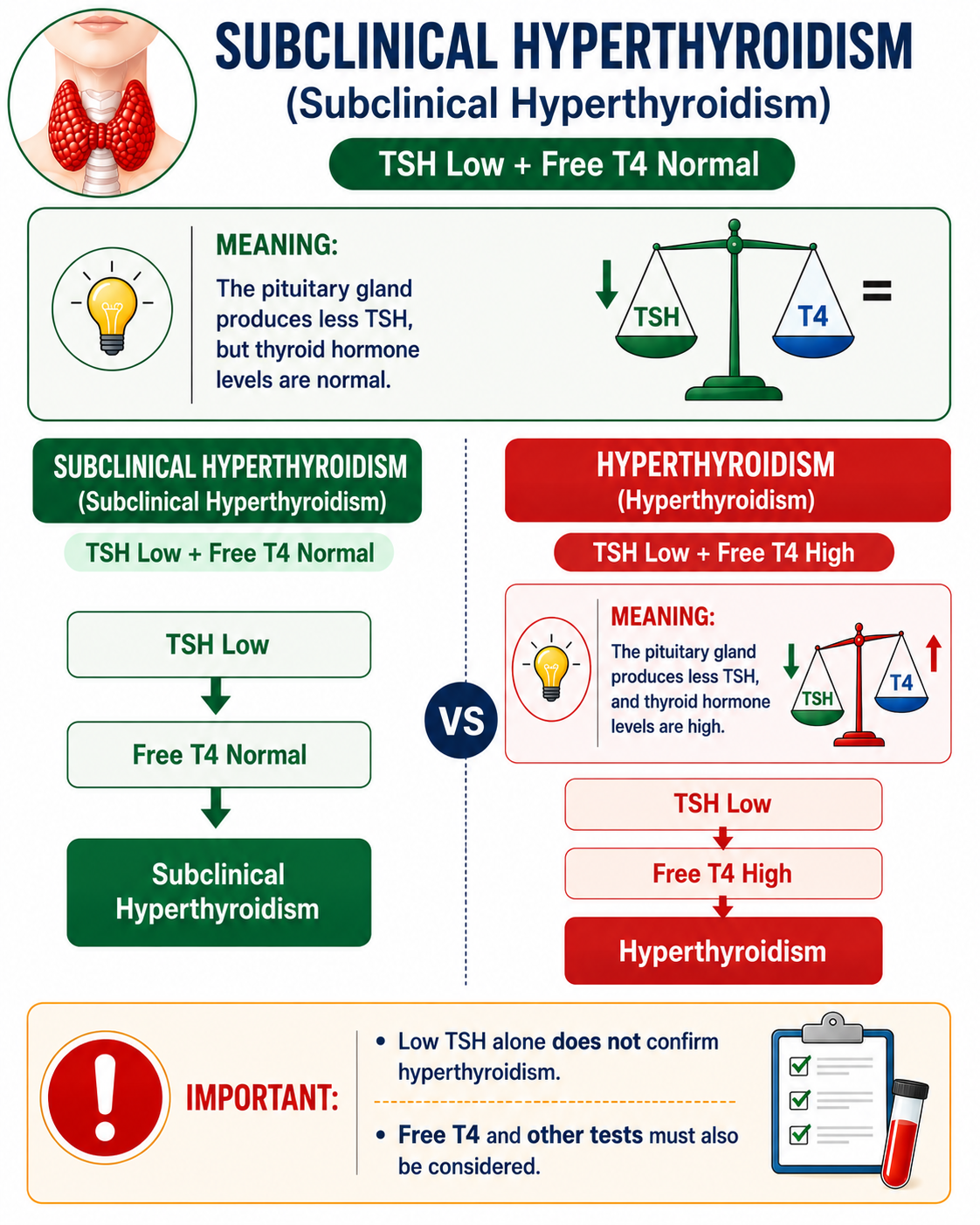
Not all low TSH results indicate overt hyperthyroidism. When TSH is low but Free T4 remains normal, this is called subclinical hyperthyroidism. Many patients with subclinical hyperthyroidism have no obvious symptoms.
| Feature | Hyperthyroidism | Subclinical Hyperthyroidism |
|---|---|---|
| TSH | Low | Low |
| Free T4 | High | Normal |
| Symptoms | Common | May be absent |
Hyperthyroidism During Pregnancy
Pregnancy requires special thyroid assessment because thyroid hormones affect both mother and baby.
Overt hyperthyroidism during pregnancy can increase the risk of miscarriage, preterm birth and problems with fetal growth. Treatment decisions are individualized and specialist review may be required. Antithyroid drug dosing during pregnancy also needs careful adjustment and close monitoring.
How Is Hyperthyroidism Treated?
Treatment depends on the cause, severity, age, pregnancy status and patient preference. Common approaches include:
- Antithyroid medications — drugs such as carbimazole or propylthiouracil reduce thyroid hormone production
- Radioactive iodine treatment — destroys overactive thyroid tissue; not suitable during pregnancy
- Surgery — removal of part or all of the thyroid gland (thyroidectomy); used in selected cases
What Is Thyroid Storm?
Thyroid storm is a rare but life-threatening complication of severe uncontrolled hyperthyroidism.
It occurs when thyroid hormone activity becomes extremely high, causing serious effects on the heart, nervous system and other organs.
- Very rapid heartbeat
- High fever
- Severe agitation or confusion
- Shortness of breath
- Collapse or reduced consciousness
When Should You See a Doctor?
Seek medical advice promptly if you have any of the following:
- Rapid weight loss without trying
- Persistent palpitations or irregular heartbeat
- Resting heart rate consistently above 100 beats per minute
- Neck swelling or a new thyroid lump
- Eye symptoms such as bulging, redness, pain or double vision
- Thyroid symptoms during pregnancy or when planning pregnancy
Related Thyroid Articles and Tools
This article is part of our thyroid education cluster. These related pages can help you understand the broader picture.
Key Takeaways
- Hyperthyroidism occurs when the thyroid gland produces too much thyroid hormone, speeding up body functions.
- Graves disease is the most common cause, especially in younger patients.
- A low TSH is the key laboratory finding — usually accompanied by a high Free T4 in overt hyperthyroidism.
- When TSH is low but Free T4 is normal, this is called subclinical hyperthyroidism and may have few symptoms.
- Treatment depends on cause, age, symptoms and pregnancy status — always discuss options with your doctor.