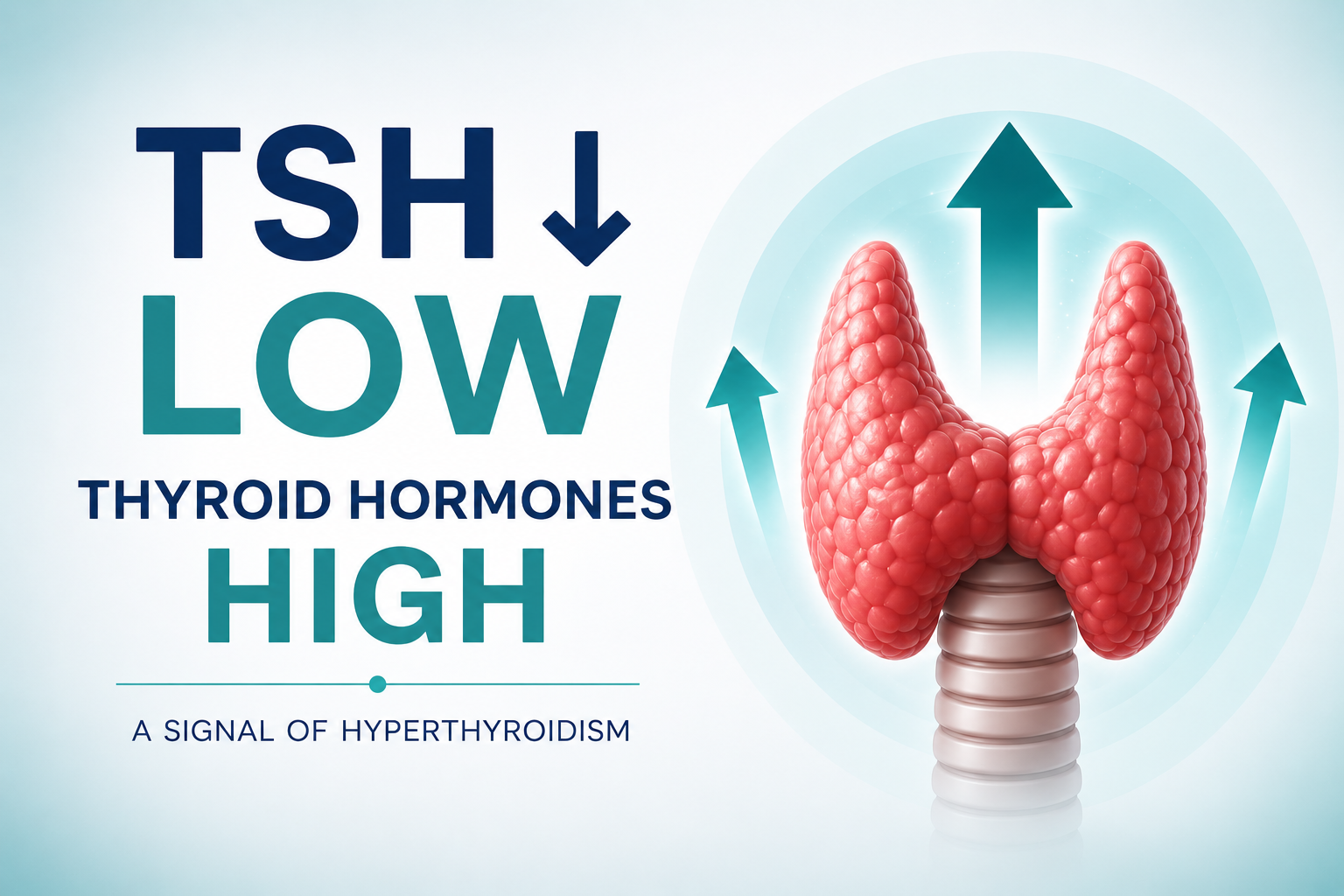
Low TSH usually suggests that thyroid hormone levels are higher than expected. However, TSH should never be interpreted alone — Free T4, Free T3 and clinical context are essential.
| Result | Possible Meaning |
|---|---|
| Low TSH + normal Free T4 | Subclinical hyperthyroidism |
| Low TSH + high Free T4 | Hyperthyroidism |
| Low TSH during pregnancy | Needs medical review |
| Temporary low TSH | Repeat testing may be needed |
If you have TSH, Free T4 and Free T3 results together, use our Thyroid Report Reader to understand the pattern more clearly.
What is Considered a Low TSH?
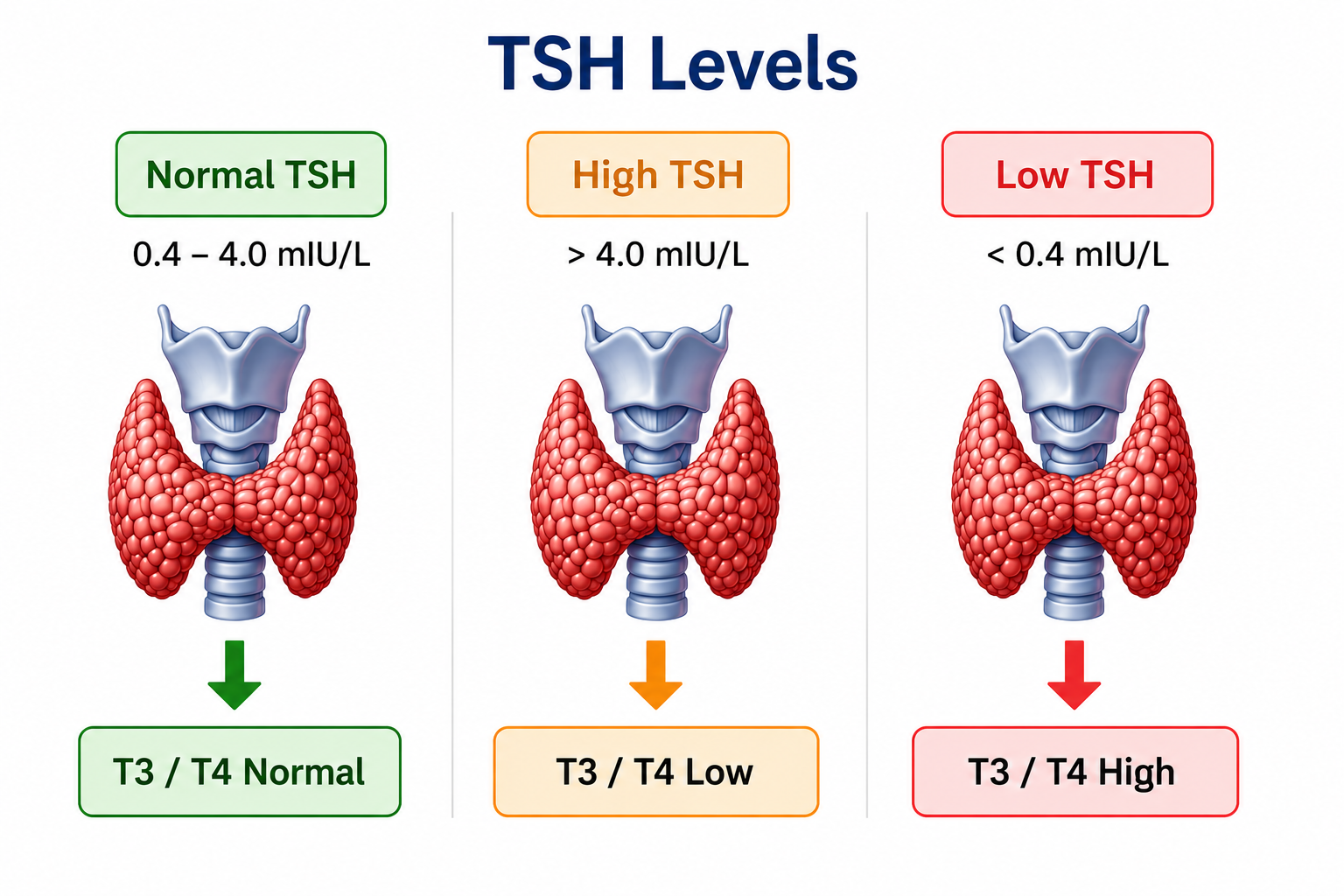
A TSH result is considered low when it falls below the lower limit of the laboratory reference range.
In many laboratories the usual adult reference range is approximately 0.4 to 4.0 mIU/L, but ranges vary between laboratories and patient populations.
A low TSH result does not automatically mean treatment is needed. Doctors look at how low the TSH is, whether Free T4 or Free T3 are elevated, and whether the patient has symptoms.
How Low Is Your TSH?
The degree of TSH suppression provides a useful guide, but interpretation always depends on Free T4, Free T3, symptoms, age, pregnancy status, medicines and clinical history.
| TSH Level | General Interpretation | Usual Meaning |
|---|---|---|
| 0.1–0.4 mIU/L | Mild suppression | Often subclinical hyperthyroidism if Free T4 is normal |
| 0.01–0.1 mIU/L | Moderate suppression | Free T4 and Free T3 assessment essential |
| <0.01 mIU/L | Marked suppression | Significant thyroid overactivity is more likely |
Normal vs Low vs High TSH
TSH is easiest to understand when low, normal and high results are compared together.
| TSH Result | Common Interpretation | Related Page |
|---|---|---|
| Low TSH | Thyroid hormone levels may be high | This article |
| Normal TSH | Usually normal thyroid regulation | TSH Test Explained |
| High TSH | Thyroid hormone levels may be low | High TSH Explained |
Why Does TSH Fall?
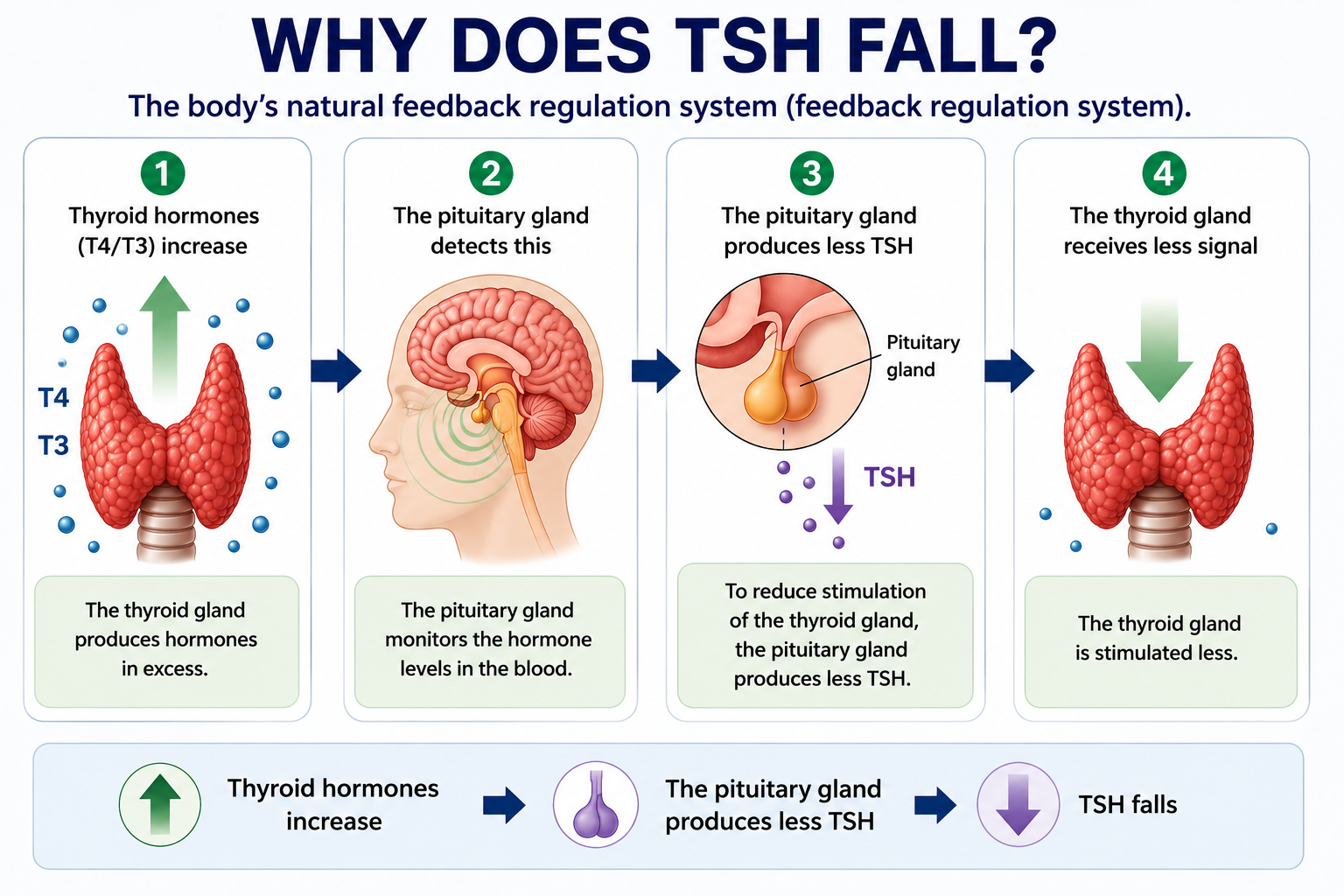
TSH is produced by the pituitary gland in the brain.
When thyroid hormone levels become higher than the body requires, the pituitary gland reduces TSH production. This is the body's natural feedback system — it stops over-stimulating the thyroid once enough hormone is present.
Common Causes of Low TSH
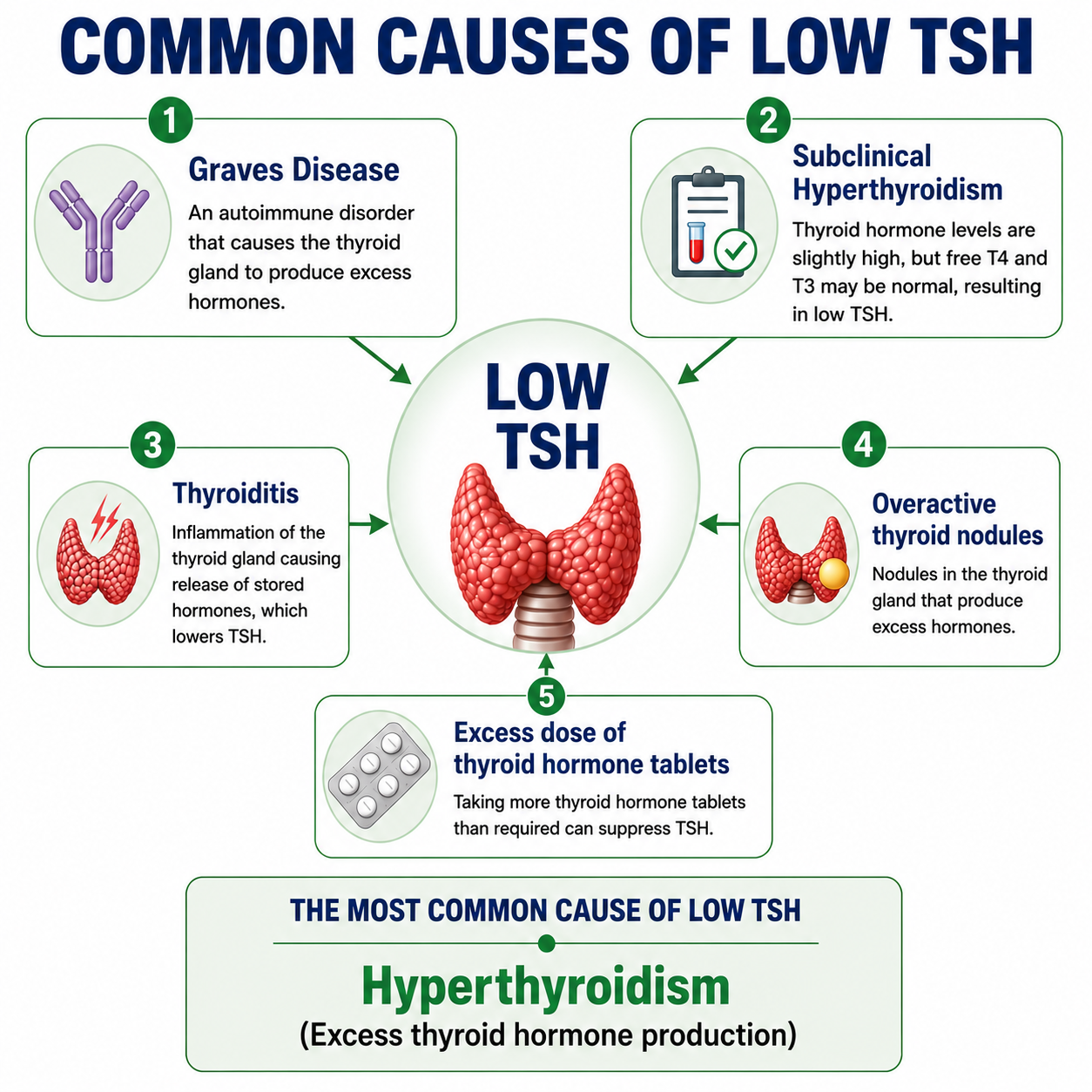
The most common causes of a low TSH include:
- Hyperthyroidism — the thyroid gland is overactive and producing too much thyroid hormone
- Graves disease — autoimmune stimulation of the thyroid gland (most common cause of persistent low TSH)
- Thyroiditis — inflammation causing temporary release of stored thyroid hormone
- Excess thyroid medication — over-replacement with levothyroxine or other thyroid medicines
- Toxic thyroid nodules — overactive nodules producing excess hormone independently
- Subclinical hyperthyroidism — low TSH with normal Free T4 and Free T3
In most cases, a persistently low TSH reflects the thyroid gland producing more hormone than the body needs, prompting the pituitary to reduce TSH output.
Graves Disease
Graves disease is an autoimmune condition in which the immune system produces antibodies that directly stimulate the thyroid gland to produce excessive thyroid hormone.
Unlike other autoimmune thyroid diseases that damage the gland, Graves disease stimulates it — this is why it causes hyperthyroidism and a suppressed TSH rather than hypothyroidism.
It is one of the most common causes of persistent low TSH, particularly in younger patients.
Can Low TSH Cause Neck Swelling?
Some causes of low TSH, particularly Graves disease and overactive thyroid nodules, can cause enlargement of the thyroid gland. This is called a goitre.
A goitre may be noticed as a swelling at the front of the neck.
- Visible swelling at the front of the neck
- Feeling of pressure or tightness in the neck
- Difficulty swallowing
- Voice change or hoarseness
- Rapidly growing neck lump
Low TSH with Normal Free T4
Sometimes TSH is low while Free T4 remains within the normal range. This pattern is called subclinical hyperthyroidism.
It means the pituitary is already suppressing TSH, but the thyroid has not yet produced enough excess hormone to push Free T4 above the normal range.
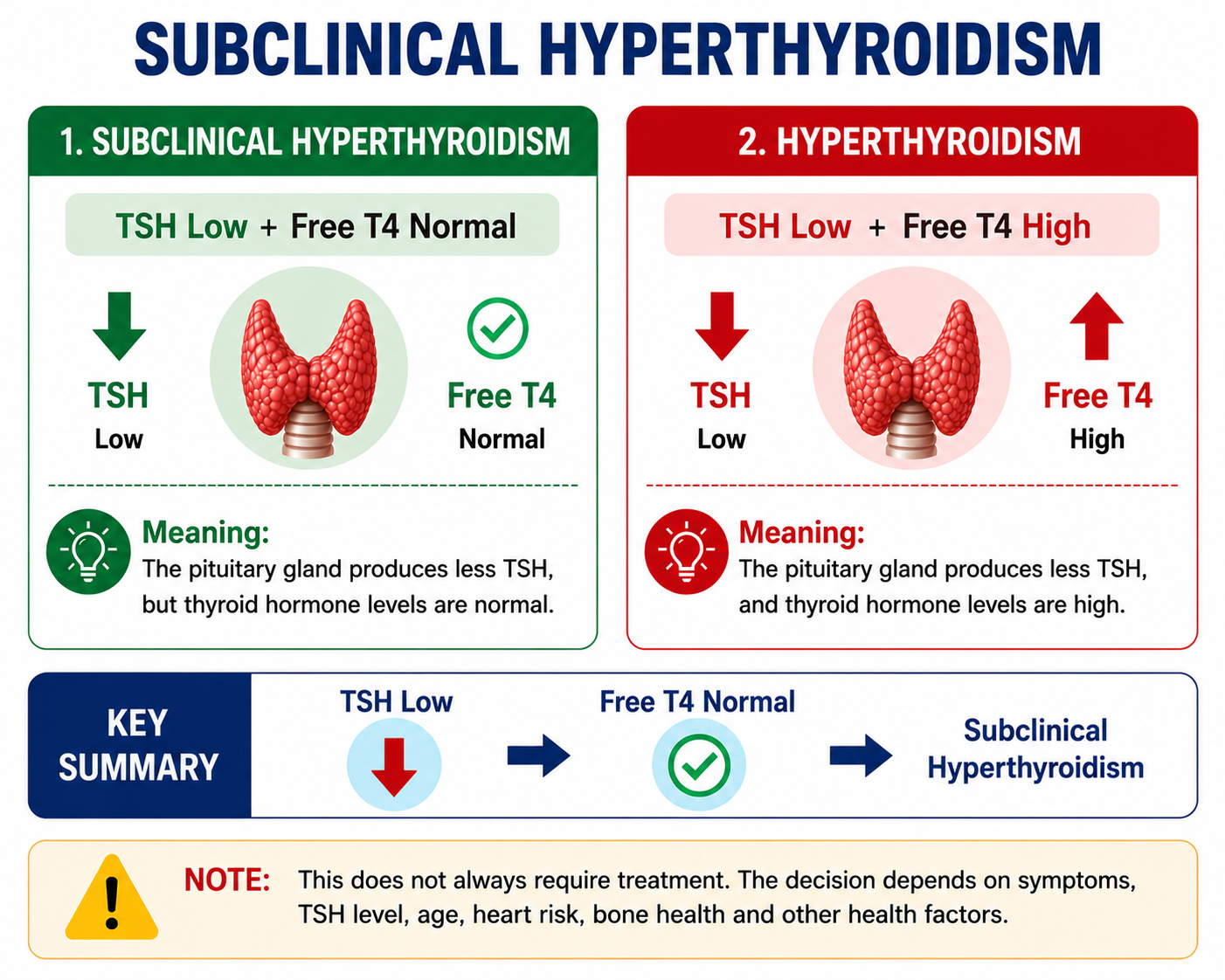
| TSH | Free T4 | Meaning |
|---|---|---|
| Low | Normal | Subclinical hyperthyroidism |
| Low | High | Overt hyperthyroidism |
If your report includes TSH, Free T4 and Free T3, our Thyroid Report Reader can help you understand whether the pattern fits subclinical or overt hyperthyroidism.
Symptoms of Low TSH
Low TSH itself does not directly cause symptoms. Symptoms occur when thyroid hormone levels are genuinely elevated.
Possible symptoms associated with a low TSH (overactive thyroid) include:
Eye Symptoms in Graves Disease
Some patients with Graves disease develop eye symptoms. These may occur together with thyroid symptoms or sometimes separately.
- Eye irritation
- Redness
- Bulging eyes
- Double vision
- Painful or uncomfortable eyes
Many people first notice symptoms such as weight loss, palpitations, heat intolerance, anxiety, tremor or excessive sweating before a thyroid blood test is performed.
For a complete overview of both hypothyroidism and hyperthyroidism symptoms, read our Thyroid Symptoms Guide.
Does Every Low TSH Need Treatment?
No. Treatment depends on the full clinical picture.
Doctors consider several factors before deciding whether treatment is needed:
- How low the TSH is
- Whether Free T4 or Free T3 are elevated
- Symptoms present
- Age of the patient
- Pregnancy or planning pregnancy
- Heart disease risk (atrial fibrillation)
- Bone health (osteoporosis risk)
- Whether the cause is excess thyroid medication
Low TSH in Pregnancy
Pregnancy can affect thyroid test interpretation. A mildly low TSH in the first trimester can be physiologically normal due to stimulation by the pregnancy hormone hCG. However, a markedly low TSH, or any low TSH combined with symptoms, needs prompt assessment.
Overt hyperthyroidism during pregnancy can increase the risk of complications including miscarriage, preterm birth and problems with fetal growth. Early identification and management are important.
If you are pregnant or planning pregnancy and have a low TSH, discuss this with your doctor without delay.
Can Low TSH Be Temporary?
Yes. A mildly low TSH can sometimes be temporary. Possible reasons include:
- Recent acute illness
- Thyroiditis — inflammation causing temporary hormone release
- Recent change in thyroid medication dose
- Laboratory variation between tests
- Recovery from a period of illness
When a mildly low TSH is unexpected or does not fit the clinical picture, doctors usually recommend repeating the test with Free T4 and Free T3 before making any management decisions.
Can TSH Be Low Without Hyperthyroidism?
Yes. A low TSH does not always mean true hyperthyroidism. Doctors interpret TSH together with Free T4, Free T3, symptoms and clinical context.
Low TSH may occur without overt hyperthyroidism in situations such as:
- Early pregnancy, especially in the first trimester
- Recent illness or recovery from illness
- Thyroiditis recovery phase
- Excess thyroid medication dose
- Laboratory variation or unexpected one-off result
- Subclinical hyperthyroidism, where Free T4 and Free T3 may still be normal
When Should TSH Be Repeated?
Repeat testing is recommended when the result is borderline, unexpected, or does not match the clinical picture. Doctors usually repeat TSH with Free T4 and Free T3 after several weeks depending on the situation.
| Situation | Usual Next Step |
|---|---|
| Mild low TSH, normal Free T4 | Repeat TSH, Free T4 and Free T3 in 3–6 months |
| Low TSH with symptoms | Medical review with Free T4 and Free T3 |
| Low TSH in pregnancy | Prompt medical review |
| On thyroid medication | Dose review and repeat test in 6–8 weeks |
| Unexpected result | Repeat and review current medicines |
When Should You See a Doctor?
You should seek medical advice if a low TSH is found alongside any of the following:
- Rapid or irregular heartbeat
- Chest pain or palpitations
- Pregnancy or planning pregnancy
- Significant unexplained weight loss
- Severe symptoms affecting daily life
- Older age (risk of atrial fibrillation and bone loss)
- Markedly suppressed TSH (below 0.01 mIU/L)
- High Free T4 or Free T3 alongside low TSH
- Neck swelling or goitre
- Eye changes (bulging eyes, redness, double vision)
Related Thyroid Articles and Tools
This article is part of our thyroid education cluster. These related pages can help you understand the broader picture.
Key Takeaways
- Low TSH usually suggests thyroid hormone levels are higher than expected.
- Graves disease is a common cause of persistent low TSH.
- Low TSH with normal Free T4 is called subclinical hyperthyroidism.
- Not every low TSH result requires treatment.
- Pregnancy, symptoms, age, heart risk and bone health influence management decisions.