High TSH usually suggests an underactive thyroid. But doctors do not interpret TSH alone. Free T4, symptoms and clinical context are all important.
| Result | Possible Meaning |
|---|---|
| Mildly high TSH + normal Free T4 | Subclinical hypothyroidism |
| High TSH + low Free T4 | Overt hypothyroidism |
| High TSH during pregnancy | Needs medical review |
| Temporary mild high TSH | Repeat testing may be needed |
What is Considered a High TSH?
A TSH result is considered high when it is above the upper limit of the laboratory reference range.
In many laboratories, the usual adult reference range is approximately 0.4 to 4.0 mIU/L, but this can vary between laboratories and patient populations.
A TSH above the reference range does not automatically mean treatment is needed. Doctors look at how high the TSH is, whether Free T4 is normal or low, and whether the patient has symptoms.
How High Is Your TSH?
People often want to know whether their TSH is mildly high or very high. The table below gives a simple guide, but interpretation always depends on Free T4, symptoms, age, pregnancy status, medicines and clinical history.
| TSH Level | General Interpretation | Usual Meaning |
|---|---|---|
| 4–10 mIU/L | Mild elevation | Often subclinical hypothyroidism if Free T4 is normal |
| 10–20 mIU/L | Moderate elevation | Hypothyroidism is more likely; Free T4 and symptoms matter |
| >20 mIU/L | Marked elevation | Significant thyroid underactivity is more likely |
Why Does TSH Rise?
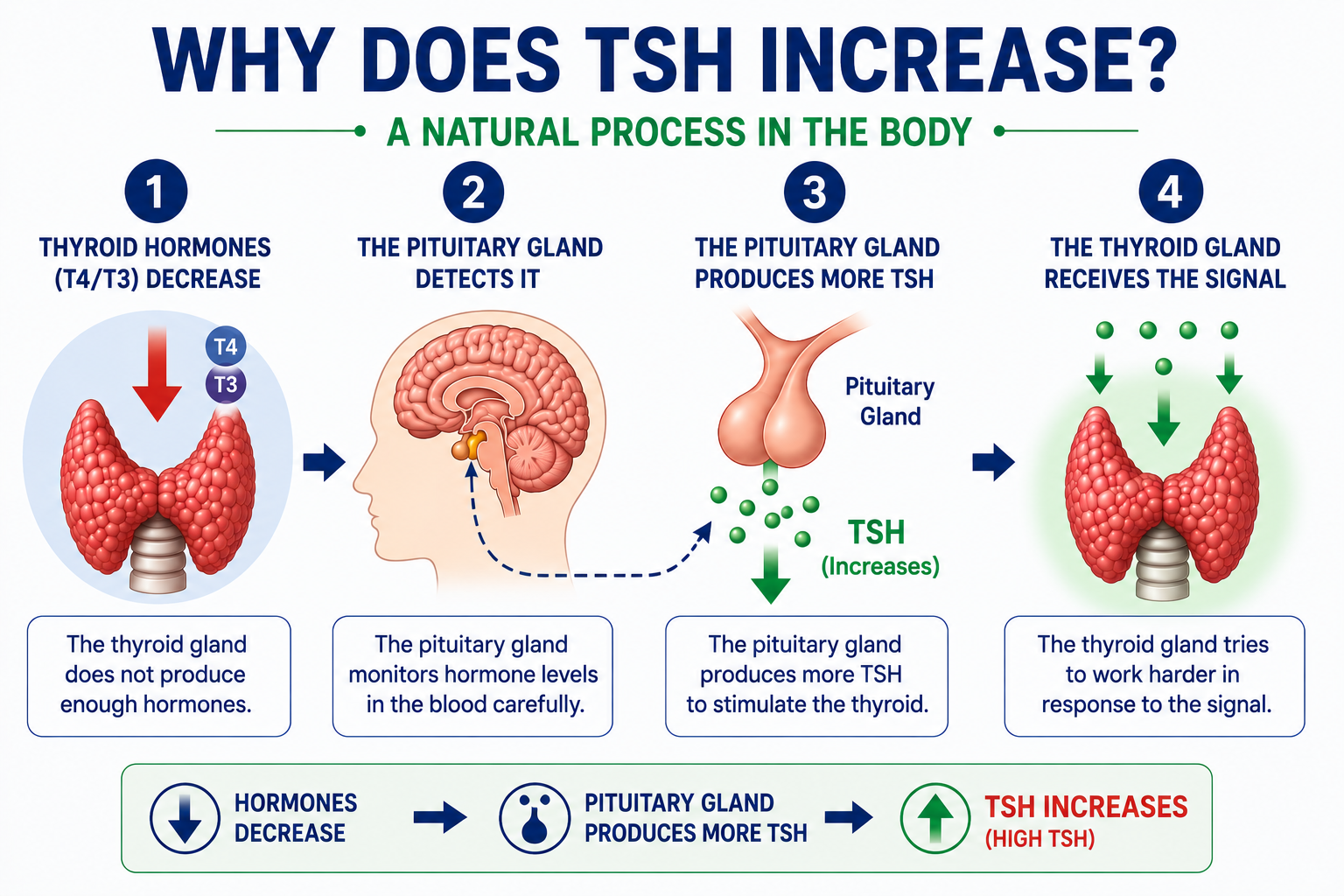
TSH is produced by the pituitary gland in the brain.
When the thyroid gland does not produce enough T4 and T3, the pituitary responds by producing more TSH. This is the body's attempt to push the thyroid gland to work harder. That is why TSH usually rises when thyroid hormone levels are low.
Common Causes of High TSH
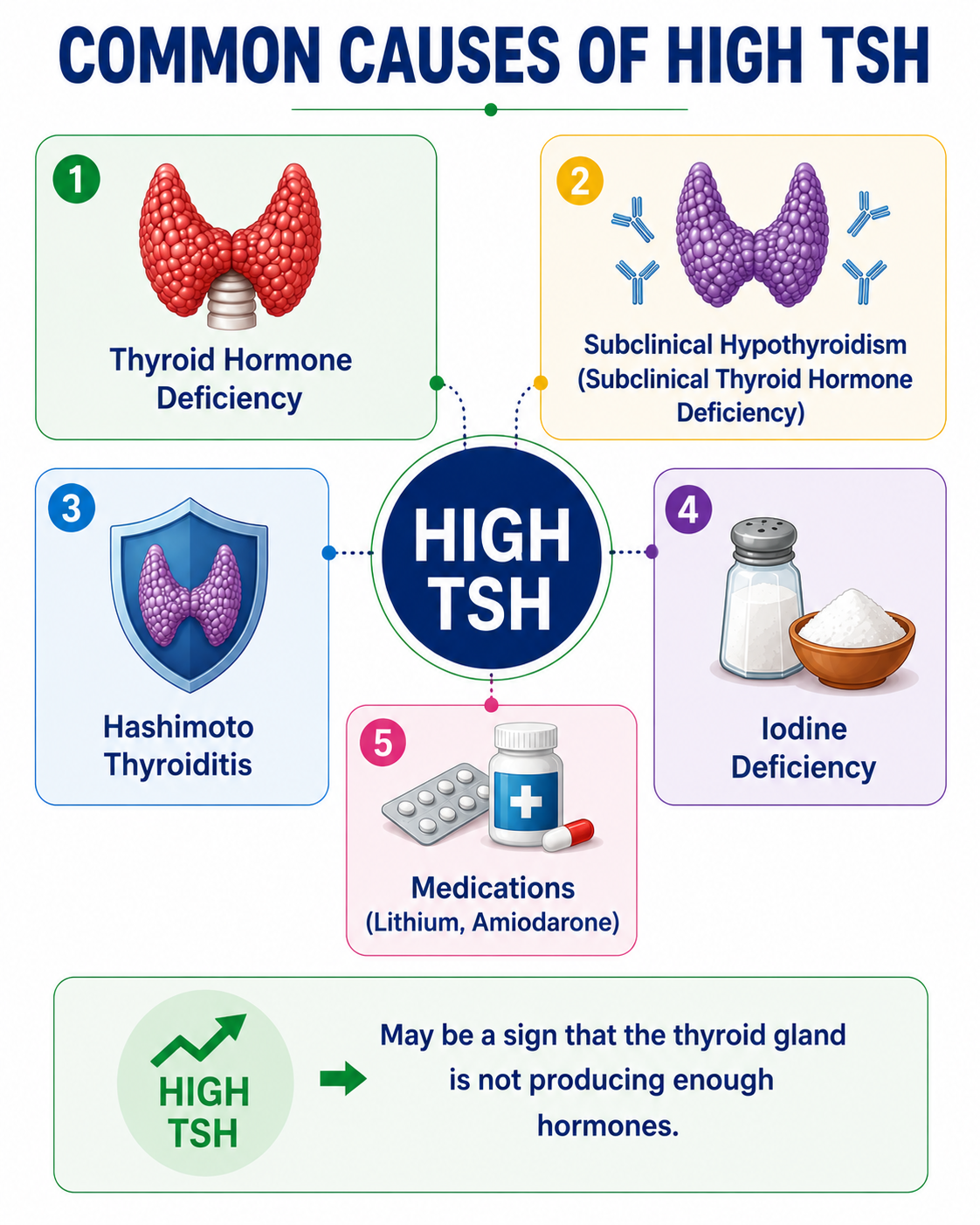
The most common causes of high TSH include:
- Primary hypothyroidism — the thyroid gland itself is underactive (most common cause)
- Hashimoto's thyroiditis — autoimmune destruction of thyroid tissue
- Previous thyroid surgery — partial or total removal of the thyroid gland
- Radioactive iodine treatment — used for hyperthyroidism or thyroid cancer
- Iodine deficiency
- Certain medicines — including lithium and amiodarone
- Recovery phase after thyroiditis
- Subclinical hypothyroidism
Primary hypothyroidism means the problem lies in the thyroid gland itself. This is the most common reason for a high TSH.
Hashimoto Thyroiditis
Hashimoto thyroiditis is an autoimmune condition in which the immune system gradually damages the thyroid gland.
It is one of the most common causes of persistent high TSH in many countries. Over time, thyroid hormone production may decrease, causing the pituitary gland to release more TSH.
Doctors may request thyroid antibody tests, such as anti-TPO antibodies, when Hashimoto thyroiditis is suspected.
High TSH with Normal Free T4
Sometimes TSH is high but Free T4 remains within the normal range. This pattern is called subclinical hypothyroidism.
It means the pituitary is already working harder, but the thyroid is still producing enough hormone to keep Free T4 normal.
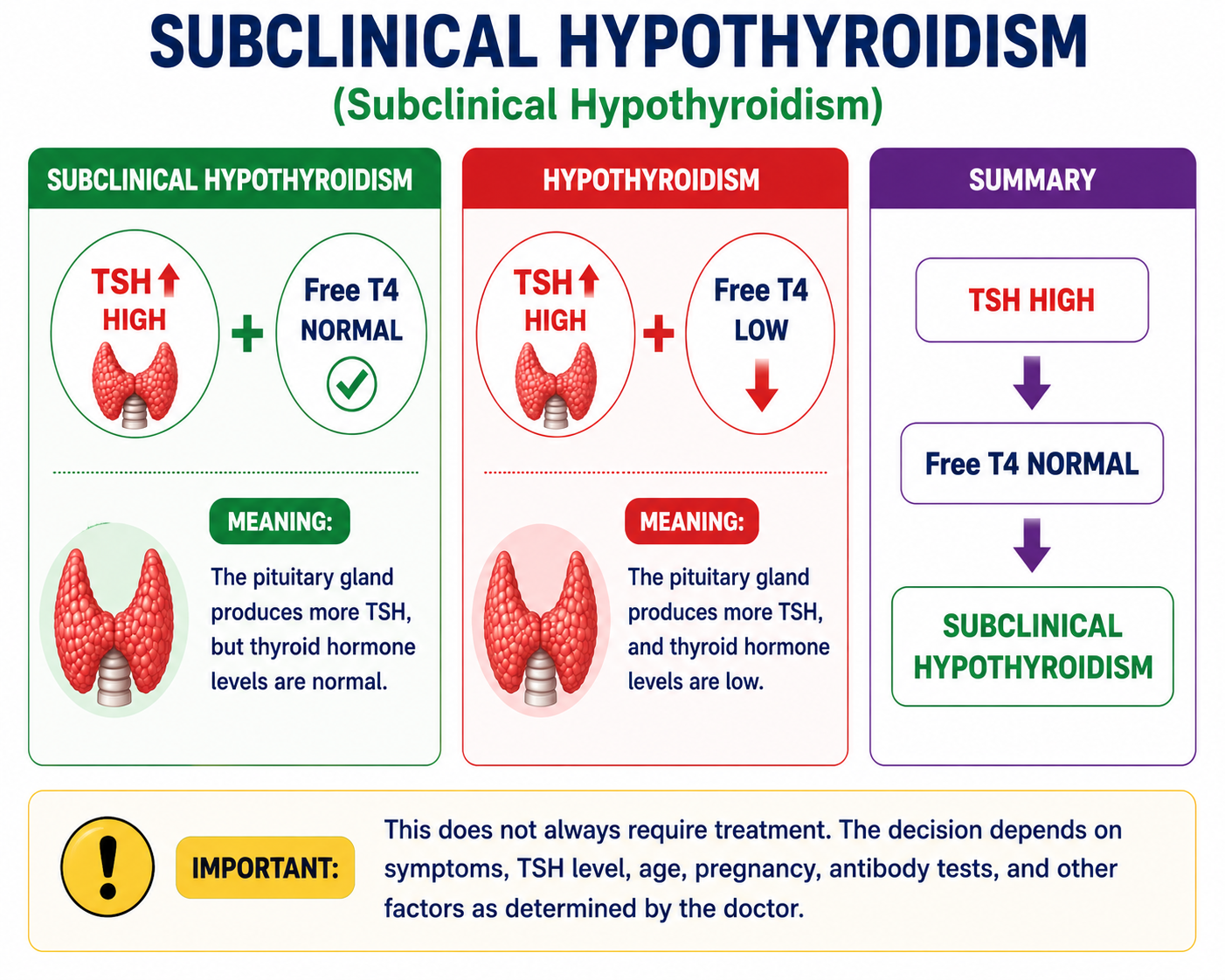
| TSH | Free T4 | Meaning |
|---|---|---|
| High | Normal | Subclinical hypothyroidism |
| High | Low | Overt hypothyroidism |
Symptoms of High TSH
High TSH itself does not directly cause symptoms. Symptoms occur when thyroid hormone levels are low.
Possible symptoms associated with a high TSH (underactive thyroid) include:
For a full symptom guide, read our Thyroid Symptoms article.
Does Every High TSH Need Treatment?
No. Treatment depends on the full clinical picture.
Doctors consider several factors before deciding whether thyroid medication is needed:
- How high the TSH is
- Whether Free T4 is low
- Symptoms present
- Age of the patient
- Pregnancy or planning pregnancy
- Thyroid antibody result
- Heart disease risk
- Previous thyroid disease history
High TSH in Pregnancy
High TSH during pregnancy needs special attention because thyroid hormones are important for fetal brain and nervous system development.
The acceptable TSH range in pregnancy is usually lower than in non-pregnant adults. Many guidelines recommend a TSH below 2.5 mIU/L in the first trimester, though this varies by individual laboratory and guideline.
If you are pregnant, planning pregnancy, or undergoing fertility treatment, a high TSH should be discussed with a doctor without delay.
Can High TSH Be Temporary?
Yes. A mildly high TSH can sometimes be temporary. Possible reasons include:
- Recent illness or acute infection
- Recovery from thyroiditis
- Laboratory variation between tests
- Missed thyroid medicine doses
- Medicine interactions
- Testing during unstable health conditions
When a borderline or mildly high TSH result is unexpected or does not fit the clinical picture, doctors may recommend repeating the test before any management decisions are made.
When Should TSH Be Repeated?
Repeat testing may be needed when the result is borderline, unexpected, or does not match the symptoms. Doctors may repeat TSH with Free T4 after several weeks or months depending on the situation.
| Situation | Usual Next Step |
|---|---|
| Mild high TSH, normal Free T4 | Repeat TSH and Free T4 in 3–6 months |
| High TSH with symptoms | Medical review |
| High TSH in pregnancy | Prompt medical review |
| On levothyroxine | Check dose and repeat test in 6–8 weeks |
| Unexpected result | Repeat and review current medicines |
When Should You See a Doctor?
You should seek medical advice if high TSH is found alongside any of the following:
- Pregnancy or planning pregnancy
- Severe fatigue significantly affecting daily life
- Marked unexplained weight gain
- Slow heart rate (below 60 beats per minute)
- Large neck swelling or goitre
- Difficulty swallowing or breathing
- Very high TSH (above 10 mIU/L)
- Low Free T4 alongside high TSH
- Children or adolescents with high TSH
Related Thyroid Articles and Tools
This article is part of our thyroid education cluster. These related pages can help you understand the broader picture.