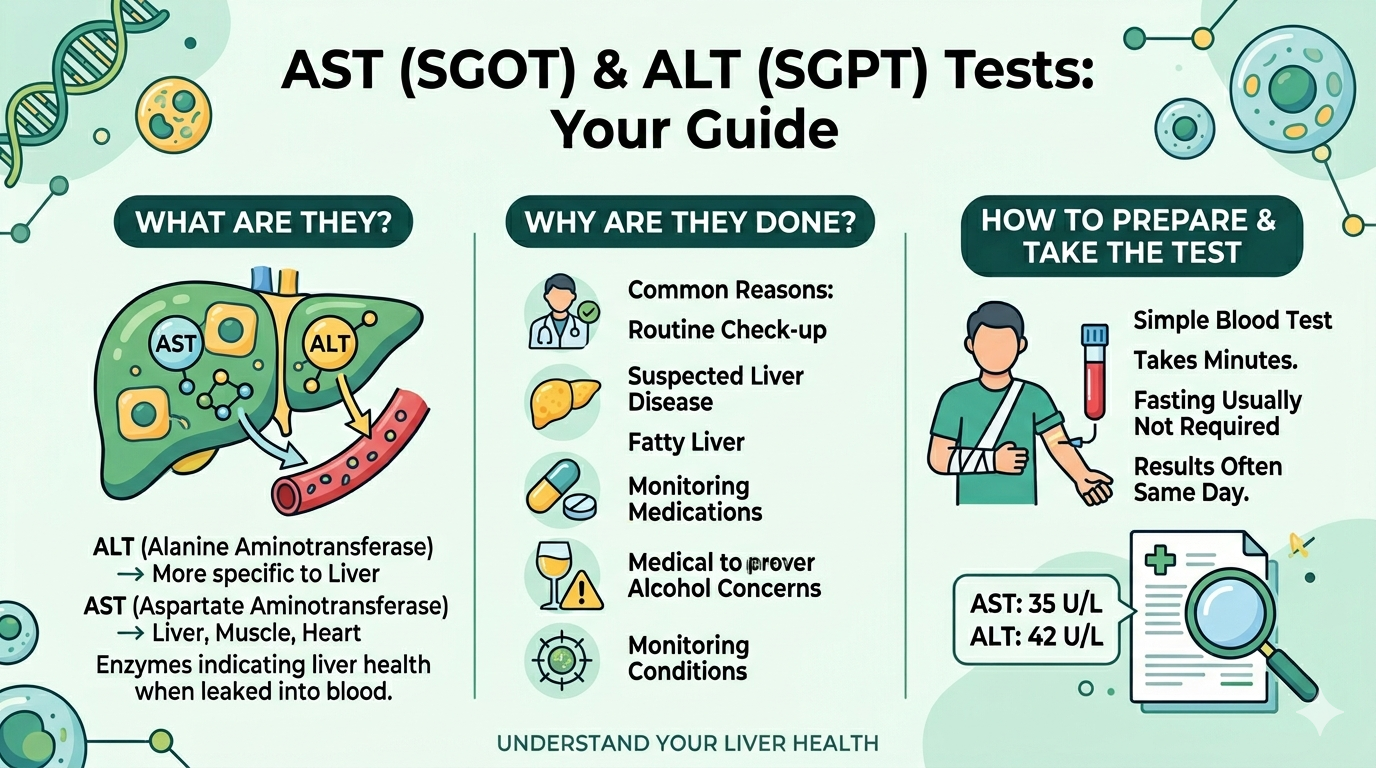
AST and ALT are common liver blood tests
AST and ALT are among the most frequently ordered liver blood tests. They are often included in a liver profile, sometimes called a liver function test or LFT, together with bilirubin, ALP, GGT, albumin and other measurements.
These tests help doctors look for possible liver cell injury. AST and ALT are enzymes found inside cells. When liver cells are irritated or damaged, these enzymes may leak into the blood and appear as higher values on a report.
AST and ALT do not diagnose a disease by themselves. A result becomes meaningful only when it is interpreted with symptoms, medical history, examination findings, other blood tests and, when needed, ultrasound or further investigations.
What are AST and ALT?
AST and ALT are enzymes measured in a blood sample. Older reports may use the names SGOT and SGPT, which refer to the same tests.
| Modern Name | Older Name | Where it is found |
|---|---|---|
| AST | SGOT | Liver, muscle, and heart cells |
| ALT | SGPT | More specific to liver cells |
AST is found in the liver but also in muscles and the heart. ALT is more liver-specific, so doctors often pay close attention to ALT when assessing liver cell irritation.
Why are AST and ALT tests done?
Doctors request AST and ALT when they want to assess whether liver cells may be irritated or injured. They are commonly ordered as part of a broader liver profile.
Fatty liver assessment
AST and ALT may be checked when fatty liver is suspected, especially in people with overweight, diabetes, high triglycerides or abnormal ultrasound findings.
Jaundice evaluation
When the eyes or skin look yellow, AST and ALT are often checked with bilirubin, ALP and GGT to understand the pattern.
Viral hepatitis assessment
AST and ALT can rise in viral hepatitis. Doctors may combine enzyme testing with hepatitis screening when clinically indicated.
Medication monitoring
Some medicines, supplements and herbal products can affect the liver. AST and ALT may be monitored before or during treatment.
Alcohol-related liver disease
AST and ALT can help assess alcohol-related liver injury, but they must be interpreted with history and other tests such as GGT.
Routine health screening
Many health checkups include AST and ALT because mild liver enzyme abnormalities are common and may be found before symptoms develop.
What other tests are usually ordered together?
AST and ALT are often ordered with other liver profile tests because each test answers a different question. This reduces guesswork and helps doctors identify the pattern.
| Test | Purpose |
|---|---|
| Bilirubin | Jaundice and bilirubin processing |
| ALP | Bile ducts and cholestatic patterns |
| GGT | Liver and biliary system support test |
| Albumin | Liver synthetic function and nutrition context |
| Globulin | Immune proteins and inflammation context |
| PT/INR | Liver synthetic function and clotting |
Do I need to fast?
Fasting is usually not required for AST and ALT alone. You can usually drink plain water before the blood test unless your laboratory gives different instructions.
How is the test performed?
A small blood sample is taken from a vein, usually from the arm.
The laboratory measures AST and ALT enzyme activity in the blood sample.
The values are reported in units per liter, usually written as U/L.
How long do results take?
AST and ALT results are commonly available on the same day or the next day. Timing depends on the laboratory, hospital workflow, sample collection time and whether the test is urgent or routine.
How are AST and ALT reported?
AST and ALT are usually shown with the test name, older name in brackets, result, unit and reference range.
A value slightly above the reference range does not automatically mean serious disease. Doctors interpret the level, pattern and reason for testing.
What is the normal range?
Reference ranges vary slightly between laboratories. Always compare your result with the reference range printed on your own report.
| Test | Approximate common reference |
|---|---|
| AST (SGOT) | Usually less than 40 U/L |
| ALT (SGPT) | Usually less than 40 U/L |
Do normal results always mean a healthy liver?
No. Normal AST and ALT results are reassuring, but they do not always prove that the liver is completely healthy.
Fatty liver, early liver disease and even fibrosis may sometimes be present despite normal liver enzymes. This is why doctors may also consider ultrasound, risk factors, symptoms and other blood tests.
Do AST and ALT diagnose disease by themselves?
No. AST and ALT alone do not give a final diagnosis. They can indicate possible liver injury or cell damage, but the numbers need to be interpreted with history, symptoms, physical examination, medication and alcohol history, ultrasound findings and other blood tests.
What should I read next?
Read: High AST & ALT (SGOT/SGPT): Causes, Levels and Next Steps
Frequently asked questions about AST and ALT tests
AST and ALT are test clues, not final diagnoses
AST (SGOT) and ALT (SGPT) are simple blood tests that help assess possible liver cell injury. They are easy to perform, widely used and commonly included in liver profiles.
If the result is abnormal, the next step is interpretation: level, trend, symptoms and other tests.