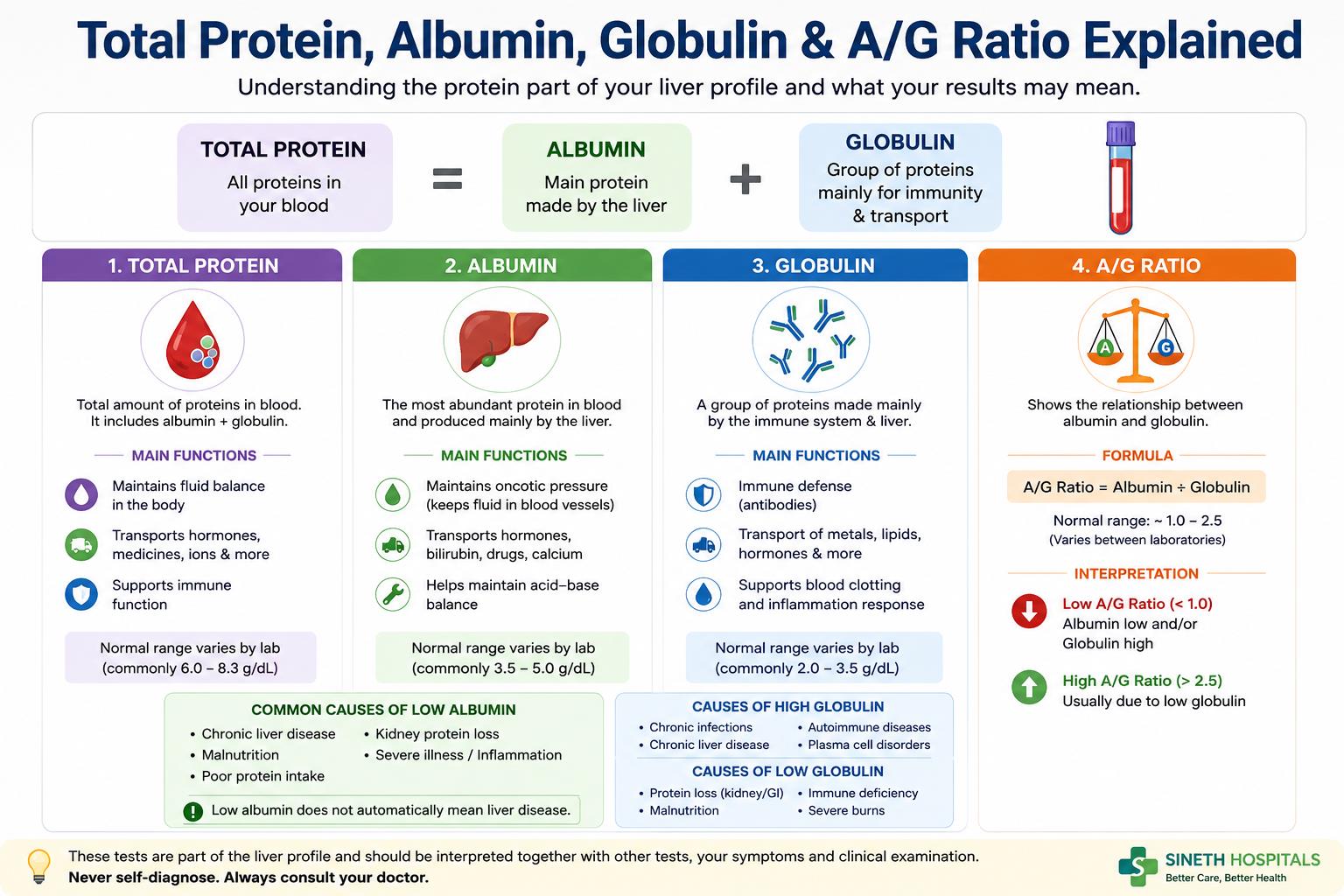
These tests describe the protein part of your liver profile
Total protein, albumin, globulin and the albumin/globulin ratio are protein-related blood results often included in a liver profile. They help doctors understand liver protein production, nutrition status, inflammation, immune activity and possible protein loss.
These results should not be interpreted as isolated numbers. A low albumin, high globulin or abnormal A/G ratio becomes meaningful only when reviewed together with symptoms, examination findings, AST, ALT, bilirubin, ALP, GGT and other relevant tests.
Quick summary of total protein, albumin, globulin and A/G ratio
| Result | Simple meaning | Why it matters |
|---|---|---|
| Total Protein | Albumin + globulin | Shows the overall blood protein level |
| Albumin | Main liver-made blood protein | Helps assess liver production, nutrition and protein loss |
| Globulin | Group of immune and transport proteins | May rise with inflammation, infection or immune activity |
| A/G Ratio | Albumin divided by globulin | Shows the balance between albumin and globulin |
What are total protein, albumin, globulin and A/G ratio?
Total protein is the combined amount of the two main protein groups measured in blood: albumin and globulin. The A/G ratio compares how much albumin there is compared with globulin.
This simple relationship is important because a normal total protein may still hide a low albumin, high globulin or abnormal A/G ratio.
Normal ranges for total protein, albumin, globulin and A/G ratio
Reference ranges can vary slightly between laboratories. Always compare your result with the reference range printed on your own report.
| Test | Common approximate range |
|---|---|
| Total Protein | 6.0-8.3 g/dL |
| Albumin | 3.5-5.0 g/dL |
| Globulin | 2.0-3.5 g/dL |
| A/G Ratio | About 1.0-2.5 |
What is total protein?
Total protein measures the major proteins circulating in your blood. These proteins help transport substances, maintain fluid balance and support immune function.
Because total protein combines albumin and globulin, doctors usually look at the separate albumin and globulin values as well, not only the total number.
What is albumin?
Albumin is the most abundant protein in the blood. It is produced mainly by the liver and helps keep fluid inside blood vessels, a function called oncotic pressure.
Albumin also transports substances such as hormones, bilirubin, medicines, calcium and fatty acids through the bloodstream.
What does low albumin mean?
Low albumin means the albumin level in the blood is below the laboratory reference range. It can happen because the body is not producing enough albumin, albumin is being lost from the body, or inflammation is changing the way proteins are distributed.
| Cause | How it lowers albumin |
|---|---|
| Advanced chronic liver disease | The liver may produce less albumin |
| Kidney protein loss | Albumin may be lost in urine |
| Malnutrition or poor intake | The body may lack enough protein building blocks |
| Severe inflammation or infection | Albumin may fall during major illness |
| Protein-losing bowel disease | Protein may be lost through the gut |
What does high albumin mean?
High albumin is less common than low albumin. It is most often related to dehydration or reduced fluid in the blood sample rather than excess albumin production.
What is globulin?
Globulin is a group of proteins that includes antibodies and several transport proteins. Many globulins are linked to immune system activity.
Globulin may increase when the immune system is chronically active, and it may fall when proteins are lost or the immune system is not producing enough antibodies.
What does high globulin mean?
High globulin means the globulin level is above the laboratory reference range. This may happen when the immune system is chronically active.
- Chronic infections
- Autoimmune diseases
- Chronic liver disease
- Long-standing inflammation
- Some plasma cell disorders
What does low globulin mean?
Low globulin may occur when the body is not producing enough immune proteins or when proteins are being lost from the body.
- Protein loss through kidneys or gut
- Some immune deficiency states
- Malnutrition
- Severe illness
Can total protein be normal even when albumin or globulin is abnormal?
Yes. Total protein is the sum of albumin and globulin. If albumin is low but globulin is high, the total protein may still appear normal.
This is why doctors look at albumin, globulin and A/G ratio separately instead of relying only on total protein.
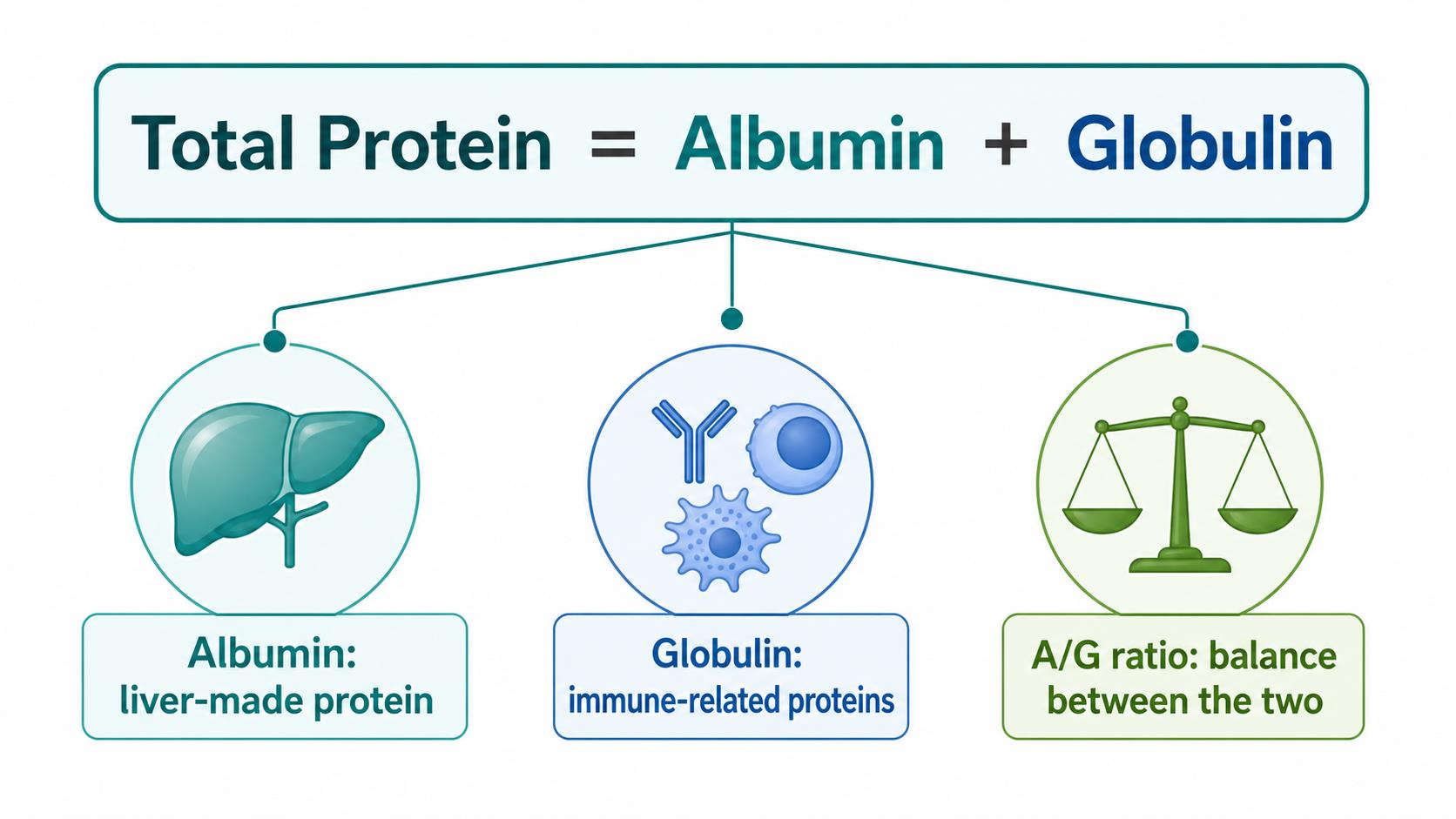
What is the albumin/globulin ratio?
The albumin/globulin ratio, often written as the A/G ratio, compares the albumin level with the globulin level.
The A/G ratio can change because albumin is low, globulin is high, or both are happening at the same time.
| A/G Ratio Pattern | Possible explanation |
|---|---|
| Low A/G ratio | Albumin is low, globulin is high, or both |
| Normal A/G ratio | Albumin and globulin are in expected balance |
| High A/G ratio | Usually due to low globulin or relatively high albumin |
What does a low A/G ratio mean?
A low A/G ratio means albumin is low compared with globulin. This can happen because albumin is reduced, globulin is increased, or both are happening together.
- Chronic liver disease
- Chronic inflammation
- Autoimmune disease
- Chronic infection
- Kidney-related protein loss
What does albumin tell us about liver disease?
Albumin is produced mainly by the liver. Because of this, albumin can help doctors assess the liver's protein-producing function, especially in chronic or advanced liver disease.
Early liver disease
Albumin may remain normal in early liver disease. Therefore, a normal albumin result does not completely rule out liver disease.
Advanced liver disease
In advanced chronic liver disease or cirrhosis, albumin may fall because the liver's production capacity is reduced. Doctors usually interpret this together with INR, bilirubin, platelet count, ultrasound findings and clinical features.
Can kidney disease cause low albumin?
Yes. Albumin can become low if large amounts of protein are lost through urine. This is why doctors may request a urine protein test, urine albumin test or kidney function test when albumin is low.
Low albumin should therefore not be assumed to be liver disease without checking the broader clinical picture.
Can these tests diagnose liver disease?
No. Total protein, albumin, globulin and A/G ratio cannot diagnose liver disease by themselves.
They should be interpreted together with symptoms, examination findings, AST and ALT blood tests, bilirubin test explained, ALP, GGT and imaging such as ultrasound when needed.
What tests may be needed if albumin, globulin or A/G ratio is abnormal?
The next step depends on the pattern of abnormality and the patient's symptoms. Doctors may consider:
- Repeat liver profile
- AST, ALT, bilirubin, ALP and GGT review
- Kidney function tests
- Urine protein or urine albumin test
- Full blood count
- Inflammatory markers when clinically relevant
- Hepatitis screening when indicated
- Ultrasound scan when liver or abdominal disease is suspected
- Serum protein electrophoresis if globulin is significantly or persistently high
When should you see a doctor?
You should discuss abnormal albumin, globulin or A/G ratio results with a doctor, especially if the abnormality is significant, persistent or associated with symptoms.
- Swelling of legs or abdomen
- Jaundice or yellow eyes
- Dark urine
- Unexplained weight loss
- Persistent fever or night sweats
- Severe fatigue
- Known liver, kidney or autoimmune disease
- Persistently high globulin
- Very low albumin
Related liver profile guides
Frequently asked questions
The pattern matters more than one number
Total protein, albumin, globulin and A/G ratio are helpful parts of a liver profile, but they are not final diagnoses. A low albumin, high globulin or abnormal A/G ratio should be understood in context.
If your report shows abnormal protein results, discuss the full liver profile with your doctor so the next step is based on the complete picture.