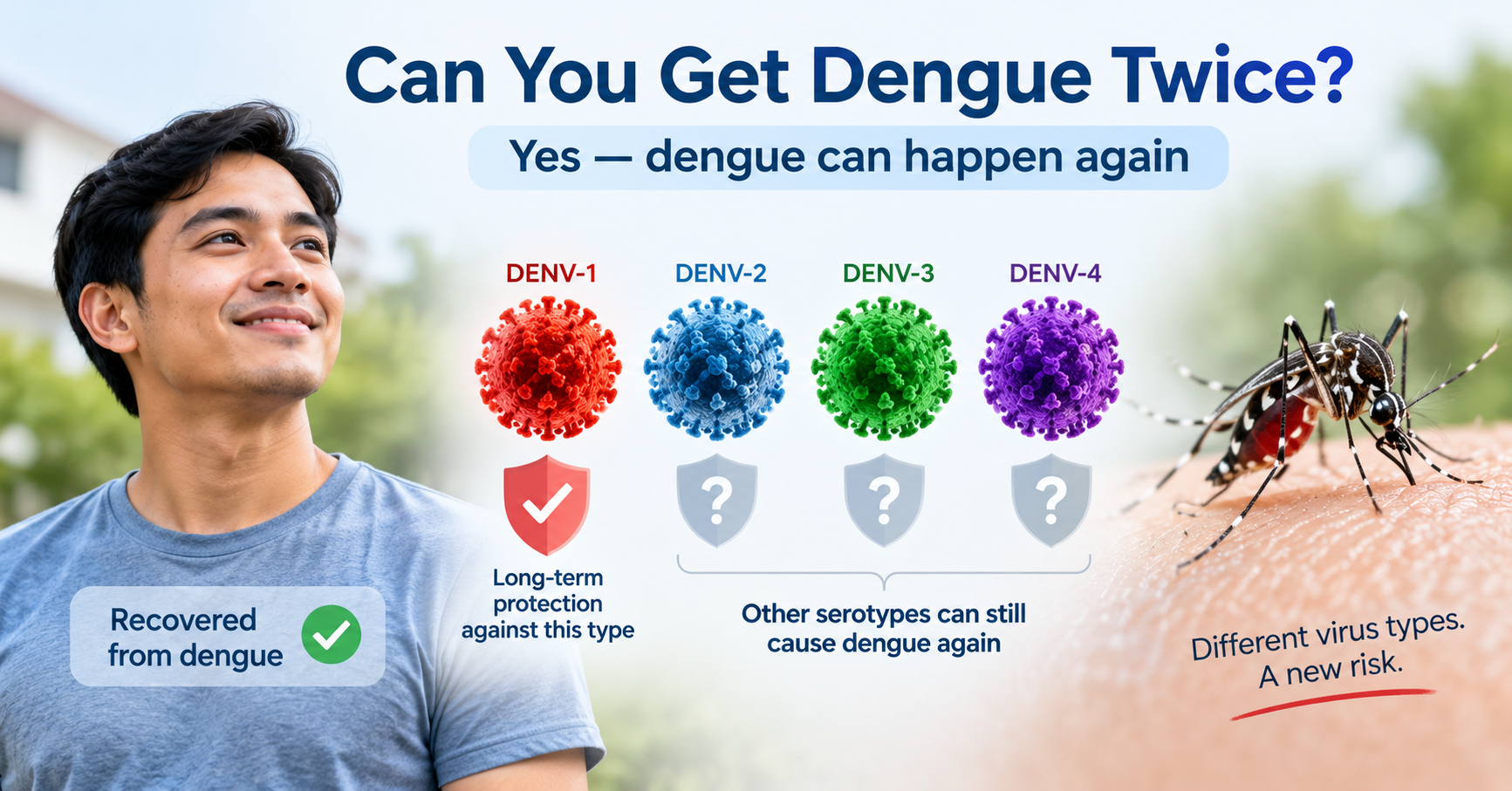
If you have already had dengue once, you may wonder whether you are now protected from getting it again.
The answer is no — having dengue once does not mean that you can never get dengue again.
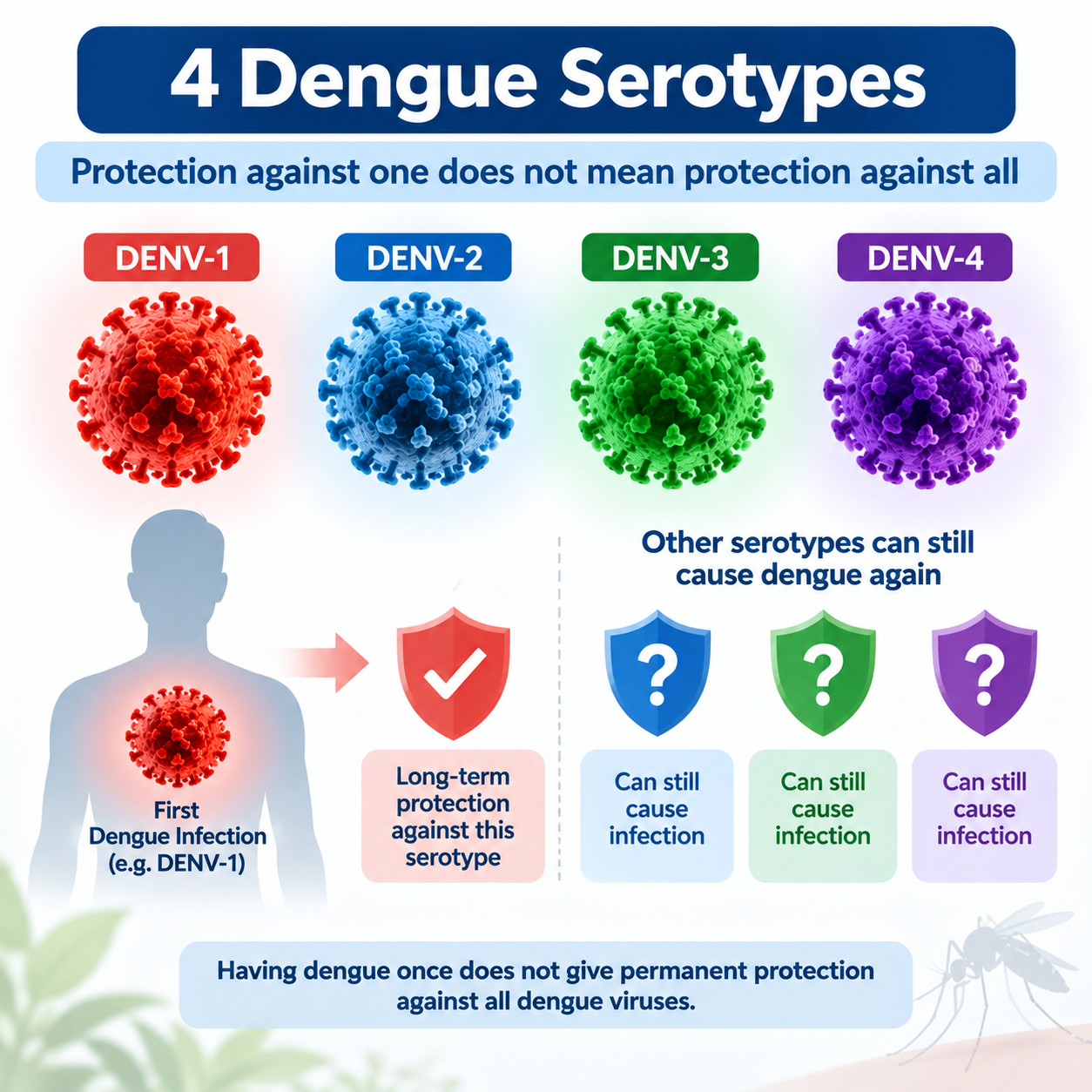
Dengue is caused by a group of closely related dengue viruses. There are four main dengue virus serotypes. Infection with one serotype usually gives long-lasting protection against that same serotype, but it does not provide permanent protection against the other serotypes.
This means that a person can develop dengue again later.
A previous dengue infection is also associated with an increased risk of severe dengue during a later infection with a different serotype. However, this does not mean that everyone who gets dengue for the second time will develop severe dengue.
The most important thing is still to monitor the current illness carefully and seek medical attention if warning signs develop.
Can You Get Dengue More Than Once?
Yes. Dengue can occur more than once during a person's lifetime.
This is possible because dengue is not caused by only one type of dengue virus.
There are four closely related dengue virus serotypes.
After recovering from dengue, your immune system develops strong protection against the particular serotype that caused that infection.
However, you may still become infected later by another dengue serotype.
Therefore, having had dengue before should not make you assume that a future fever cannot be dengue. Read more about Dengue Fever: Symptoms, Warning Signs, Tests and Treatment.
Why Can Dengue Happen Again?
The reason is that there are different dengue virus serotypes.
They are commonly called:
- DENV-1
- DENV-2
- DENV-3
- DENV-4
They all cause dengue, but they are different enough that immunity against one does not provide permanent protection against all the others.
For example, someone who has previously been infected with one dengue serotype may later be infected with another.
That later infection is still dengue.
What Are the Four Dengue Serotypes?
A serotype is a distinct form of the dengue virus that the immune system recognizes differently.
For patients, the most useful point is simple:
Dengue is caused by four related but different virus types.
You do not need to know which serotype is causing your illness in order to recognize warning signs or seek appropriate medical care.
Routine patient management is based mainly on your symptoms, examination, stage of illness and relevant investigations rather than on trying to identify the serotype yourself.
What Happens to Immunity After Dengue?
After infection with one dengue serotype, the body develops long-lasting immunity against that same serotype.
There can also be some protection against the other dengue serotypes for a period after infection.
However, this cross-protection is temporary rather than permanent.
Later, a person can again become susceptible to dengue caused by another serotype.
This is why previous dengue infection does not mean lifelong protection against all dengue infections.
What Is a Second or Secondary Dengue Infection?
The first dengue virus infection a person experiences is commonly called a primary dengue infection.
A later infection with another dengue serotype is called a secondary dengue infection.
The term “secondary dengue” does not by itself mean that the patient has severe dengue.
It describes the fact that the person has been infected with dengue previously and is now experiencing another dengue infection.
Is a Second Dengue Infection More Dangerous?
A previous dengue infection is an established risk factor for developing severe dengue during a later infection.
Therefore, compared with someone experiencing their first dengue infection, a person with a secondary infection may have a higher risk of severe disease.
However, risk is not the same as certainty.
A second dengue infection does not automatically become severe dengue.
Many dengue infections remain mild or recover without progressing to severe disease.
Doctors therefore do not decide that a patient will develop severe dengue simply because the patient has had dengue before.
The current symptoms, warning signs, examination findings, stage of illness and relevant investigations remain essential.
Does Everyone With Dengue for the Second Time Develop Severe Dengue?
No.
This is one of the most important points to understand.
Previous dengue increases the risk of severe dengue, but it does not mean that severe disease is inevitable.
Some people with a second dengue infection may have relatively mild illness.
Others may require closer observation or hospital care depending on their clinical condition.
Therefore, a history of previous dengue should encourage appropriate awareness — not panic.
Why Can a Later Dengue Infection Sometimes Be More Severe?
The immune system remembers a previous dengue infection.
When a person later encounters a different dengue serotype, the immune response can be more complicated than during the first infection.
One mechanism studied in dengue is called antibody-dependent enhancement, often shortened to ADE.
In simple terms, antibodies from a previous dengue infection may recognize a different dengue serotype without always neutralizing it effectively. Under some circumstances, this immune response may contribute to a higher risk of severe disease.
However, dengue severity is complex.
Whether an individual patient develops severe dengue cannot be predicted simply by knowing that they have had dengue before.
For patients, the practical message is much more important than the immunology:
Previous dengue can increase risk, but careful monitoring of the current illness is what matters.
Can You Know Which Dengue Serotype You Have?
In routine patient care, most people are not told whether they have DENV-1, DENV-2, DENV-3 or DENV-4.
Tests such as NS1, IgM and IgG can help doctors diagnose or assess dengue, but these routine results do not usually tell a patient which serotype is causing the infection.
Identifying the exact serotype generally requires specialized laboratory testing and is more important for surveillance, outbreak investigation and research than for everyday home decisions.
Do not try to judge the likely serotype from your symptoms.
Does a Positive Dengue IgG Test Mean This Is Your Second Infection?
Not necessarily.
Dengue IgG antibodies can remain after a previous dengue infection.
Therefore, a positive IgG result may indicate previous exposure to dengue.
However, an IgG result must be interpreted together with:
- the day of illness;
- symptoms;
- other dengue tests;
- the clinical examination;
- and the patient's previous history.
A positive IgG result by itself should not be used at home to conclude that the current illness is definitely a second dengue infection or that severe dengue will develop.
For a detailed explanation, read Dengue IgG Test Explained and NS1 vs IgM vs IgG: Which Dengue Test and When?
Can You Get Dengue a Third or Fourth Time?
Because there are four dengue serotypes, infection more than twice is biologically possible.
A person who has previously been infected with one serotype can later encounter other serotypes.
However, it is not useful for a patient with a new fever to try to count possible infections and predict severity from that number.
The practical approach remains the same:
If dengue is suspected, assess the current illness properly and monitor for warning signs.
What Should You Do If You Have Had Dengue Before and Develop Fever Again?
Do not dismiss dengue simply because you have already had it.
If you live in or have recently been in an area where dengue occurs and develop a compatible febrile illness, dengue may still be possible.
Seek appropriate medical assessment, particularly if symptoms are significant or dengue is circulating in your community.
Tell the healthcare professional if you know that you have had dengue previously.
Follow advice about:
- clinical review;
- blood tests where indicated;
- fluid intake;
- medicines;
- follow-up;
- and warning signs.
Do not wait for a particular platelet count before seeking medical help if your overall condition is worsening. Doctors weigh these factors together with when a dengue patient may need hospital admission.
Warning Signs You Should Not Ignore
Anyone with suspected or confirmed dengue should know the warning signs, whether this is their first infection or a later infection.
Seek urgent medical assessment if there is:
- severe or increasing abdominal pain;
- persistent vomiting;
- bleeding from the nose or gums;
- blood in vomit or stool;
- marked drowsiness, unusual sleepiness or restlessness;
- dizziness, fainting or increasing weakness;
- difficulty breathing;
- inability to drink adequately;
- significantly reduced urine output;
- pale, cold or clammy skin;
- or a clear deterioration in the person's overall condition.
Warning signs can appear around the time the fever begins to settle — see our dengue illness timeline for how this usually unfolds.
Do not assume that the illness is over simply because the temperature has returned to normal.
For a fuller explanation, read Dengue Warning Signs: When Should You Go to Hospital?
Does Previous Dengue Change How Doctors Monitor You?
A history of previous dengue is useful information for your healthcare professional.
However, doctors still assess the whole patient.
They may consider:
- symptoms;
- warning signs;
- hydration;
- blood pressure and circulation;
- urine output;
- bleeding;
- the day and stage of illness;
- full blood count;
- platelet trend;
- haematocrit;
- and other findings when clinically indicated.
Previous dengue is therefore one part of the clinical picture.
It should not replace proper assessment of the current illness.
Can You Prevent Another Dengue Infection?
Having had dengue before does not remove the need to prevent mosquito bites.
Continue measures that reduce exposure to mosquitoes.
Useful measures include:
- reducing mosquito breeding places around the home;
- preventing water from collecting unnecessarily in containers;
- using appropriate mosquito repellents;
- wearing clothing that reduces exposed skin when practical;
- using window or door screens where available;
- and following local public-health mosquito-control advice.
These precautions are important because previous dengue does not provide permanent protection against all dengue serotypes.
One-Minute Summary
- Yes, you can get dengue more than once.
- There are four dengue virus serotypes: DENV-1, DENV-2, DENV-3 and DENV-4.
- Infection usually gives long-lasting protection against the serotype that caused that infection.
- It does not provide permanent protection against the other dengue serotypes.
- A later infection with another serotype is called a secondary dengue infection.
- Previous dengue infection is associated with a higher risk of severe dengue during a later infection.
- A second infection does not mean that severe dengue is inevitable.
- A positive IgG result alone does not tell you that the current illness will become severe.
- Warning signs and the patient's overall clinical condition remain more important than simply counting how many times dengue may have occurred.
- If you have had dengue before and develop a new illness compatible with dengue, seek appropriate medical assessment and continue to watch carefully for warning signs.
Most Important Message
Having dengue once does not give permanent protection against all dengue viruses. You can get dengue again, and previous infection can increase the risk of severe dengue during a later infection. However, a second infection does not automatically become severe. If dengue is suspected again, focus on proper medical assessment, monitoring and warning signs rather than assuming the outcome from your previous infection.
Frequently Asked Questions
Can you get dengue twice?
Yes. There are four dengue virus serotypes. Infection with one serotype does not provide permanent protection against all the others, so dengue can occur again.
Is dengue more dangerous the second time?
A previous dengue infection is associated with a higher risk of severe dengue during a later infection with a different serotype. However, a second infection does not automatically become severe.
Why can I get dengue again if I already have antibodies?
The antibodies produced after dengue provide strong long-term protection mainly against the serotype that caused the previous infection. Protection against the other serotypes is not permanently complete.
How many times can a person get dengue?
There are four dengue virus serotypes, so infection on multiple separate occasions is biologically possible. However, patients should not try to predict the severity of a new illness simply by counting previous infections.
Does having dengue once make me immune?
It provides long-lasting immunity mainly against the dengue serotype that caused that infection. It does not provide permanent immunity against all four dengue serotypes.
Does a positive IgG test mean I have dengue for the second time?
Not necessarily. IgG can indicate previous dengue exposure, but the result must be interpreted together with the timing of illness, symptoms, other tests and clinical findings.
Will my second dengue infection definitely be severe?
No. Previous infection increases the risk of severe dengue, but severe disease is not inevitable. Many factors influence how an individual dengue infection progresses.
Are the symptoms different during a second dengue infection?
The symptoms can still resemble those of dengue generally. You cannot reliably determine whether an infection is primary or secondary, or whether it will become severe, from symptoms alone.
Should I tell my doctor that I have had dengue before?
Yes. A previous dengue infection is useful medical information. Tell your healthcare professional if you know that you have had dengue previously.
What should I do if I have had dengue before and develop fever again?
Do not assume that dengue is impossible because you have already had it. Seek appropriate medical assessment if dengue is suspected and monitor carefully for warning signs, especially if your overall condition worsens or the fever begins to settle.
Related Articles
- Dengue Fever: Symptoms, Warning Signs, Tests and Treatment
- Dengue Warning Signs: When Should You Go to Hospital?
- Dengue IgG Test Explained
- NS1 vs IgM vs IgG: Which Dengue Test and When?
- Platelets in Dengue: What Platelet Counts Mean and When to Worry
- How Long Does Dengue Last? Day-by-Day Symptoms and Recovery Timeline
Medical Guidelines & References
- • World Health Organization — Dengue and Severe Dengue
- • World Health Organization — Dengue Guidelines for Diagnosis, Treatment, Prevention and Control
- • CDC — Clinical Features of Dengue