Dengue can occur during pregnancy.
If you are pregnant and develop dengue or symptoms that could be dengue, appropriate medical assessment is important.
This does not mean that every pregnant woman with dengue will develop complications.
Many women recover from dengue.
However, pregnancy adds important considerations because doctors need to think about both the mother's condition and the pregnancy.
Dengue during pregnancy has been associated with adverse pregnancy outcomes, and dengue virus can occasionally pass from an infected mother to her baby.
This possibility is particularly important when dengue occurs late in pregnancy or around the time of delivery.
There is another important point:
Do not judge the severity of dengue from the fever or platelet count alone.
Warning signs can appear around the time the fever settles.
If you are pregnant and have suspected or confirmed dengue, follow the medical monitoring plan given to you and seek prompt reassessment if your condition worsens.
Can You Get Dengue During Pregnancy?
Yes.
A pregnant woman can become infected with dengue virus in the same way as other people, most commonly through the bite of an infected Aedes mosquito.
Pregnancy does not protect you from dengue.
If you live in or have recently been in an area where dengue is circulating, dengue should be considered as one possible cause of an acute fever.
However, fever during pregnancy can have many other causes.
Therefore:
Do not assume that every fever during pregnancy is dengue.
Medical assessment is important because the cause of the fever and the stage of pregnancy may influence what evaluation and monitoring are needed.
Is Dengue More Dangerous During Pregnancy?
Dengue during pregnancy deserves careful medical attention.
Dengue can range from a relatively mild illness to severe disease in any patient.
Pregnancy also produces normal changes in circulation and blood tests, and some symptoms or laboratory abnormalities can overlap with pregnancy-related conditions.
This can make assessment more complicated.
In addition, doctors need to consider:
- the mother's condition;
- the stage of dengue illness;
- hydration and circulation;
- bleeding;
- blood-test trends;
- the stage of pregnancy;
- the wellbeing of the pregnancy;
- whether labour or delivery is approaching.
This does not mean that a serious complication will occur.
It means that dengue during pregnancy should not be treated simply as an ordinary fever without appropriate assessment and follow-up.
What Are the Symptoms of Dengue During Pregnancy?
The symptoms of dengue during pregnancy are generally similar to those experienced by other adults.
They can include:
- fever;
- headache;
- pain behind the eyes;
- muscle and body aches;
- nausea;
- vomiting;
- rash;
- tiredness or weakness.
Not every person develops every symptom.
These symptoms also do not prove that the illness is dengue.
Many infections can cause fever, headache, body aches or vomiting.
Pregnancy itself can also cause symptoms such as nausea and vomiting.
For that reason, symptoms need to be interpreted together with the clinical assessment and appropriate investigations.
Can Dengue Affect the Baby?
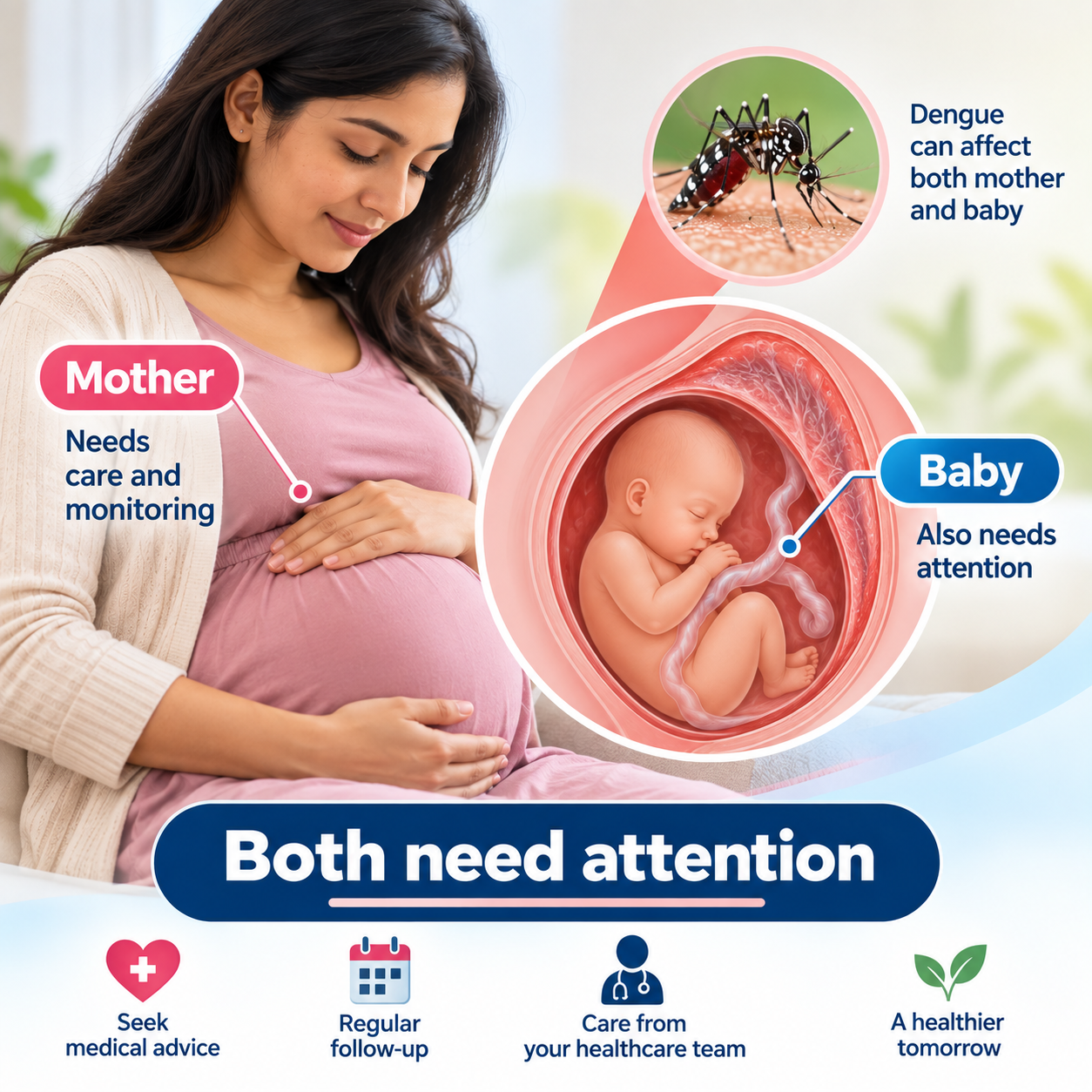
It can.
Research on dengue during pregnancy is still limited, and the outcome varies considerably between pregnancies.
However, maternal dengue infection has been associated with adverse outcomes including:
- premature birth;
- low birth weight;
- fetal distress;
- and, in some cases, fetal death.
These are possible complications, not inevitable outcomes.
Having dengue during pregnancy does not mean that your baby will necessarily be harmed.
The individual risk depends on many factors, including the mother's illness and the timing of infection.
This is one reason why appropriate obstetric and medical follow-up is important when dengue occurs during pregnancy.
Can Dengue Pass From Mother to Baby?
Yes, but this is not the usual way dengue spreads.
Dengue is mainly transmitted through infected mosquitoes.
However, dengue virus can occasionally pass from an infected pregnant woman to her baby.
This is called vertical transmission.
The possibility is particularly important when the mother develops dengue late in pregnancy or around the time of delivery.
Even when the mother has dengue near delivery, transmission to the baby is not inevitable.
Most newborns exposed in this situation do not necessarily develop symptomatic dengue.
If maternal dengue occurs close to delivery, the obstetric and newborn-care teams should be aware so that appropriate observation can be arranged.
Can Dengue Cause Miscarriage, Premature Birth or Other Pregnancy Complications?
Dengue during pregnancy has been associated with adverse pregnancy outcomes.
Reported complications include premature birth, low birth weight and fetal distress.
Fetal loss has also been reported.
However, it is important to interpret these findings carefully.
An association does not mean that every pregnant woman with dengue will experience one of these complications.
Pregnancy outcomes depend on many factors, and available evidence about dengue in pregnancy remains limited.
If you develop dengue during pregnancy, the appropriate response is not to assume that something will happen to the baby.
Instead, obtain appropriate medical care and continue the pregnancy monitoring recommended by your healthcare team.
What Should You Do If You Develop Fever During Pregnancy?
If you develop fever while pregnant, particularly in an area where dengue is circulating, seek appropriate medical advice.
Tell the healthcare professional:
- that you are pregnant;
- how many weeks pregnant you are;
- when the fever began;
- what other symptoms you have;
- whether you have vomiting or abdominal pain;
- whether there has been any bleeding;
- whether you can drink adequately;
- what medicines you have taken;
- whether you have already had any dengue tests or blood counts.
Do not diagnose yourself from symptoms alone.
Do not wait for a rash or a low platelet count before seeking advice.
A healthcare professional can decide whether dengue testing, a blood count or other investigations are appropriate.
How Is Dengue Diagnosed During Pregnancy?
Dengue is diagnosed by considering the whole clinical picture.
Doctors may consider:
- your symptoms;
- the day of illness;
- dengue activity or exposure;
- examination findings;
- blood-count changes;
- specific dengue tests when appropriate.
Pregnancy does not make a positive dengue test meaningless.
However, pregnancy can affect some normal clinical and laboratory measurements, so results need to be interpreted in context.
The most useful dengue test can also depend on the stage of illness.
Read more about dengue tests: NS1, IgM, IgG and NS1 vs IgM vs IgG.
How Is Dengue Treated During Pregnancy?
There is no routine antiviral medicine that cures dengue.
Treatment is mainly supportive and depends on the severity of illness.
Important aspects can include:
- appropriate fluid intake or fluid management;
- monitoring for warning signs;
- monitoring circulation and clinical condition;
- appropriate blood tests;
- treatment of complications if they occur;
- obstetric assessment when required.
Pregnancy does not mean that every woman with dengue needs intensive care or an emergency delivery.
Management should be individualized according to the mother's clinical condition, the dengue phase and the pregnancy.
Follow the advice of the healthcare professionals caring for you.
What Medicines Should Be Avoided?
Medicine safety is particularly important when dengue and pregnancy occur together.
For fever and discomfort in dengue, paracetamol is generally used when appropriate.
However, during pregnancy, medicines should also be considered in relation to pregnancy safety and individual medical circumstances.
Do not start additional medicines simply because you have fever or body aches.
In suspected or confirmed dengue:
Aspirin should be avoided.
NSAIDs such as ibuprofen should also be avoided because they can increase bleeding risk.
Some combination cold-and-fever medicines contain several active ingredients, so check before taking them.
If you are pregnant and unsure whether a medicine is suitable, ask a doctor or pharmacist.
Read more:
Why Are Fluids Important?
Adequate hydration is an important part of dengue care.
Fever, vomiting and reduced intake can make dehydration more likely.
If you are being managed outside hospital and are able to drink, follow the fluid advice provided by your healthcare team.
If nausea is present, smaller amounts taken more frequently may be easier to tolerate.
However, dengue fluid management is not simply a matter of drinking as much as possible.
The amount and type of fluid required can depend on the person's clinical condition.
Pregnancy also affects normal circulation and fluid balance.
Therefore:
Do not attempt to manage worsening dengue by forcing excessive fluids at home.
If you cannot drink adequately, have persistent vomiting, pass much less urine, develop breathing difficulty or appear to be worsening, seek medical reassessment.
Read more:
What Happens When the Fever Settles?
This is one of the most important points in dengue care.
Many people naturally assume:
“My fever has gone, so the dengue is over.”
That is not always true.
In dengue, the period around the time the fever settles can be when warning signs become apparent.
Therefore:
Do not stop monitoring yourself simply because your temperature has returned to normal.
Continue to pay attention to:
- abdominal pain;
- vomiting;
- bleeding;
- dizziness or fainting;
- urine output;
- breathing;
- unusual weakness;
- your overall condition.
If you are pregnant, follow the medical follow-up plan you have been given even if the fever has disappeared.
A falling temperature together with worsening symptoms requires medical reassessment.
What Warning Signs Require Urgent Medical Attention?
Seek urgent medical assessment if you have suspected or confirmed dengue and develop symptoms such as:
- severe or worsening abdominal pain;
- persistent vomiting;
- significant bleeding;
- blood in vomit or stool;
- severe dizziness or fainting;
- unusual drowsiness, confusion or marked restlessness;
- breathing difficulty;
- inability to maintain adequate fluid intake;
- substantially reduced urine output;
- rapidly worsening overall condition.
During pregnancy, you should also seek urgent obstetric assessment for pregnancy-related concerns such as significant vaginal bleeding, severe abdominal pain, labour-related concerns or a concerning change in your baby's usual movements when you are at a stage of pregnancy where movements are normally felt.
Do not try to decide at home whether a concerning symptom is caused by dengue or by the pregnancy.
The distinction may require medical assessment.
Read more:
What If Dengue Occurs Close to Delivery?
Dengue occurring late in pregnancy or around the time of delivery requires particular medical attention.
There are several reasons.
The mother's bleeding risk, circulation and overall dengue condition need to be considered.
The obstetric team also needs to consider labour and delivery.
In addition, maternal-to-baby transmission of dengue is particularly relevant when maternal infection occurs close to birth.
This does not mean that every woman who develops dengue near her due date will have a complicated delivery or that the baby will develop dengue.
It means that the healthcare teams caring for the mother and newborn should know about the dengue infection and arrange appropriate monitoring.
If you are close to your expected delivery date and develop suspected dengue, tell both the medical and obstetric teams promptly.
Does a Low Platelet Count Mean Delivery Is Dangerous?
Not necessarily.
Platelet counts commonly fall during dengue.
Pregnancy can also involve conditions that affect platelet counts.
Therefore, a platelet result must be interpreted in the context of the whole clinical situation.
Doctors may consider:
- the actual platelet count;
- whether it is stable, falling or recovering;
- whether bleeding is present;
- other blood-test results;
- the phase of dengue;
- the mother's clinical condition;
- the stage of pregnancy;
- whether labour or a procedure is expected.
There is no single platelet number that patients should use at home to decide whether delivery is safe or dangerous.
Similarly:
Do not assume that a low platelet count automatically means that you need a platelet transfusion or Caesarean section.
Those decisions require clinical assessment.
Read more:
Platelets in Dengue: What Platelet Counts Mean and When to Worry
Does Dengue Mean You Need a Caesarean Section?
No.
Having dengue does not automatically mean that a baby must be delivered by Caesarean section.
The method and timing of delivery depend on the obstetric situation together with the mother's clinical condition.
If there is no obstetric or medical reason for urgent delivery, healthcare professionals may prefer to avoid unnecessary procedures while managing the dengue appropriately.
On the other hand, if an obstetric emergency or another medical reason requires delivery, the team will manage the situation according to the individual circumstances.
Therefore:
Do not assume that dengue itself determines how your baby must be delivered.
This decision belongs to the obstetric and medical teams caring for you.
What Happens After Recovery?
As dengue resolves, your general condition should progressively improve.
Appetite and ability to drink usually improve.
Strength should gradually return.
Blood counts also recover, although not necessarily all at the same time.
Continue your usual pregnancy follow-up and any additional monitoring recommended because of the dengue episode.
If dengue occurred close to delivery, the newborn-care team may recommend observation of the baby.
If you initially improve but then develop new fever, worsening weakness, bleeding, breathing difficulty or other new concerning symptoms, seek medical review.
Read more:
Recovery After Dengue Fever: Weakness, Tiredness and Returning to Normal
One-Minute Summary
- Pregnant women can develop dengue.
- Having dengue during pregnancy does not mean that a serious complication will definitely occur.
- Dengue during pregnancy should receive appropriate medical assessment and follow-up.
- Dengue has been associated with pregnancy complications including premature birth and low birth weight, but these outcomes are not inevitable.
- Dengue virus can occasionally pass from an infected mother to her baby.
- Mother-to-baby transmission is particularly relevant when maternal dengue occurs late in pregnancy or around delivery.
- The fever settling does not always mean the risky period has passed.
- A platelet count alone cannot tell you whether the pregnancy, dengue or delivery is safe.
- Dengue does not automatically mean that Caesarean delivery is required.
- Seek prompt medical care if warning signs develop or your overall condition worsens.
Most Important Message
If you develop suspected or confirmed dengue while pregnant, do not panic — but do not rely only on the fever or platelet count either.
Most importantly, follow an appropriate medical monitoring plan.
Watch for worsening abdominal pain, persistent vomiting, bleeding, difficulty drinking, reduced urine, dizziness, breathing difficulty or worsening general condition.
Remember that warning signs can appear around the time the fever settles.
Dengue during pregnancy can occasionally affect the pregnancy or be transmitted to the baby, particularly around the time of delivery, but complications are not inevitable.
Appropriate medical and obstetric care allows the condition of both mother and pregnancy to be assessed properly.
Frequently Asked Questions
Can dengue affect a pregnant woman?
Yes. Pregnant women can develop dengue just like other adults. Dengue can range from mild illness to severe disease, so appropriate medical assessment and follow-up are important during pregnancy.
Can dengue harm my unborn baby?
Dengue during pregnancy has been associated with outcomes such as premature birth, low birth weight and fetal distress, and fetal loss has also been reported. However, these complications do not occur in every pregnancy. Having dengue does not mean that your baby will necessarily be harmed.
Can dengue pass from a pregnant mother to her baby?
Yes, dengue virus can occasionally pass from an infected mother to her baby. This is called vertical transmission. The possibility is particularly relevant when maternal infection occurs late in pregnancy or around the time of delivery.
Does dengue cause miscarriage?
Fetal loss has been reported in association with dengue during pregnancy, but it is not correct to say that dengue inevitably causes miscarriage. Available pregnancy data are limited, and outcomes vary. A pregnant woman with dengue should receive appropriate medical and obstetric follow-up.
What should I do if I have fever while pregnant during a dengue outbreak?
Seek appropriate medical advice and tell the healthcare professional that you are pregnant, how many weeks pregnant you are, when the fever started and what other symptoms you have. Do not wait for a rash or low platelet count before seeking assessment.
Is dengue dangerous when the fever goes away?
The fever settling does not necessarily mean that the risky period of dengue has passed. Warning signs can develop around this time. Continue monitoring your symptoms and follow the medical review plan you have been given.
Can I take ibuprofen for dengue while pregnant?
Ibuprofen and other NSAIDs should be avoided in suspected or confirmed dengue because they can increase bleeding risk. Pregnancy also has its own medicine-safety considerations. Paracetamol is generally used for dengue fever and discomfort when appropriate, but ask your healthcare professional if you are unsure about any medicine during pregnancy.
Does a low platelet count mean my baby must be delivered?
No. A low platelet count alone does not determine whether or when delivery is required. Doctors consider the platelet trend, bleeding, other investigations, dengue phase, mother's condition, stage of pregnancy and obstetric circumstances together.
Does dengue mean I need a Caesarean section?
No. Dengue itself does not automatically require Caesarean delivery. The timing and method of delivery depend on the obstetric situation and the mother's clinical condition.
What happens if I get dengue close to my delivery date?
Dengue close to delivery requires careful medical and obstetric assessment. The mother's dengue condition and bleeding risk need attention, and there is also a possibility of dengue transmission to the baby around birth. This does not mean that complications will definitely occur, but the obstetric and newborn-care teams should be informed and appropriate monitoring arranged.
Related Articles
- Dengue Fever: Symptoms, Warning Signs, Tests and Treatment
- Dengue Warning Signs: When Should You Go to Hospital?
- Medicines to Avoid in Dengue Fever
- Platelets in Dengue: What Platelet Counts Mean and When to Worry
- Fluids in Dengue: How Much Should You Drink?
- Dengue Treatment in Hospital Explained
- Recovery After Dengue Fever: Weakness, Tiredness and Returning to Normal