Serum Magnesium Test Explained: High and Low Magnesium Results
A serum magnesium test measures the amount of magnesium in your blood.
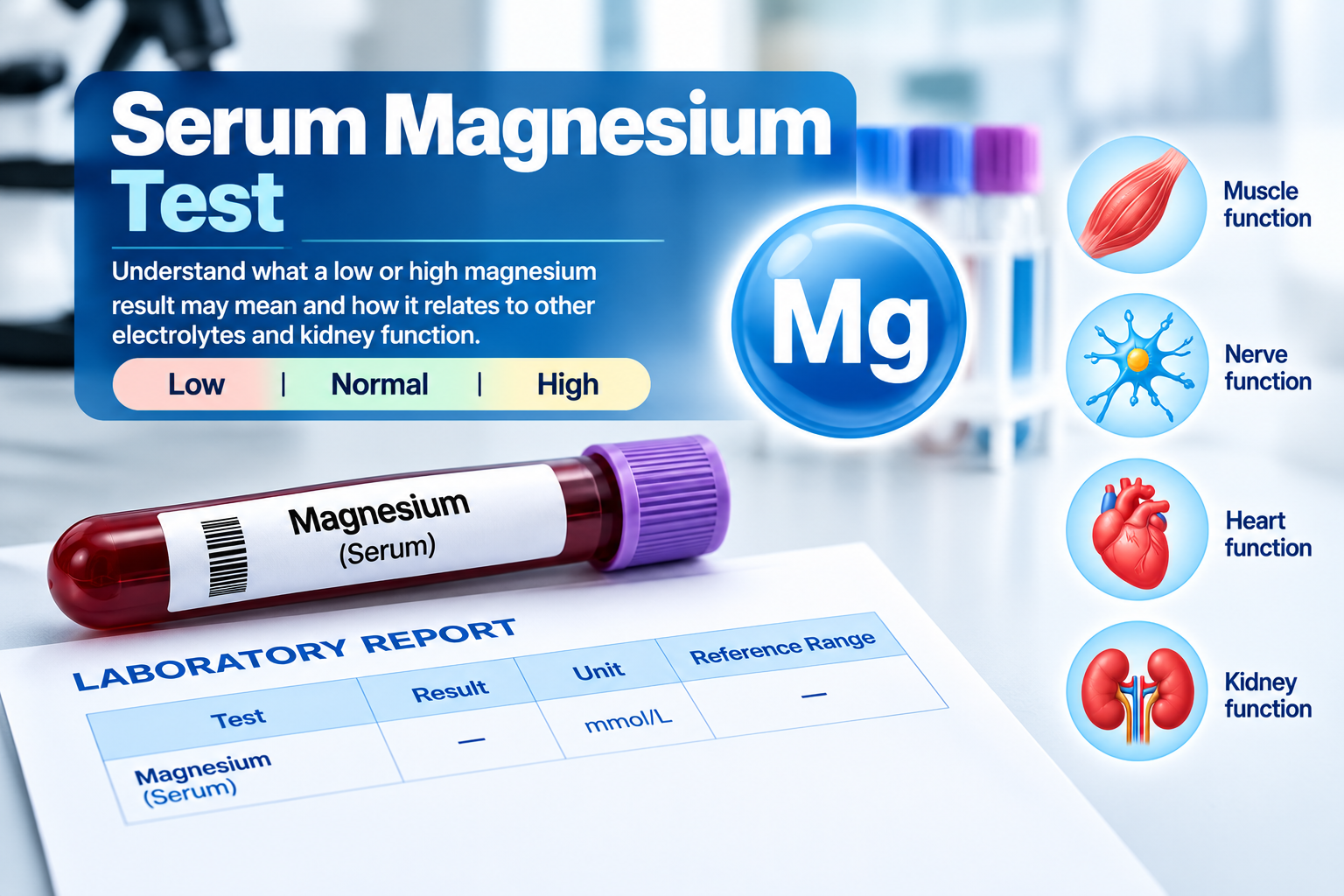
Magnesium is an important mineral and electrolyte involved in many normal body functions. It helps support normal muscle function, normal nerve function, normal heart function, healthy bones, and many processes inside cells.
A magnesium result below the relevant laboratory reference range is called hypomagnesaemia. A result above the reference range is called hypermagnesaemia. American spelling may appear as hypomagnesemia and hypermagnesemia.
What Does Magnesium Do in the Body?
Magnesium is an electrolyte and an essential mineral. It participates in many processes involving muscles, nerves, the heart, bones, energy use, and normal cell function.
Most of the body's magnesium is not circulating freely in the blood. Much of it is located in bones, cells, and other body tissues. Only a small proportion is present in the blood.
This is important when interpreting a serum magnesium result.
Does a Blood Magnesium Test Show All the Magnesium in My Body?
Not exactly. A serum magnesium test measures magnesium in the blood. However, only a small proportion of the body's total magnesium is present there. The body also regulates blood magnesium relatively tightly.
This does NOT mean that patients should ignore serum magnesium testing or diagnose magnesium deficiency themselves. Clinical interpretation may require symptoms, medical history, medicines, other electrolyte results, kidney function, and sometimes additional investigations.
Why Might a Magnesium Blood Test Be Requested?
A healthcare professional may request magnesium when:
- symptoms suggest an electrolyte abnormality;
- potassium is low;
- calcium is low;
- kidney disease is present;
- there has been prolonged diarrhoea or vomiting;
- malabsorption or poor nutrition is suspected;
- alcohol-related problems may be relevant;
- certain medicines are being used;
- a patient is seriously ill;
- magnesium treatment is being monitored;
- or another laboratory abnormality requires further investigation.
Magnesium is therefore useful in several different clinical situations.
Is Magnesium Automatically Included With Sodium and Potassium?
Not always. A routine serum electrolyte panel commonly includes tests such as sodium, potassium, and chloride. Magnesium may be ordered separately or added when clinically relevant.
Read Serum Electrolytes Test Explained: Sodium, Potassium and Chloride.
How Is a Serum Magnesium Test Performed?
The test is performed using a blood sample. A healthcare worker usually takes a small amount of blood from a vein in your arm.
The laboratory report may label the result as Magnesium, Serum Magnesium, Mg, or a similar name. The report should also show your result, the unit, and the laboratory reference range.
Do I Need to Fast for a Magnesium Blood Test?
Usually, no special preparation is required for a magnesium blood test itself.
However, if magnesium is being measured together with other investigations, those tests may have their own preparation requirements.
Should I Stop Medicines or Magnesium Supplements Before the Test?
Do not stop prescribed medicines or supplements simply because you are having a magnesium test unless the healthcare professional managing your care tells you to do so.
Tell the healthcare professional about prescription medicines, non-prescription medicines, magnesium supplements, multivitamins, antacids, laxatives, and other supplements. Several medicines and magnesium-containing products can affect the result.
How Do I Read My Magnesium Result?
Check the test name, your result, the unit, and the laboratory reference range.
| Test | Result | Unit | Reference range |
|---|---|---|---|
| Magnesium / Serum Magnesium / Mg | Your result | Laboratory unit | Laboratory range |
Use the reference interval printed on your own report.
What Is a Normal Magnesium Level?
Laboratory reference ranges can vary.
The clinical importance of a result also depends on symptoms, previous results, other electrolytes, medicines, kidney function, and the reason the test was requested.
What Does Low Magnesium Mean?
A magnesium result below the relevant laboratory reference range is called hypomagnesaemia.
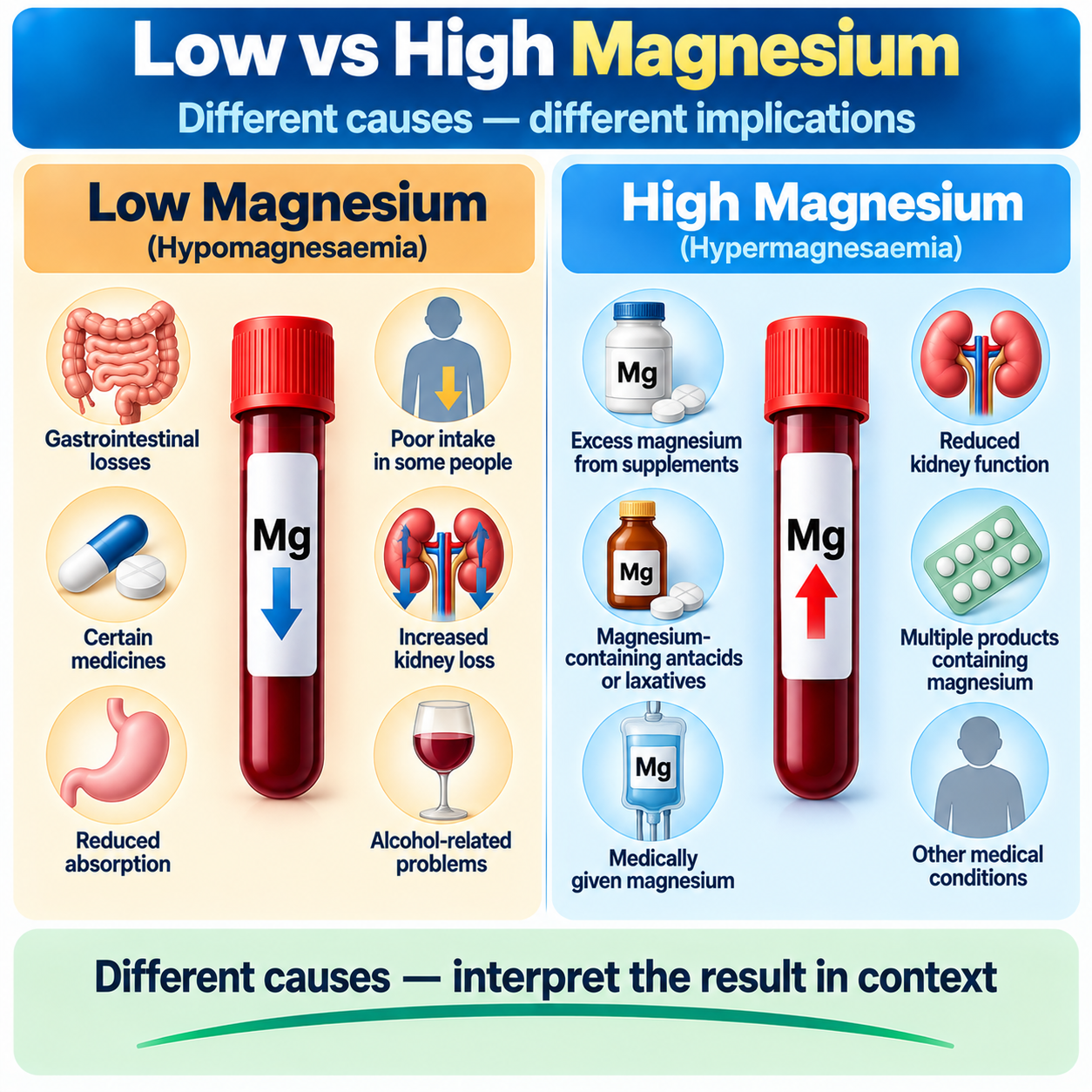
Low magnesium can occur when the body receives too little magnesium, magnesium is not absorbed adequately from the intestine, excessive magnesium is lost through the gastrointestinal tract, excessive magnesium is lost through the kidneys, or medicines and medical conditions alter magnesium balance.
The result alone does not tell you which mechanism is responsible.
What Can Cause Low Magnesium?
Possible causes or associations include:
- prolonged diarrhoea;
- repeated vomiting in some situations;
- reduced intestinal absorption;
- malnutrition or inadequate intake in some patients;
- alcohol-related problems;
- poorly controlled diabetes in some patients;
- excessive magnesium loss through the kidneys;
- certain kidney-tubule disorders;
- some medicines;
- and other medical conditions.
Several factors can occur together.
Which Medicines Can Contribute to Low Magnesium?
Some medicines can contribute to magnesium loss or reduced magnesium absorption. Examples include certain diuretics or “water tablets”, proton-pump inhibitors used to reduce stomach acid, antibiotics, chemotherapy medicines, immunosuppressive medicines, and other treatments.
The relevance depends on which medicine is being used, dose and duration, kidney function, other medical conditions, and other laboratory results.
Can Acid-Reducing Medicines Cause Low Magnesium?
Long-term use of some proton-pump inhibitors — PPIs has been associated with low magnesium in some patients. These medicines include drugs used to reduce stomach acid.
Can Diarrhoea Cause Low Magnesium?
Yes. Prolonged diarrhoea can lead to loss of magnesium and other electrolytes.
This may be particularly relevant when diarrhoea is persistent, severe, associated with poor intake, or part of an intestinal condition causing malabsorption. Other electrolyte abnormalities may occur at the same time.
What Symptoms Can Occur With Low Magnesium?
Mild low magnesium may cause no obvious symptoms.
When magnesium becomes more significantly reduced, possible symptoms can include weakness, tiredness, loss of appetite, nausea, muscle cramps, muscle spasms, tremor, numbness or tingling, and abnormal heart rhythms.
Severe magnesium deficiency can sometimes contribute to seizures, significant heart-rhythm problems, or other serious complications.
What Is the Relationship Between Magnesium and Potassium?
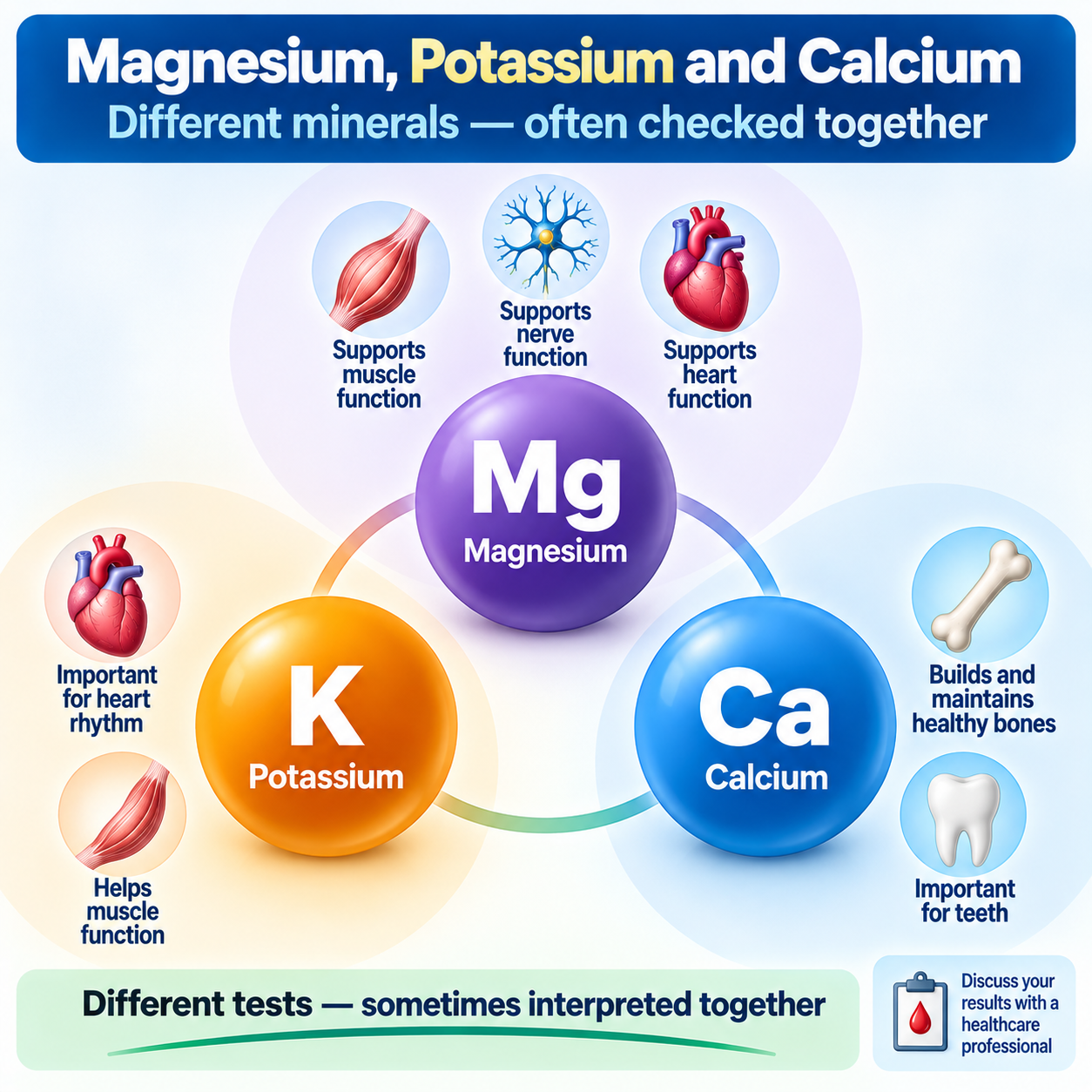
Magnesium and potassium are different electrolytes, but their balance can be connected.
Low magnesium can occur together with low potassium — hypokalaemia. In some patients, persistent low magnesium can make a low potassium problem more difficult to correct. This is one reason a doctor may request magnesium when potassium is unexpectedly or repeatedly low.
What Is the Relationship Between Magnesium and Calcium?
Magnesium and calcium are separate minerals, but their regulation is connected.
Significant magnesium deficiency can sometimes occur with low calcium — hypocalcaemia. Magnesium can influence systems involved in calcium regulation, including parathyroid hormone function. For this reason, magnesium may be checked when calcium is unexpectedly low or difficult to explain.
Are Magnesium and Phosphate Related?
Magnesium and phosphate are different minerals. Both may be relevant in patients with nutritional problems, gastrointestinal illness, kidney disease, or other electrolyte/mineral disturbances.
An abnormality in one does not automatically predict the other. Where clinically relevant, doctors may assess several minerals together.
What Is the Relationship Between Magnesium and Kidney Function?
The kidneys have an important role in controlling magnesium balance. When magnesium levels are low, healthy kidneys can reduce magnesium loss in urine. The kidneys also remove excess magnesium from the body.
This means kidney function becomes particularly important when interpreting high magnesium.
What Does High Magnesium Mean?
A magnesium result above the relevant laboratory reference range is called hypermagnesaemia.
High blood magnesium is less common than low magnesium. The kidneys normally remove excess magnesium.
Therefore, clinically significant high magnesium is particularly important when kidney function is substantially reduced, and/or the person is receiving magnesium from medicines, supplements or other products.
What Can Cause High Magnesium?
Possible causes or associations include:
- significantly reduced kidney function;
- excessive magnesium from certain supplements or medicines;
- magnesium-containing laxatives;
- magnesium-containing antacids;
- medically administered magnesium;
- and certain other medical conditions.
High magnesium from ordinary food intake alone is unusual in people with normal kidney function.
Does High Magnesium Mean Kidney Failure?
No. Kidney failure is an important cause of significant hypermagnesaemia because the kidneys may be unable to remove magnesium effectively.
The combination of impaired kidney function and magnesium-containing medicines or supplements can be particularly important.
Can Laxatives and Antacids Raise Magnesium?
Yes. Some laxatives, antacids, supplements, and other products contain magnesium.
In people with normal kidney function, the kidneys can usually remove excess magnesium effectively. However, magnesium accumulation becomes more concerning when kidney function is significantly impaired.
What Symptoms Can Occur With High Magnesium?
Mild elevations may cause few or no obvious symptoms.
More significant hypermagnesaemia can sometimes cause nausea, weakness, drowsiness, low blood pressure, reduced reflexes, breathing difficulty, abnormal heart rhythms, or other serious problems.
Very severe hypermagnesaemia can be life-threatening. Symptoms depend on the degree of abnormality and the patient's overall medical condition.
Can Eating Magnesium-Rich Food Cause High Blood Magnesium?
In people with normal kidney function, high magnesium from ordinary food intake is uncommon. The kidneys usually remove excess magnesium.
Excessive magnesium is more likely to be associated with supplements, medicines, magnesium-containing laxatives or antacids, medical magnesium administration, and impaired kidney function.
Can My Magnesium Blood Test Be Normal Even if My Body Magnesium Is Low?
Sometimes. Because only a small amount of total body magnesium is present in the blood, serum magnesium does not perfectly reflect total-body magnesium stores.
Therefore, a normal serum magnesium result does not answer every possible question about magnesium status.
Symptoms such as fatigue, muscle cramps, weakness, or palpitations have many possible causes. A healthcare professional can decide whether further assessment is appropriate.
Are There Other Tests for Magnesium?
Serum magnesium is the most commonly used and readily available magnesium test.
In selected situations, other assessments may be considered, such as urine magnesium or other specialized magnesium measurements. These tests are not routinely required for every patient.
Does One Abnormal Magnesium Result Diagnose a Disease?
No. The healthcare professional may consider previous magnesium results, symptoms, potassium, calcium, kidney function, gastrointestinal losses, medicines, supplements, nutrition, diabetes, alcohol use, and other medical conditions.
Sometimes repeat testing or additional investigations may be appropriate.
Why Might Magnesium Be Repeated?
Magnesium may be repeated when an unexpected abnormal result is found, an abnormality needs confirmation, a condition causing magnesium loss or accumulation persists, treatment is being monitored, other electrolytes remain abnormal, or kidney function changes.
The appropriate timing depends on the clinical situation.
Should I Take a Magnesium Supplement if My Result Is Low?
Do not automatically start magnesium supplements solely because one laboratory result is low.
The appropriate response depends on how abnormal the result is, symptoms, the cause, kidney function, other electrolyte results, medicines, and the patient's medical condition.
Does a Normal Magnesium Result Mean My Muscle Cramps Have Another Cause?
A normal serum magnesium result makes significant blood hypomagnesaemia less likely, but serum magnesium does not perfectly reflect total body stores.
What Should I Do if My Magnesium Is High While Taking Supplements?
Tell the healthcare professional exactly what you are taking. Include magnesium supplements, multivitamins, antacids, laxatives, electrolyte products, and prescribed medicines. Also mention the dose and frequency where known.
If a clinician prescribed magnesium for a medical reason, discuss the high result with that clinician rather than making an unsupervised major treatment change.
What Should I Do if My Magnesium Is Low?
Do not panic and do not assume the solution is simply to take a supplement. Consider:
- Why was magnesium tested?
- Is this the first abnormal result?
- Are potassium or calcium also low?
- Have you had prolonged diarrhoea or vomiting?
- Are there problems with nutrition or absorption?
- What medicines are you taking?
- Are you taking a proton-pump inhibitor or diuretic?
- What is your kidney function?
- Are there significant symptoms?
Discuss a clinically important low result with the healthcare professional responsible for your care.
What Should I Do if My Magnesium Is High?
Consider:
- Are you taking magnesium supplements?
- Do any antacids or laxatives contain magnesium?
- Are you receiving magnesium as medical treatment?
- What is your creatinine/eGFR?
- Is kidney function significantly impaired?
- Are you experiencing weakness, drowsiness, low blood pressure or breathing difficulty?
- Has the result changed from previous tests?
A clearly high result should be interpreted with the clinical situation.
When Should I Discuss an Abnormal Magnesium Result With a Doctor?
Medical advice is particularly appropriate when:
- magnesium is clearly outside the laboratory reference range;
- the abnormality persists;
- potassium or calcium is also abnormal;
- you have significant kidney disease;
- you have persistent diarrhoea or vomiting;
- you have a condition affecting absorption;
- you take medicines that can alter magnesium;
- you regularly use magnesium-containing supplements, laxatives or antacids;
- you have significant muscle symptoms;
- you have palpitations;
- or you are unsure how the result applies to your medical condition.
When Can an Abnormal Magnesium Level Require Urgent Assessment?
Severe magnesium abnormalities can affect muscles, nerves, breathing, blood pressure, and heart rhythm.
Seek prompt medical assessment if an abnormal magnesium result is accompanied by concerning symptoms such as:
- seizures;
- severe or rapidly worsening weakness;
- fainting;
- significant palpitations;
- marked confusion or unusual drowsiness;
- severe muscle spasms;
- significant breathing difficulty;
- or another rapidly worsening illness.
If the laboratory or healthcare professional specifically advises urgent assessment because of the result, follow that advice.
Do Not Treat the Magnesium Number Yourself
Do not automatically:
- start high-dose magnesium supplements;
- take repeated magnesium products;
- use magnesium laxatives as replacement;
- change prescribed medicines;
- stop acid-reducing medicines;
- stop diuretics;
- dramatically change your diet;
- or assume every muscle cramp means magnesium deficiency.
The correct response depends on the result + symptoms + cause + other electrolytes + kidney function + medicines.
Related electrolyte & laboratory topics
Key Points
- Serum magnesium measures magnesium in the blood.
- Magnesium is an essential mineral and electrolyte.
- It supports normal muscle, nerve, heart, bone and cellular functions.
- Only a small proportion of total body magnesium is present in the blood.
- Serum magnesium is useful but does not perfectly measure total-body magnesium stores.
- Low magnesium is called hypomagnesaemia. High magnesium is called hypermagnesaemia.
- Low magnesium can result from gastrointestinal loss, poor absorption, medicines, renal loss and other conditions.
- Low magnesium does not automatically mean poor dietary intake.
- Some diuretics and long-term proton-pump inhibitor use can contribute to low magnesium in some patients.
- Low magnesium may occur together with low potassium or low calcium.
- High magnesium is less common.
- Significant high magnesium is particularly associated with impaired kidney function and magnesium-containing products or treatment.
- High magnesium does not automatically mean kidney failure.
- Ordinary magnesium-containing food rarely causes high magnesium in people with normal kidney function.
- Magnesium-containing supplements, laxatives and antacids can be clinically important.
- One abnormal magnesium result does not identify the cause.
- A normal serum magnesium result does not perfectly represent total body stores.
- Symptoms such as cramps or fatigue do not diagnose magnesium deficiency.
- Do not start magnesium replacement solely from one laboratory result.
- Severe magnesium abnormalities can require urgent medical assessment.