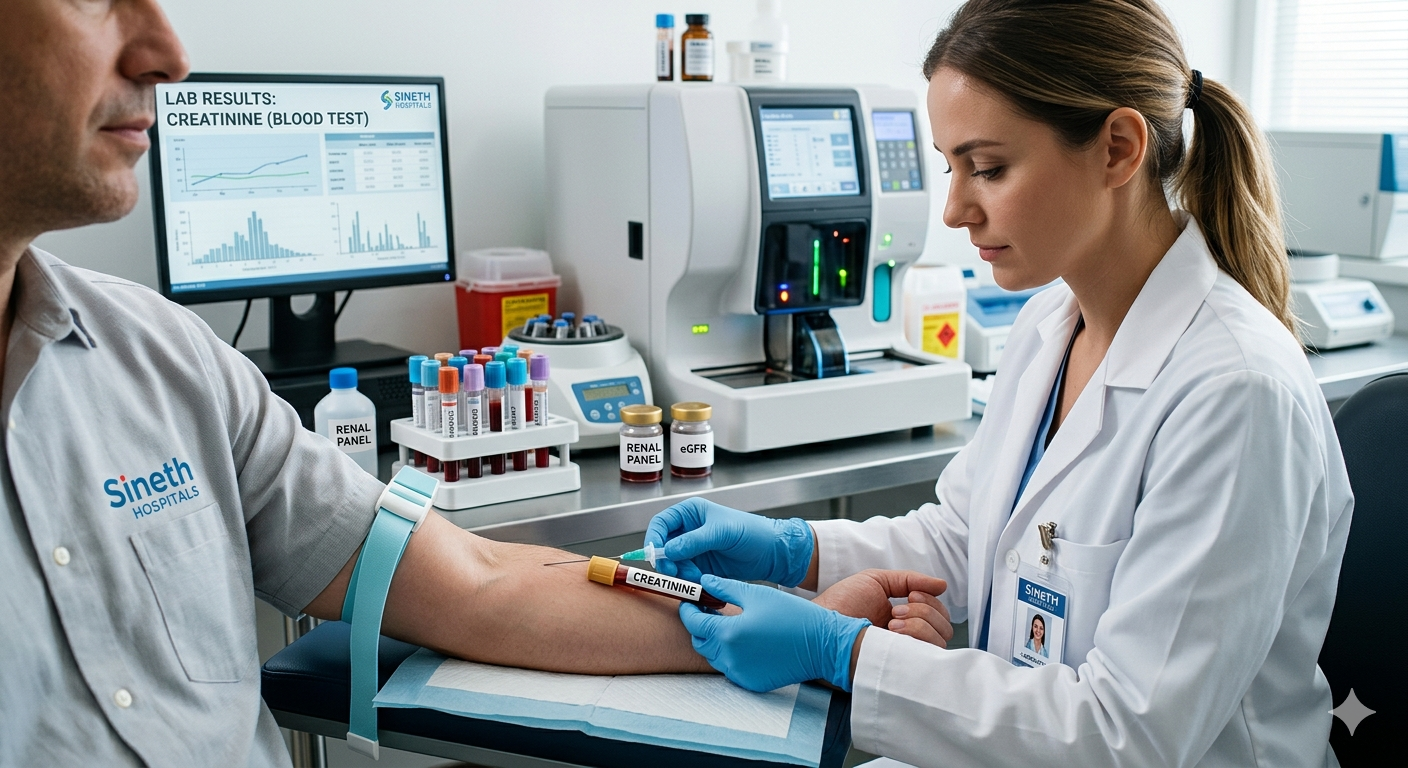
Serum creatinine is a common kidney function blood test
The serum creatinine test is one of the most commonly performed blood tests used to assess kidney function. Kidneys continuously filter waste products from the blood and remove them through urine. When kidney function becomes impaired, waste products can begin to accumulate in the bloodstream.
One of the most important of these substances is creatinine. Because of this, creatinine testing is widely used during routine health checkups, hospital admissions, diabetes and blood pressure monitoring, medication safety checks, and chronic kidney disease follow-up.
What is creatinine?
Creatinine is a waste product produced by muscles during normal daily activity. Muscles use a substance called creatine phosphate to generate energy, and creatinine is formed during this process.
The kidneys filter creatinine out of the bloodstream and remove it through urine. Because the body produces creatinine continuously, and healthy kidneys remove it efficiently, the blood creatinine level usually stays within a relatively stable range.
| Step | What happens |
|---|---|
| Production | Muscles produce creatinine during normal energy use. |
| Filtration | Kidneys filter creatinine from the blood. |
| Removal | Creatinine leaves the body through urine. |
Why is serum creatinine testing done?
The main reason is to assess kidney function. Doctors may use serum creatinine to help identify acute kidney injury, chronic kidney disease, or kidney failure, and to monitor people who already have kidney problems.
- To assess suspected kidney disease or reduced kidney function
- To monitor diabetes and high blood pressure, which are leading causes of kidney disease
- Before some CT scans, angiography procedures, or contrast dye studies
- To check medication safety or adjust doses when kidney function is reduced
- During routine medical checkups, renal profiles, and hospital admissions
- To evaluate symptoms such as leg or face swelling, reduced urine output, foamy urine, blood in urine, fatigue, nausea, or unexplained high blood pressure
How doctors think about creatinine results
In general, normal kidney filtration tends to keep creatinine within the expected range, while reduced kidney filtration can cause creatinine to rise. However, interpretation is not always straightforward.
Creatinine levels can be affected by muscle mass, age, sex, body size, hydration, certain medicines, and dietary protein intake. A muscular person may naturally have a higher creatinine level, while an elderly or frail person may have significant kidney disease despite only a mild rise.
How should you prepare for the test?
In most cases, special preparation is not required for a serum creatinine test. Your doctor may still give instructions depending on your health condition and any other tests ordered together.
How is the creatinine blood test performed?
The serum creatinine test is a simple blood test. A healthcare worker cleans the skin, inserts a needle into a vein, usually in the arm, collects a small blood sample, and sends it to the laboratory.
| Question | Usual answer |
|---|---|
| How long does collection take? | Usually only a few minutes. |
| Is it painful? | Most people feel only mild discomfort or a brief needle-prick pain. |
| When are results ready? | Often within a few hours or on the same day, depending on the laboratory. |
Minor bruising or mild dizziness can occur occasionally. Serious complications from the blood draw are rare.
A normal creatinine level does not always guarantee normal kidney function
This limitation is especially important in elderly patients, thin or malnourished individuals, and people with low muscle mass. In these situations, creatinine may not rise dramatically even when kidney function is reduced.
Because of this, doctors often combine serum creatinine with estimated GFR (eGFR), blood urea, urine analysis, urine albumin testing, and clinical assessment.
Related kidney and metabolic health topics
Frequently asked questions about serum creatinine testing
Serum creatinine helps assess kidney health
Serum creatinine testing is one of the most useful and widely used investigations in modern medicine. It provides valuable information about kidney health and can help detect kidney disease early.
Patients should avoid self-diagnosis based on a single creatinine number. The result should be interpreted with age, muscle mass, medical history, hydration status, medicines, and other laboratory findings.