
What Is Blood Sugar?
Blood sugar — also called blood glucose — is the body's main source of energy. After you eat, carbohydrates are broken down into glucose, which enters the bloodstream. The hormone insulin, produced by the pancreas, helps move glucose from the blood into cells where it is used for energy.
When this system breaks down — either because the pancreas produces too little insulin or the body does not respond to it properly — blood glucose levels remain persistently elevated. Over time, this can lead to diabetes and its complications.
When Blood Sugar Persistently High
Persistently elevated blood sugar may indicate one of the following conditions:
- Prediabetes — blood sugar is above normal but not yet at the diabetic threshold; a window for prevention
- Diabetes mellitus — full diabetes, where blood sugar regularly exceeds the diagnostic cut-off values
- Gestational diabetes — high blood sugar that develops during pregnancy, even in women who did not previously have diabetes
1. Fasting Blood Sugar (FBS / FPG)
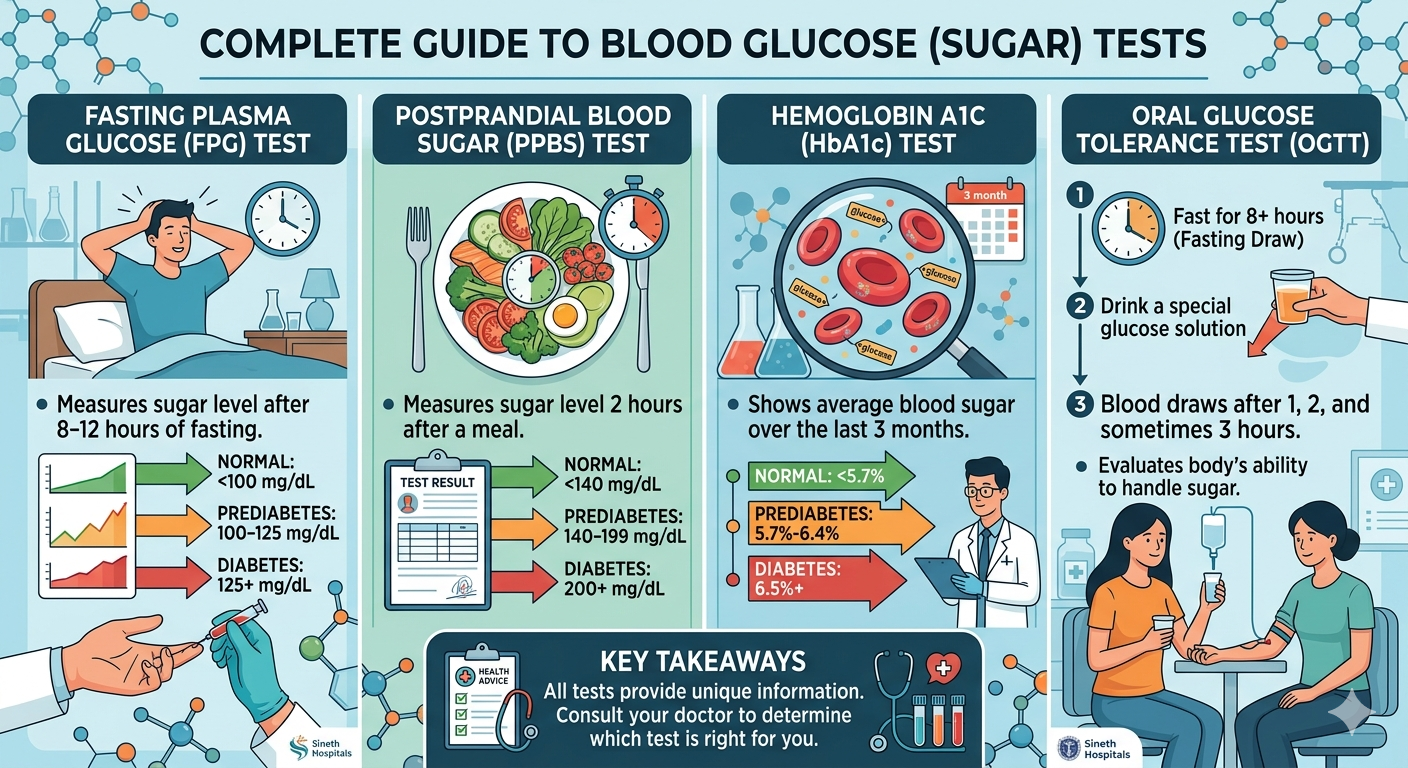
The fasting blood sugar test — also called the Fasting Plasma Glucose (FPG) test — measures blood glucose after you have fasted for at least 8 hours. It is one of the most widely used tests for screening and diagnosing diabetes and prediabetes.
| Result | mg/dL | mmol/L | Interpretation |
|---|---|---|---|
| Normal | Less than 100 | Less than 5.6 | Normal |
| Prediabetes | 100 – 125 | 5.6 – 6.9 | Prediabetes |
| Diabetes | 126 or higher | 7.0 or higher | Diabetes |
Important Notes for FBS
- Plain water is generally allowed during fasting — check with your laboratory
- Tea, coffee, milk, or any sugary drink will affect the result
- Illness, stress, and some medications (e.g. steroids) can temporarily raise blood sugar
- In the absence of diabetes symptoms, a diagnosis requires a repeat abnormal result
2. Postprandial Blood Sugar (PPBS)
The PPBS (Postprandial Blood Sugar) test measures blood glucose approximately 2 hours after a meal. It shows how effectively your body clears glucose from the bloodstream after eating.
| Result | mg/dL | mmol/L | Interpretation |
|---|---|---|---|
| Normal | Less than 140 | Less than 7.8 | Normal |
| Prediabetes | 140 – 199 | 7.8 – 11.0 | Prediabetes |
| Diabetes | 200 or higher | 11.1 or higher | Diabetes |
3. Random Blood Sugar (RBS)
The random blood sugar (RBS) test can be performed at any time, regardless of when you last ate. It is often used in emergency or symptomatic situations — for example, when a patient presents with symptoms that may suggest diabetes.
| Result | mg/dL | mmol/L | Interpretation |
|---|---|---|---|
| Usually normal | Below 140 | Below 7.8 | Normal |
| Possible diabetes* | 200 or higher | 11.1 or higher | Investigate |
*Especially when associated with typical symptoms of diabetes (see below).
Symptoms That Raise Suspicion of Diabetes
4. Oral Glucose Tolerance Test (OGTT)
The OGTT evaluates how the body handles a standardised glucose load. The patient fasts overnight, then drinks a glucose solution, and blood sugar is measured 2 hours later. It is more sensitive than the FBS for detecting early abnormalities in glucose metabolism.
How OGTT Is Performed
- 1Fast for at least 8–10 hours overnight (water is allowed)
- 2Drink a standardised glucose solution (75 g of glucose in adults)
- 3Rest quietly — avoid food, smoking, or strenuous activity
- 4Blood sugar is measured at 2 hours (and sometimes at 1 hour)
OGTT Reference Values (2-hour result)
| Result | mg/dL | mmol/L | Interpretation |
|---|---|---|---|
| Normal | Less than 140 | Less than 7.8 | Normal |
| Impaired Glucose Tolerance | 140 – 199 | 7.8 – 11.0 | Prediabetes |
| Diabetes | 200 or higher | 11.1 or higher | Diabetes |
When OGTT Is Commonly Used
5. HbA1c (Glycated Haemoglobin)
The HbA1c test measures the percentage of haemoglobin in red blood cells that has glucose attached to it. Because red blood cells live for approximately 2–3 months, HbA1c reflects your average blood sugar over that entire period — not just at a single point in time.
Importantly, no fasting is required for the HbA1c test — it can be done at any time of day.
HbA1c Reference Values
| Result | HbA1c (%) | Interpretation |
|---|---|---|
| Normal | Below 5.7% | Normal |
| Prediabetes | 5.7% – 6.4% | Prediabetes |
| Diabetes | 6.5% or higher | Diabetes |
HbA1c Target for People Living With Diabetes
For most adults with diabetes, the general target is HbA1c below 7%. However, individual targets may differ based on:
- Age and life expectancy
- Pregnancy status
- Risk of low blood sugar (hypoglycaemia)
- Presence of other medical conditions
HbA1c to Estimated Average Glucose
| HbA1c (%) | Estimated Average Glucose (mg/dL) | Estimated Average Glucose (mmol/L) |
|---|---|---|
| 5% | 97 | 5.4 |
| 6% | 126 | 7.0 |
| 7% | 154 | 8.6 |
| 8% | 183 | 10.2 |
| 9% | 212 | 11.8 |
Blood Sugar Levels During Pregnancy
Pregnancy requires different blood sugar targets because elevated glucose can affect both the mother and the developing baby. The thresholds used during pregnancy are stricter than general diabetes cut-offs.
| Test Timing | Target (mg/dL) | Target (mmol/L) |
|---|---|---|
| Fasting | Less than 95 | Less than 5.3 |
| 1 hour after meal | Less than 140 | Less than 7.8 |
| 2 hours after meal | Less than 120 | Less than 6.7 |
How to Convert Between mg/dL and mmol/L
Both units measure the same thing — glucose concentration in the blood — but on different scales. The conversion factor is 18.
A fasting sugar of 126 mg/dL = 126 ÷ 18 = 7.0 mmol/L (diabetes threshold).
An HbA1c of 7% corresponds to an estimated average glucose of 154 mg/dL or 8.6 mmol/L.
What Causes High or Low Blood Sugar?
Common Causes of High Blood Sugar (Hyperglycaemia)
- Diabetes mellitus (Type 1 or Type 2)
- Obesity and physical inactivity
- Family history of diabetes
- Stress and infections
- Steroid medications (e.g. prednisolone, dexamethasone)
- Gestational diabetes during pregnancy
- Polycystic ovarian syndrome (PCOS)
- Certain pancreatic diseases
Common Causes of Low Blood Sugar (Hypoglycaemia)
- Skipping meals or prolonged fasting
- Excess insulin or diabetes medication
- Heavy exercise without adequate food intake
- Alcohol consumption
- Certain rare tumours (e.g. insulinoma)
- Liver or kidney disease
Symptoms of Low Blood Sugar
When Should You See a Doctor?
Seek medical advice if you:
- 1Have repeatedly high or low blood sugar readings on a home glucometer or lab report
- 2Develop symptoms of diabetes — excessive thirst, frequent urination, unexplained weight loss, or blurred vision
- 3Feel dizzy, faint, or confused — which may indicate dangerously low blood sugar
- 4Are pregnant and have received abnormal blood sugar results
- 5Have a strong family history of diabetes, are overweight, or are physically inactive
- Fasting blood sugar below 100 mg/dL (5.6 mmol/L) is generally normal
- PPBS below 140 mg/dL (7.8 mmol/L) at 2 hours after a meal is normal
- HbA1c below 5.7% is normal; 6.5% or above indicates diabetes
- A random blood sugar of 200 mg/dL or above with symptoms is a red flag
- Pregnancy targets are stricter than general cut-offs
- To convert mg/dL to mmol/L: divide by 18
- Persistently elevated blood sugar requires medical evaluation — early treatment prevents complications