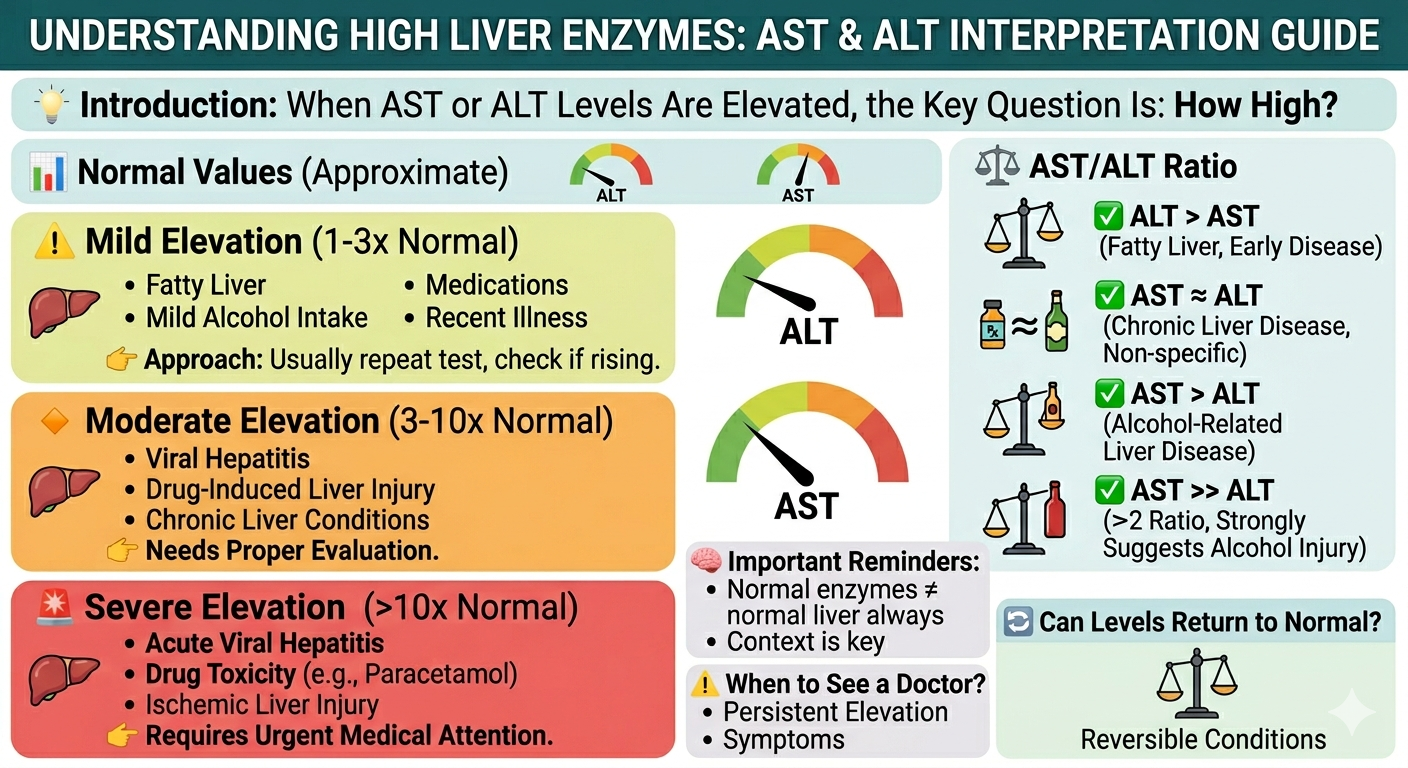
High AST and ALT levels need context
AST and ALT levels often cause concern when they are elevated. But the key question is not simply whether they are high. The more useful question is: how high are they, and what is happening over time?
This article continues from our basic guide: AST (SGOT) and ALT (SGPT) tests: why they are done and how to prepare.
Normal AST and ALT values
Normal values are approximate, and the reference range can be slightly different between laboratories. Always compare your result with the reference range printed on your own lab report.
| Test | Approximate normal value |
|---|---|
| ALT (SGPT) | Less than 40 U/L |
| AST (SGOT) | Less than 40 U/L |
Understanding mild, moderate, and severe elevation
Mild elevation: 1-3 times normal
Mild elevation is the most common pattern. Common causes include fatty liver, mild alcohol intake, medications, and recent illness.
Moderate elevation: 3-10 times normal
Moderate elevation needs proper evaluation. Possible causes include viral hepatitis, alcohol-related injury, and drug-induced liver injury.
Severe elevation: more than 10 times normal
Severe elevation can be serious. Possible causes include acute viral hepatitis, drug toxicity such as paracetamol overdose, and ischemic liver injury.
Rising values can matter more than one result
Even if AST and ALT are not extremely high, an increasing trend over time can be important. A single result gives one snapshot. Repeated results show direction.
AST/ALT ratio explained
The pattern between AST and ALT can give clues, but it is not a diagnosis by itself.
| Pattern | Possible meaning |
|---|---|
| ALT > AST Ratio less than 1 | Common in fatty liver and early liver disease |
| AST approximately ALT Ratio around 1 | Can be seen in chronic liver disease or non-specific patterns |
| AST > ALT Ratio more than 1 | Can suggest alcohol-related liver disease |
| AST much higher than ALT Ratio more than 2 | Strongly suggests alcohol-related injury, especially with the right clinical history |
Do not interpret AST and ALT alone
- Normal enzymes do not always mean the liver is completely normal.
- Mild elevation does not automatically mean serious disease.
- Interpretation must include symptoms, history, medications, alcohol intake, and other tests.
When should you see a doctor?
You should seek medical review if AST or ALT elevations are moderate or severe, persistent, rising over time, or associated with symptoms.
- Moderate or severe elevation
- Persistent elevation on repeat testing
- Rising values over time
- Symptoms such as jaundice, fatigue, abdominal pain, vomiting, or dark urine
Can AST and ALT return to normal?
Yes. AST and ALT can return to normal, especially when the cause is reversible. Fatty liver and lifestyle-related liver enzyme elevation may improve with weight reduction, healthier diet, regular activity, and avoiding alcohol when advised.
Your doctor may recommend repeat blood tests, additional liver tests, ultrasound, medication review, or hepatitis screening depending on your situation.
Continue the liver health cluster
Frequently asked questions about high AST and ALT
Level, trend, and context give the real meaning
AST (SGOT) and ALT (SGPT) are useful indicators, but they do not tell the whole story by themselves.
Trend + level + context = the true meaning.