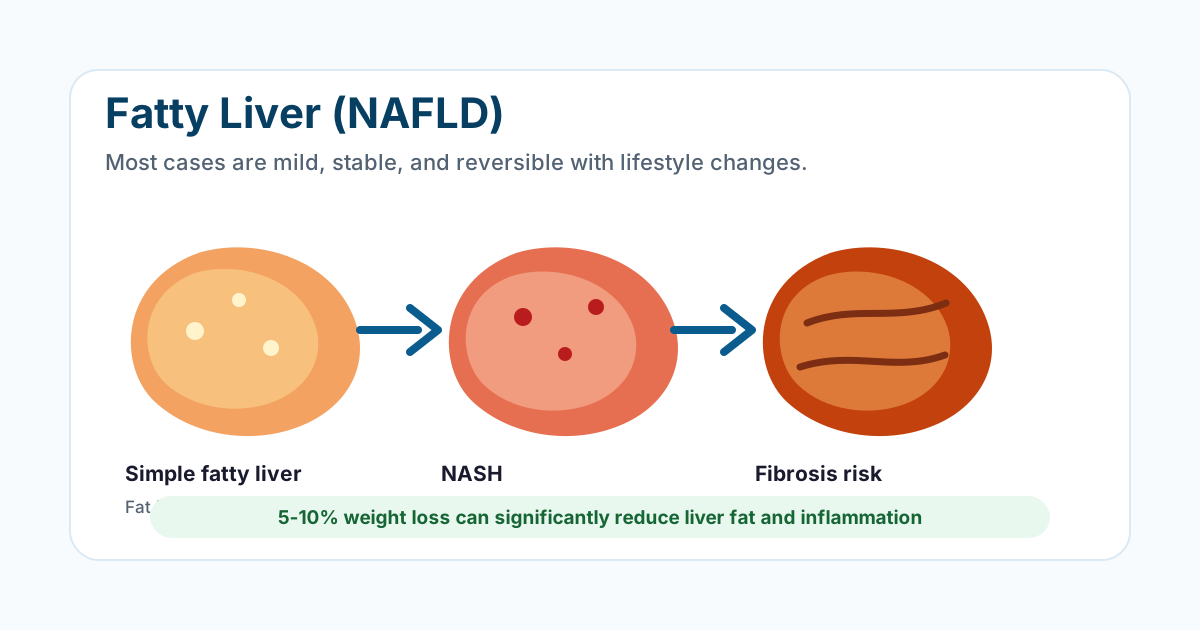

What is fatty liver?
Fatty liver means fat accumulation inside liver cells. It is now one of the most commonly reported findings on ultrasound scans and medical reports.
The most common type is Non-Alcoholic Fatty Liver Disease (NAFLD), which is strongly linked with obesity, diabetes, insulin resistance, and metabolic syndrome.
Is fatty liver really a disease?
This is an important and often misunderstood point. In many individuals, simple fatty liver does not cause symptoms or liver damage.
In fact, whether early fatty liver should always be considered a "disease" is still debated. What matters more is whether there is inflammation, fibrosis or signs of progression.
How often does fatty liver become serious?
Most people with fatty liver do not develop serious liver disease. The usual pattern is stability, especially when metabolic risk factors are controlled.
| Stage | Approximate progression | Practical meaning |
|---|---|---|
| Simple fatty liver | Most people stay here | Often mild and reversible |
| Steatohepatitis (NASH) | About 20-30% may progress | Inflammation is present |
| Fibrosis | About 20-30% of those with NASH may develop scarring | Risk becomes more important |
| Cirrhosis | Only a small proportion | Advanced liver disease needing specialist care |
Practically, this means the majority of patients remain stable, do not develop complications, and do not need aggressive treatment. Fatty liver should be understood, not feared.
Can fatty liver be reversed?
Yes. Fatty liver is reversible, especially in early stages. Strong evidence shows that losing about 5-10% of body weight can significantly improve liver fat and inflammation.
In early disease, lifestyle change can reduce liver fat, improve insulin resistance, lower liver enzyme levels, and even reverse early changes.
NAFLD treatment: what actually works?
The most effective fatty liver treatment is lifestyle improvement. This sounds simple, but it is the part with the strongest evidence.
- Weight reduction: even modest weight loss improves liver fat.
- Diet changes: reduce sugar, refined carbohydrates and excess calories. A balanced diet matters more than extreme diets.
- Physical activity: exercise improves insulin sensitivity and reduces liver fat, even before major weight loss occurs.
When should you be concerned?
Fatty liver is sometimes overemphasized and presented as a serious disease in all cases. That can create unnecessary anxiety. A better approach is to assess the real risk.
Further medical evaluation is more important if any of the following are present:
- Diabetes or poor blood sugar control
- Persistently high liver enzymes
- Obesity with metabolic syndrome
- Evidence of fibrosis or scarring on assessment