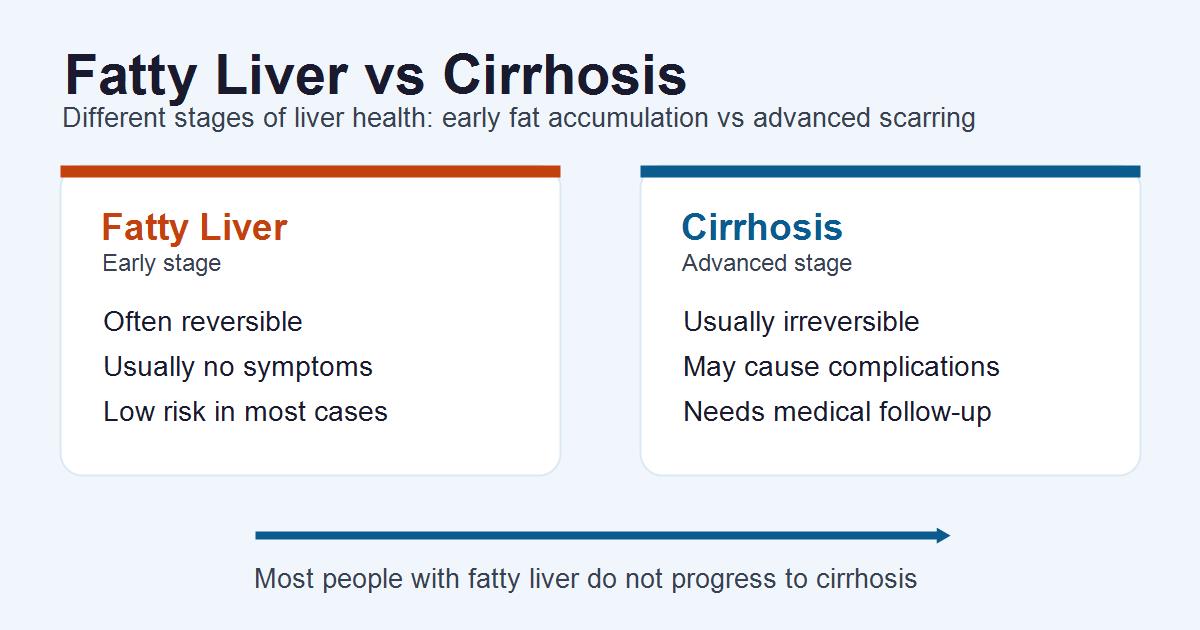

Why patients worry about fatty liver and cirrhosis
Many patients who are told they have fatty liver worry that it may lead to serious liver disease such as cirrhosis.
These two conditions are related, but they are not the same. Knowing the difference helps you avoid unnecessary fear, recognize real risk, and take the right steps early.
What is fatty liver?
Fatty liver means fat accumulation inside liver cells. The most common form is non-alcoholic fatty liver disease (NAFLD), which is linked with obesity, diabetes, high cholesterol, and insulin resistance.
In most people, fatty liver remains mild. The main goal is to reduce metabolic risk and prevent progression.
What is cirrhosis?
Cirrhosis is advanced, long-term liver damage. It occurs when normal liver tissue is replaced by scar tissue, also called fibrosis, and the liver's structure and function are significantly affected.
Fatty liver vs cirrhosis - quick comparison
| Feature | Fatty liver | Cirrhosis |
|---|---|---|
| Stage | Early | Advanced |
| Reversibility | Often reversible | Usually irreversible |
| Symptoms | Usually none | May be present |
| Liver damage | Minimal or none in many cases | Significant scarring |
| Risk level | Low in most cases | High |
How does fatty liver progress?
Not everyone with fatty liver develops cirrhosis. In fact, most patients do not reach cirrhosis.
Only about 20-30% of people with fatty liver progress to inflammation. Of those, about 20-30% develop fibrosis, and a smaller proportion develop cirrhosis.
How are symptoms different?
Fatty liver usually causes no symptoms. Some people may notice mild right upper abdominal discomfort, but many have no clue until an ultrasound or blood test is done.
Cirrhosis may cause symptoms when disease is advanced. These can include:
- Fatigue or marked weakness
- Swelling of the abdomen due to fluid, called ascites
- Yellowing of the eyes or skin, called jaundice
- Easy bleeding or bruising
Diagnosis and treatment differences
Fatty liver is usually diagnosed with ultrasound and blood tests. Cirrhosis may require blood tests, imaging, fibrosis assessment, and sometimes liver biopsy.
| Area | Fatty liver | Cirrhosis |
|---|---|---|
| Diagnosis | Ultrasound and blood tests | Blood tests, imaging, fibrosis assessment, sometimes biopsy |
| Treatment focus | Lifestyle changes, weight management, diet and exercise | Treat complications, monitor liver function, regular follow-up |
| Main goal | Reverse the condition and reduce risk | Prevent further damage and complications |
For early fatty liver, practical lifestyle steps matter most. Start with the fatty liver overview, then use the fatty liver diet guide and sample meal plan.
Can fatty liver become cirrhosis?
Yes, fatty liver can become cirrhosis, but not in most people. Risk increases when fatty liver is long-standing or combined with diabetes, obesity, high liver enzyme levels, or other metabolic risk factors.
In most cases, established cirrhosis is not fully reversible. However, early intervention can slow progression and improve outcomes.
Common misconceptions
- "Fatty liver always becomes cirrhosis" - this is not true.
- "Fatty liver is always dangerous" - most cases are mild.
- "Cirrhosis happens quickly" - progression usually takes years and does not occur in most patients.
Frequently asked questions
Fatty liver and cirrhosis are very different stages
Fatty liver is early and often reversible. Cirrhosis is advanced and serious.
Most people with fatty liver do not develop cirrhosis. Early lifestyle changes, weight control, and proper follow-up are the best ways to protect liver health.