
What Should I Actually Eat in a Day?
For people with fatty liver, also called NAFLD, one of the most common questions is: "What should I actually eat in a day?"
While there is no single special diet, a balanced, calorie-controlled meal pattern can reduce liver fat and improve overall health. This guide gives a simple daily meal plan that can be adjusted based on your preferences.
The Goal Is Not a Strict or Complicated Diet
The most useful fatty liver diet plan is the one you can continue. What matters most is balanced meals, controlled portions, reduced sugar and refined carbohydrates, and consistency over time.
Fatty Liver Daily Diet Example
This is only an example. Adjust portions based on your body weight, activity level, blood sugar control, appetite and your doctor's advice.
Breakfast (7-9 AM)
- Oats with milk, no added sugar, plus a small portion of nuts
- 1-2 boiled eggs with whole grain bread
- Red rice string hoppers with dhal
Mid-Morning Snack (10-11 AM)
- One whole fruit such as apple, guava or papaya
- A small handful of nuts
Lunch (12-2 PM)
- A controlled portion of rice, preferably brown or red rice
- Plenty of vegetables
- Lean protein such as fish, chicken or dhal
Evening Snack (4-5 PM)
- Tea without sugar
- Roasted chickpeas or peanuts in a controlled portion
Dinner (6-8 PM)
- A lighter meal with vegetables and protein such as fish, eggs or dhal
- A smaller portion of rice or whole grains if needed
Even Healthy Meals Can Be Too Much
Even healthy meals can worsen fatty liver if eaten in excess. Eat until satisfied, not full. This matters because reducing excess calorie intake is one of the main ways to reduce liver fat.
Drink Water, Not Sugar
- Drink plenty of water through the day.
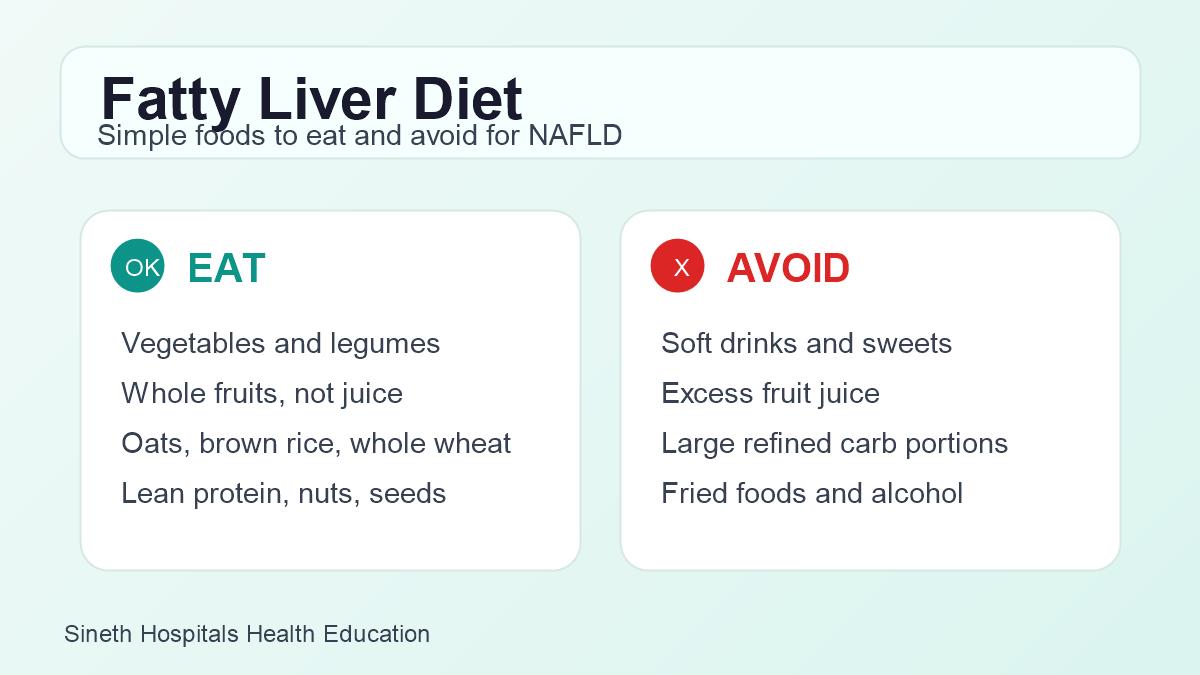
- Avoid soft drinks and sweetened beverages.
- Choose whole fruit instead of fruit juice.
Foods and Habits to Limit
- Sugary foods and drinks
- Refined carbohydrates such as white bread and bakery items
- Deep-fried foods
- Excess calories, even from healthy foods
Flexibility Matters
This is not a strict diet plan. Flexibility is important, and long-term consistency matters more than perfection. Your meals should fit your health needs, food access, culture, preferences and budget.
Frequently Asked Questions
Where This Meal Plan Comes From
This sample meal plan is based on general principles recommended by international guidelines for fatty liver (NAFLD). There is no single fixed diet, and the plan should be adapted to individual needs and cultural food patterns.
Want to know the principles behind the plan? If you would like to read what major health authorities actually recommend about diet in fatty liver, see our companion guide: Fatty Liver Diet Principles from International Guidelines.
Simple Daily Habits Are Enough
A fatty liver diet does not require complicated rules. Focus on balanced meals, controlled portions, less sugar and a regular eating pattern. Consistency is the key to improvement.