eGFR is a key kidney function estimate
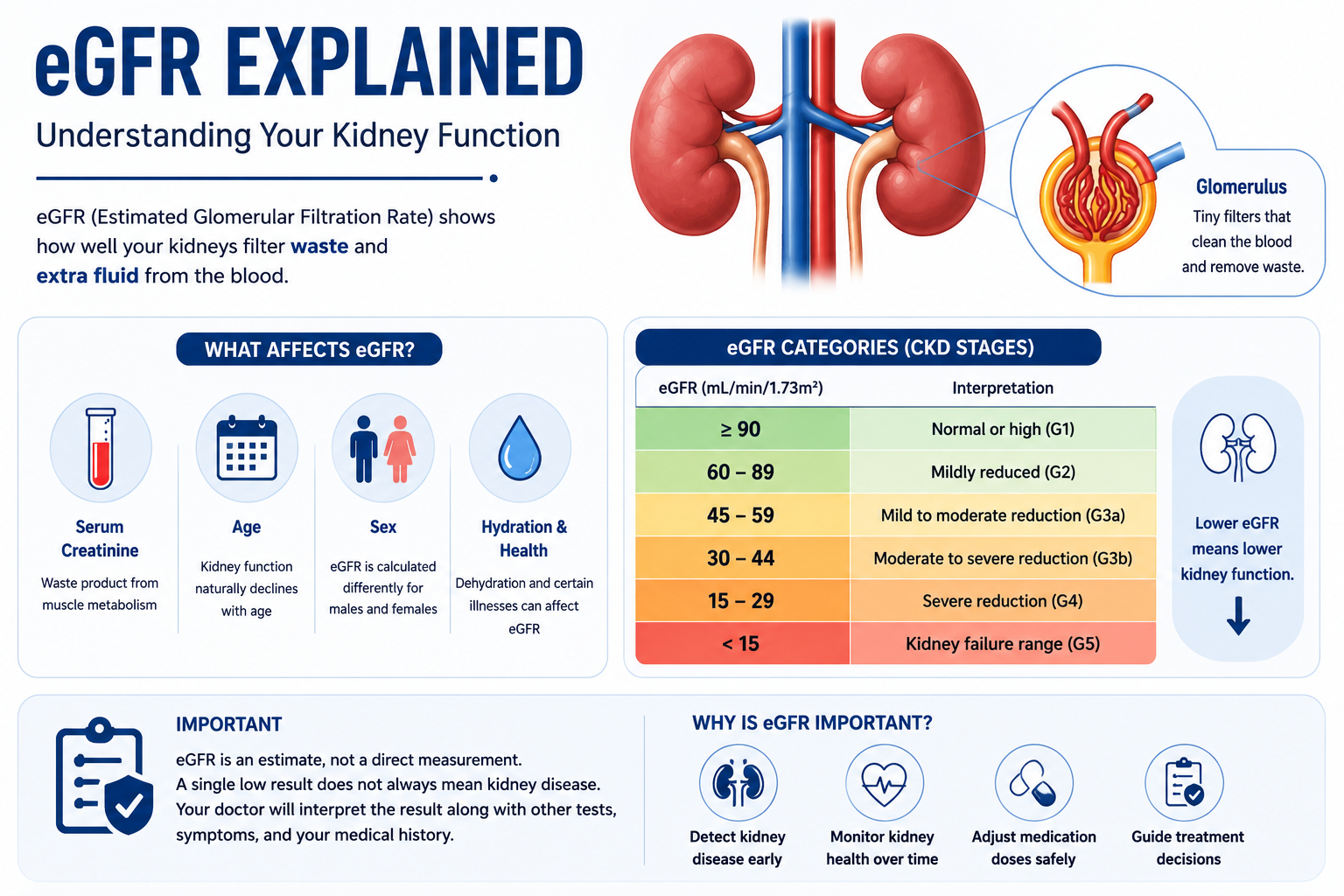
The Estimated Glomerular Filtration Rate, or eGFR, is one of the most important tests used to assess kidney function. It estimates how effectively the kidneys filter waste products and excess fluid from the blood.
Today, eGFR is widely used during routine health screening, in patients with diabetes and high blood pressure, to detect chronic kidney disease, to monitor kidney function over time, and to adjust medication doses.
Many patients see an eGFR result in a blood report without fully understanding what it means. A low eGFR can cause anxiety, while a normal-looking result may provide false reassurance if interpreted incorrectly.
What is eGFR?
eGFR stands for Estimated Glomerular Filtration Rate. The kidneys contain millions of tiny filtering units called glomeruli. These filters continuously remove waste products, toxins, and excess water from the blood.
The glomerular filtration rate refers to how much blood the kidneys filter each minute. Because directly measuring true GFR is difficult and expensive, doctors usually estimate it using blood tests. This estimated value is called eGFR.
How is eGFR calculated?
Modern eGFR equations usually use serum creatinine, age, and sex. Some older equations also used race, but modern CKD-EPI 2021 equations are race-free.
Serum creatinine and eGFR are inversely related. In general, higher creatinine means lower eGFR, while lower creatinine means higher eGFR.
| Pattern | General interpretation |
|---|---|
| Higher creatinine | Usually lower eGFR and reduced filtering capacity |
| Lower creatinine | Usually higher eGFR, but interpretation depends on muscle mass and clinical context |
| Changing creatinine trend | May be more important than a single isolated result |
Creatinine is influenced by muscle mass, age, hydration, diet, and certain medications. This is why eGFR is often more useful than creatinine alone.
Why eGFR is more useful than creatinine alone
Serum creatinine alone can sometimes be misleading. A muscular athlete may naturally have higher creatinine, while a frail elderly patient may have severe kidney disease despite only mildly elevated creatinine.
eGFR adjusts for factors such as age and sex, making it a better estimate of kidney function in most adults. Even so, it remains an estimate and must be interpreted with the full clinical picture.
What is a normal eGFR?
In most adults, an eGFR of 90 mL/min/1.73m² or above is generally considered normal. However, eGFR naturally declines slightly with age, and mildly reduced eGFR in older adults does not always indicate serious disease.
Doctors interpret eGFR together with urine tests, symptoms, medical history, imaging findings, and the trend over time.
eGFR categories and chronic kidney disease stages
| eGFR (mL/min/1.73m²) | Interpretation |
|---|---|
| ≥90 | Normal or high (G1) |
| 60-89 | Mildly reduced (G2) |
| 45-59 | Mild to moderate reduction (G3a) |
| 30-44 | Moderate to severe reduction (G3b) |
| 15-29 | Severe reduction (G4) |
| <15 | Kidney failure range (G5) |
Common causes of low eGFR
Chronic kidney disease
- Diabetes mellitus
- Hypertension
- Chronic glomerulonephritis
- Polycystic kidney disease
Acute kidney injury
- Severe dehydration
- Infection or shock
- Certain medications
- Urinary obstruction
Kidney filtration may also decline gradually with aging or temporarily fall when blood flow to the kidneys is reduced, such as during severe dehydration, heart failure, or major blood loss.
Can eGFR improve?
Yes. If the underlying cause is reversible, eGFR may improve after hydration, infection treatment, blood pressure control, diabetes management, or stopping harmful medications under medical supervision.
However, advanced chronic kidney disease may not fully reverse, so the goal may be to slow progression and reduce complications.
What are the symptoms of low eGFR?
Early kidney disease may cause no symptoms at all. As kidney function worsens, symptoms may include fatigue, swelling, reduced appetite, nausea, itching, shortness of breath, and reduced urine output.
Limitations of eGFR
eGFR is extremely useful, but it is not perfect. It may be less accurate in very muscular individuals, frail elderly patients, pregnancy, amputees, severe malnutrition, and rapidly changing kidney function.
In these situations, doctors may consider additional laboratory testing, cystatin C testing, or specialist nephrology assessment.
What other tests are used alongside eGFR?
Doctors often combine eGFR with serum creatinine, blood urea, urine routine examination, urine albumin testing, and kidney ultrasound. This provides a more complete picture of kidney health.
| Test | Why it may be used |
|---|---|
| Serum creatinine | Core blood test used to calculate eGFR and assess kidney filtration. |
| Blood urea | Another waste product that may rise with reduced kidney function or dehydration. |
| Urine routine examination | Looks for protein, blood, infection, and other urine abnormalities. |
| Urine albumin testing | Detects early kidney damage, especially in diabetes and hypertension. |
| Kidney ultrasound | Assesses kidney size, structure, obstruction, stones, or cysts. |
eGFR and medication dosing
Many medications require dose adjustment when kidney function decreases. Examples include certain antibiotics, diabetes medications, heart medications, and chemotherapy drugs. This is another important reason eGFR is widely used in modern medicine.
eGFR calculator
You can use the Sineth Hospitals health tool to estimate kidney function from common clinical inputs: open the eGFR calculator.
Related kidney health topics
Frequently asked questions about eGFR
eGFR is valuable, but it should not be read alone
eGFR is one of the most valuable tools for assessing kidney health and detecting chronic kidney disease early. However, it is an estimate, not a direct measurement, and a single abnormal result does not always indicate permanent kidney disease.
Patients should discuss abnormal kidney function results with a qualified healthcare professional rather than interpreting eGFR in isolation.