Health Education Tool

Fever Assessment Tool

Check whether fever is present, identify warning signs, assess hydration and learn when medical assessment may be appropriate. This educational tool does not diagnose illness.

1
Basic Info
2
Temperature
3
Condition
4
Warnings
5
Hydration
Step 1 of 5 — Basic Information
Required Information
Enter the child's date of birth.
Enter the child's current weight if known. Weight helps estimate daily fluid requirements.
Important Safety Note: If a child appears severely unwell, has difficulty breathing, is difficult to wake, or you are seriously concerned — seek urgent medical care immediately, regardless of this tool's result.

Why This Result Was Generated
    Fever Duration Assessment
    Hydration Assessment
    Recommended Action
    Seek Medical Care Urgently If The Child Has:
    • Age under 3 months with fever
    • Difficulty breathing or working hard to breathe
    • Very sleepy or difficult to wake
    • Not responding normally
    • A seizure
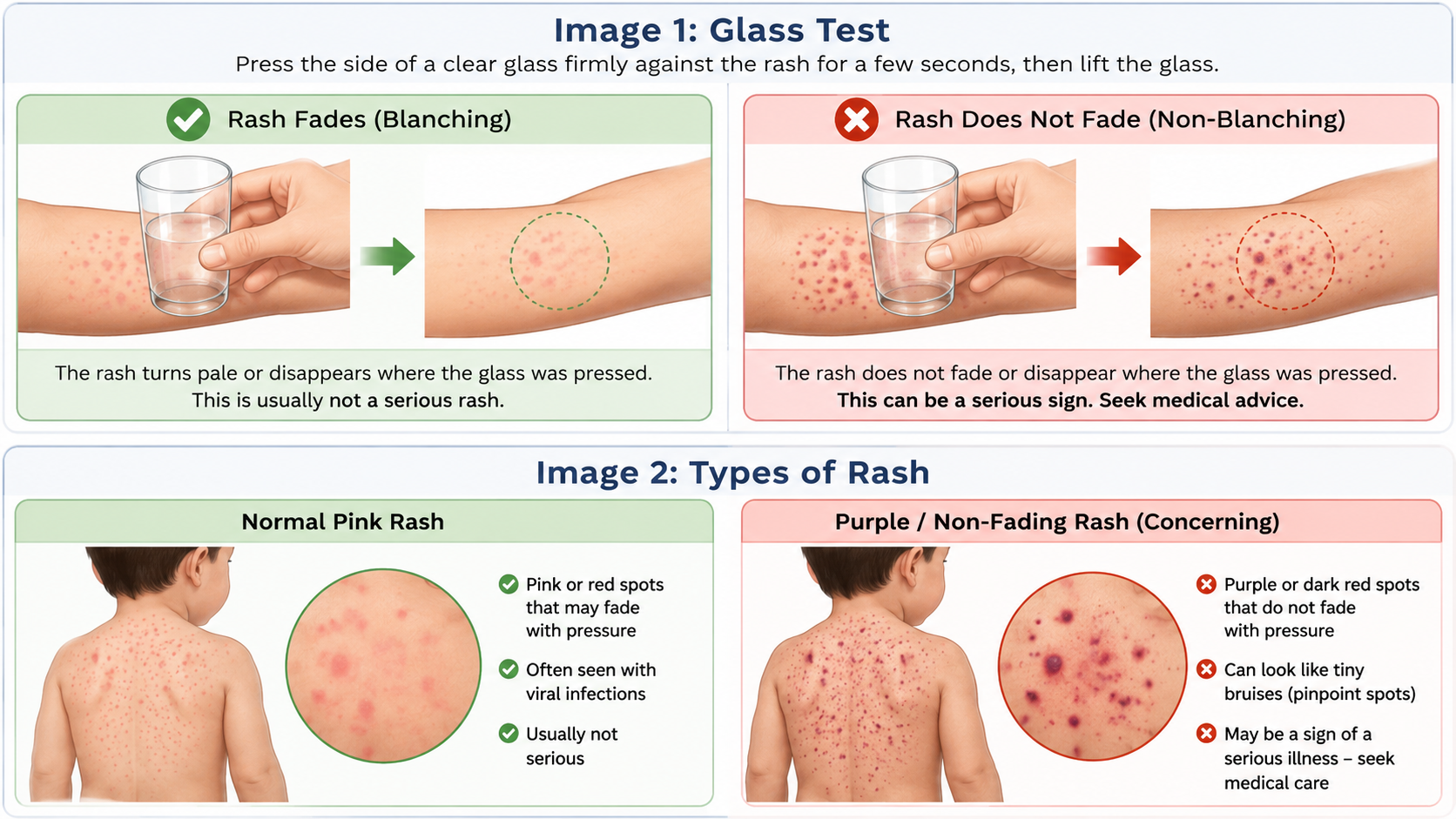
    • A rash that does not fade when pressed with a glass
    • Neck stiffness
    • Unable to keep fluids down
    • No urine output for several hours
    • Signs of significant dehydration
    Values Entered
    This assessment is for educational purposes only. It does not diagnose the cause of fever and should not replace assessment by a qualified healthcare professional. Always seek medical advice if you are concerned about a child's condition.

    Understanding Fever in Children

    Educational information about fever, warning signs, hydration and when to seek medical advice.

    What Is Considered A Fever?

    Most healthcare organisations define fever as a temperature of 38.0°C (100.4°F) or higher. Temperatures below this threshold are not classified as fever, though a child may still feel unwell and symptoms should continue to be monitored.

    Is A High Temperature Always Dangerous?

    Not necessarily. Many childhood infections cause fever and resolve without complications. The child's overall condition — including behaviour, hydration, breathing and the presence of warning signs — is often more important than the temperature alone. A mildly unwell child with a temperature of 39°C may be of less immediate concern than a lethargic child with a lower temperature.

    Why Is Age Important?

    Young infants have a higher risk of serious infection because their immune systems are still developing. A fever in a baby under 3 months of age requires prompt medical assessment regardless of the temperature level and the apparent condition of the baby. Infants aged 3 to 6 months with a temperature of 39°C or above should also be assessed by a healthcare professional.

    Why Is Hydration Important?

    Children with fever can lose fluids through sweating, reduced drinking and vomiting. Mild dehydration is common during fever and is usually manageable at home with frequent small amounts of fluid. Signs of more significant dehydration — such as no urine output, dry mouth, absence of tears, or refusing all fluids — require medical attention.

    What Is The Glass Test?

    The glass test is a simple method used to check a rash. Press a clear glass firmly against the rash. If the rash fades under pressure, it is likely a blanching rash. If the rash does not fade and remains visible through the glass, this is a non-blanching rash and may require urgent medical assessment, as it can be associated with serious illness.

    What Is Neck Stiffness?

    Neck stiffness means the child is unable or unwilling to bend the neck forward because of pain or stiffness. It is different from a child simply resisting movement. True neck stiffness in the context of fever may warrant urgent medical assessment.

    Can Fever Cause Seizures?

    Some children develop febrile seizures during fever, particularly between the ages of 6 months and 5 years. A febrile seizure is usually brief and self-limiting. Any seizure occurring during illness, even if brief, should be discussed with a healthcare professional promptly. A child who has had a febrile seizure previously is at higher risk of recurrence.

    When Should I Seek Medical Advice?

    Medical advice should be sought whenever warning signs are present, if symptoms worsen, if fever persists beyond 5 days, if you have concerns about the child's condition, or if the child is under 3 months of age. When in doubt, seeking medical assessment is always appropriate.
    Frequently Asked Questions

    38.0°C (100.4°F) or higher is commonly considered a fever.

    No. Many minor infections can cause high temperatures. The child's overall condition — behaviour, hydration and associated symptoms — remains the most important assessment.

    Fluid needs vary with age and weight. This tool estimates maintenance fluid requirements using the Holliday-Segar formula. Small, frequent amounts of fluid are usually easier to tolerate than large amounts at once.

    Sleep itself is not necessarily concerning. A child who sleeps more than usual during fever is common. Difficulty waking a child or reduced responsiveness when awake is more significant.

    No. This tool provides educational guidance only. It cannot determine the cause of fever and should not be used in place of a clinical assessment by a healthcare professional.

    Dr. Seneth Gajasinghe

    MBBS (Col), MD (Col)

    SLMC No. 27329

    Medical reviewer & author
    Sineth Hospitals, Sri Lanka

    Sineth Hospitals

    Rattanapitiya, Boralasgamuwa, Sri Lanka
    0 727 725 725  |  info@sinethhospitals.com

    Disclaimer: This tool is intended for educational purposes only and does not constitute medical advice, diagnosis, or treatment. It cannot determine the cause of fever or replace clinical assessment by a qualified healthcare professional. Do not make clinical decisions based solely on the output of this tool. If you are concerned about a child's condition, seek medical advice promptly.