What Is a Lipid Profile?
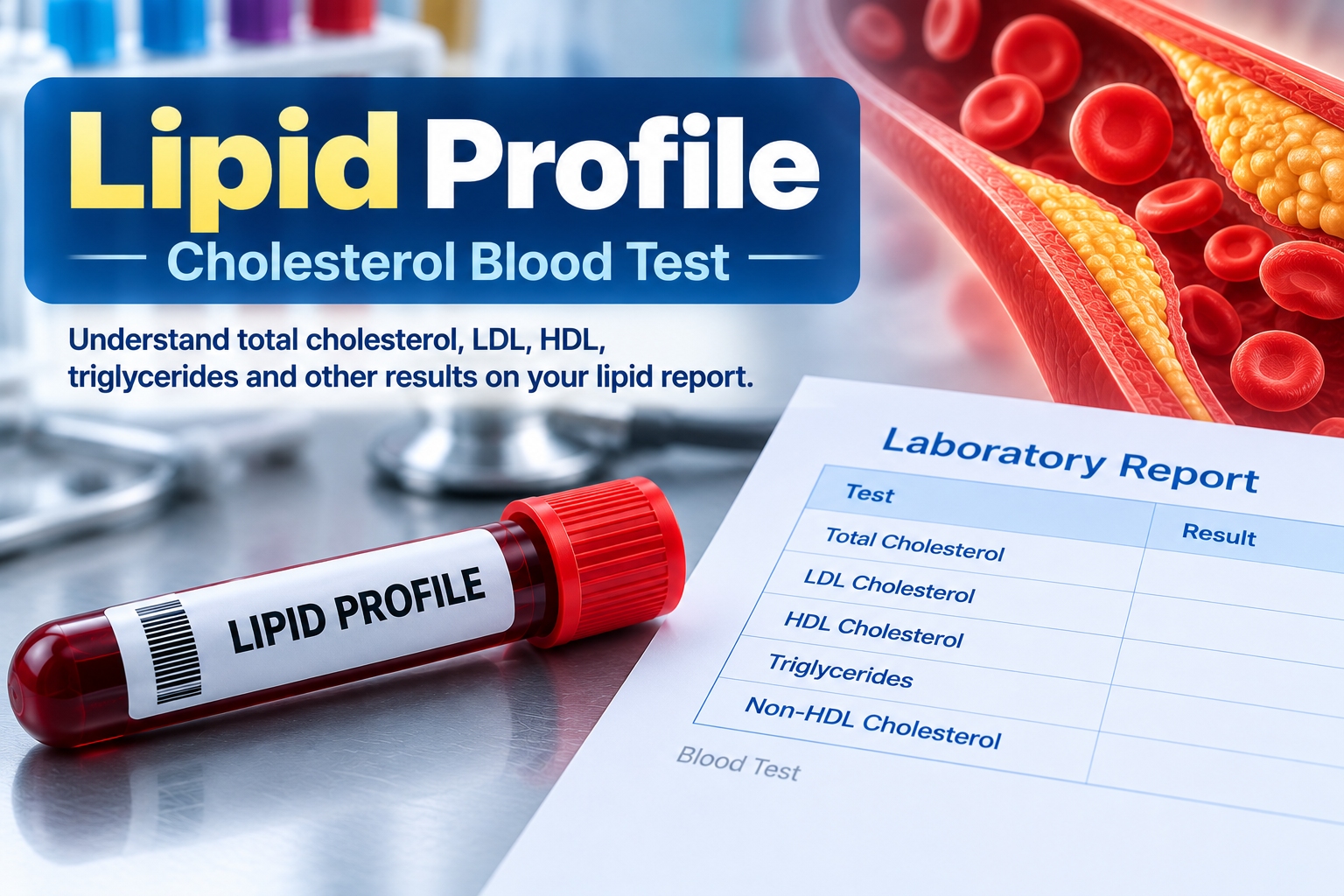
A lipid profile is a blood test that measures important fats and fat-carrying particles in your blood. It is also commonly called a lipid panel, cholesterol test, cholesterol profile, or lipid test.
A typical report may include:
- Total Cholesterol
- LDL Cholesterol
- HDL Cholesterol
- Triglycerides
Some reports also show non-HDL cholesterol, VLDL cholesterol, cholesterol ratios, or other measurements.
What Are Lipids?
Lipids are substances that include cholesterol and triglycerides. The body needs lipids for normal functions. For example, cholesterol is used in cell membranes, hormone production, and other important biological processes. Triglycerides are an important form of stored energy.
Problems occur when certain lipid-containing particles circulate at levels that increase the risk of disease.
Is Cholesterol Always Bad?
No. Your body needs cholesterol. The issue is not simply whether cholesterol exists in the blood. Cholesterol travels through the bloodstream inside particles called lipoproteins. Different lipoproteins carry cholesterol in different ways.
Two commonly reported measurements are LDL cholesterol and HDL cholesterol. They do not have the same relationship with cardiovascular disease.
What Does a Lipid Profile Measure?
A standard lipid profile commonly contains the following.
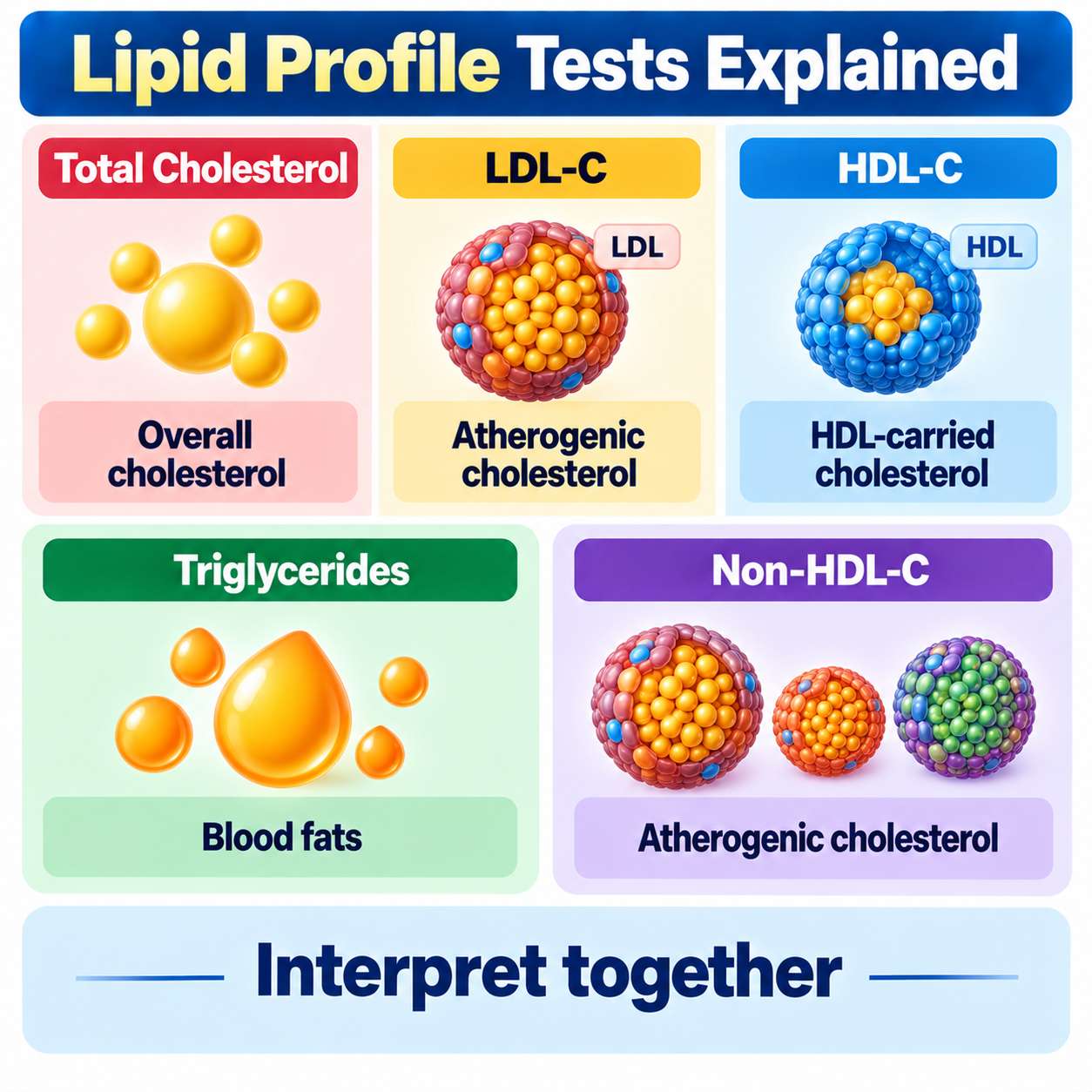
| Test | Simple Meaning |
|---|---|
| Total Cholesterol | Overall cholesterol measurement |
| LDL-C | Cholesterol carried mainly in LDL particles; an important atherosclerosis-related measurement |
| HDL-C | Cholesterol carried in HDL particles |
| Triglycerides | Another major type of fat in the blood |
| Non-HDL-C | Cholesterol carried in LDL and other major atherogenic particles |
Non-HDL cholesterol may be reported or calculated. It represents Total Cholesterol − HDL Cholesterol, and therefore includes cholesterol carried in LDL and several other potentially atherogenic particles. Not every laboratory report contains exactly the same measurements.
Why Is a Lipid Profile Tested?
A lipid profile may be performed to:
- Assess cardiovascular risk
- Screen for abnormal cholesterol or triglycerides
- Investigate a previously abnormal result
- Monitor a known lipid disorder
- Monitor treatment
- Assess risk in people with diabetes
- Assess risk in people with kidney disease
- Investigate possible inherited cholesterol problems
- As part of a general health assessment
Many people with abnormal cholesterol have no symptoms. Blood testing is therefore important.
How Is the Test Done?
A lipid profile requires a blood sample. A healthcare worker usually takes blood from a vein in your arm. The laboratory measures or calculates the different lipid values and reports them using its usual units and reference information. The test itself is generally quick.
Do I Need to Fast, and What About My Medicines?
Not every lipid profile requires fasting. Non-fasting lipid testing can be suitable in many routine situations. However, fasting may still be requested in particular circumstances — for example, when triglycerides need further assessment, a previous result requires clarification, another fasting blood test is being performed, or the clinical situation requires it.
Should I Stop My Medicines Before a Lipid Profile?
No medicine should be stopped simply because you are having a lipid profile unless the healthcare professional managing your care tells you to do so. Tell them about prescribed medicines, non-prescription medicines, supplements, and any cholesterol-lowering treatment you already use. If the test is being used to monitor treatment, continuing the treatment as instructed is usually important.
How Do I Read My Lipid Profile?
Start by identifying: total cholesterol, LDL cholesterol, HDL cholesterol, triglycerides, non-HDL cholesterol (if reported), the units, and the laboratory's reference or desirable values.
Then consider an equally important question:
What Units Are Used for Cholesterol?
Depending on the country and laboratory, lipid results may be reported in mmol/L or mg/dL. Do not compare a number from one unit directly with a reference value written in the other unit — use the units printed on your own laboratory report.
What Is Total Cholesterol?
Total cholesterol is an overall measure of cholesterol in the blood. It includes cholesterol carried in several different lipoprotein particles. Total cholesterol can be useful, but it does not show the complete pattern.
Two people can have similar total cholesterol but very different LDL, HDL, triglycerides, non-HDL cholesterol, and cardiovascular risk.
What Does High Total Cholesterol Mean?
High total cholesterol may indicate that one or more cholesterol-containing lipoproteins are elevated. The next step is to look at the individual components, especially LDL-C, HDL-C, non-HDL-C, and triglycerides. Overall cardiovascular risk also matters. Do not decide whether treatment is needed from total cholesterol alone.
What Is LDL Cholesterol?
LDL stands for Low-Density Lipoprotein. LDL particles carry cholesterol through the bloodstream. When there is excessive exposure to LDL and other atherogenic lipoproteins over time, cholesterol can accumulate in artery walls. This contributes to atherosclerosis — the process in which fatty plaque builds up within arteries. It can contribute to diseases such as heart attack, stroke, and peripheral arterial disease.
Is LDL Really "Bad Cholesterol"?
LDL is commonly called "bad cholesterol" because higher LDL levels are associated with a greater risk of atherosclerotic cardiovascular disease. This nickname is useful for simple communication, but it is not scientifically complete. LDL is a lipoprotein particle carrying cholesterol. The important clinical issue is that greater exposure to LDL and other atherogenic particles contributes to plaque formation in arteries.
What Does High LDL Cholesterol Mean?
A high LDL-C result means more cholesterol is being carried in LDL particles than is desirable for that person's risk situation. Higher LDL exposure over time increases atherosclerotic cardiovascular risk. However, the importance of an LDL result depends on factors such as whether cardiovascular disease is already present, age, blood pressure, smoking, diabetes, kidney disease, family history, and other cardiovascular-risk factors.
Why Can a Very High LDL Result Be Important?
Markedly elevated LDL may sometimes suggest a significant lipid disorder, including an inherited condition such as familial hypercholesterolaemia — particularly when there is also a strong family history, premature cardiovascular disease, or similarly high cholesterol in relatives. A single result does not establish an inherited diagnosis. Further assessment may be appropriate.
Is LDL Always Measured Directly?
Not always. In many lipid profiles, LDL-C is calculated using total cholesterol, HDL, and triglyceride information. Some laboratories can also measure LDL more directly. The method used may matter in particular situations, especially when triglycerides are substantially elevated. Patients do not usually need to calculate LDL themselves — use the value and laboratory notes on the report.
What Is HDL Cholesterol?
HDL stands for High-Density Lipoprotein. HDL particles participate in cholesterol transport within the body. Higher HDL-C levels have traditionally been associated with lower cardiovascular risk in population studies, which is why HDL is commonly called "good cholesterol." However, this nickname can create an important misunderstanding.
Does High HDL Cancel Out High LDL?
No. A high HDL result should not be used to ignore an elevated LDL result. It is incorrect to think: "My LDL is high, but my HDL is also high, so they cancel each other out." They do not simply cancel each other — LDL and other atherogenic particles still matter.
What Does Low HDL Mean?
Lower HDL-C is associated with higher cardiovascular risk in many populations. However, treatment is not simply about trying to raise the HDL number. Doctors consider the complete cardiovascular-risk picture, including LDL, non-HDL cholesterol, triglycerides, blood pressure, diabetes, smoking, kidney disease, and other factors.
Is a Very High HDL Always Better?
Not necessarily. The relationship between HDL and cardiovascular risk is more complicated than "the higher, the better." A high HDL value should therefore not be used as proof that cardiovascular risk is low.
What Are Triglycerides?
Triglycerides are another type of fat found in the blood. They are different from cholesterol. The body uses triglycerides as an important form of energy storage. Triglyceride levels can be influenced by factors such as recent food intake, body weight, diabetes, alcohol, genetics, some medicines, and other medical conditions.
What Does High Triglycerides Mean?
Elevated triglycerides can be associated with increased cardiovascular risk. The importance depends partly on how high the triglycerides are, whether the result was fasting or non-fasting, other lipid results, diabetes and glucose control, alcohol use, medicines, and other health conditions. Mild or moderate triglyceride elevation is clinically different from extremely high triglycerides.
Why Can Very High Triglycerides Be More Urgent?
Very high triglyceride levels can become important for a reason beyond long-term cardiovascular risk. At sufficiently high levels, triglycerides can increase the risk of acute pancreatitis — inflammation of the pancreas.
Are Low Triglycerides Usually a Problem?
Low triglycerides are usually much less concerning than high triglycerides. They may occur with dietary patterns, lower body fat, some illnesses, or other individual factors. A low result should be interpreted according to the clinical situation rather than treated simply because it is below a laboratory range.
Non-HDL Cholesterol, VLDL, Lp(a) and ApoB
Non-HDL cholesterol is calculated as Total Cholesterol − HDL Cholesterol. It represents cholesterol carried in the major lipoprotein particles that can contribute to atherosclerosis, including LDL and other atherogenic lipoproteins.
LDL is important, but it is not the only atherogenic lipoprotein measurement. Non-HDL cholesterol captures cholesterol carried by LDL plus several other potentially plaque-forming particles. It can be particularly useful when triglycerides are elevated or when a broader assessment of atherogenic cholesterol is helpful. The 2026 ACC/AHA dyslipidaemia guideline uses both LDL-C and non-HDL-C as treatment goals according to cardiovascular-risk level.
What Is VLDL Cholesterol?
VLDL stands for Very-Low-Density Lipoprotein. VLDL particles carry much of the triglyceride produced by the liver. Some laboratory reports provide an estimated VLDL value. VLDL is not usually the main number patients need to focus on when first learning to read a standard lipid profile — LDL, HDL, triglycerides and non-HDL generally provide more useful starting points.
What Is Lipoprotein(a), or Lp(a)?
Lipoprotein(a), usually written Lp(a), is a lipoprotein particle influenced largely by genetics. It can contribute to cardiovascular risk. Lp(a) is not the same as LDL-C, even though its structure is related to LDL, and it is not automatically included in a standard lipid profile. Current cardiovascular guidance increasingly recognizes the value of measuring Lp(a), often at least once in adulthood, to identify an inherited source of additional cardiovascular risk.
What Is ApoB?
Apolipoprotein B, or ApoB, is a protein found on major atherogenic lipoprotein particles. Measuring ApoB can provide additional information about the number of these particles. It may be useful in selected patients, particularly when the standard lipid profile may not tell the complete story. ApoB is not automatically part of a standard lipid profile.
What About Cholesterol Ratios?
Some laboratory reports and cardiovascular-risk tools use cholesterol ratios, such as total cholesterol/HDL. A ratio can provide useful information in certain risk calculations. However, a favourable ratio should not be used to ignore a substantially elevated LDL or other important risk factors. Patients should focus on the complete lipid profile and overall cardiovascular risk rather than trying to optimize one ratio alone.
How Are Lipid Profile Results Interpreted Together?
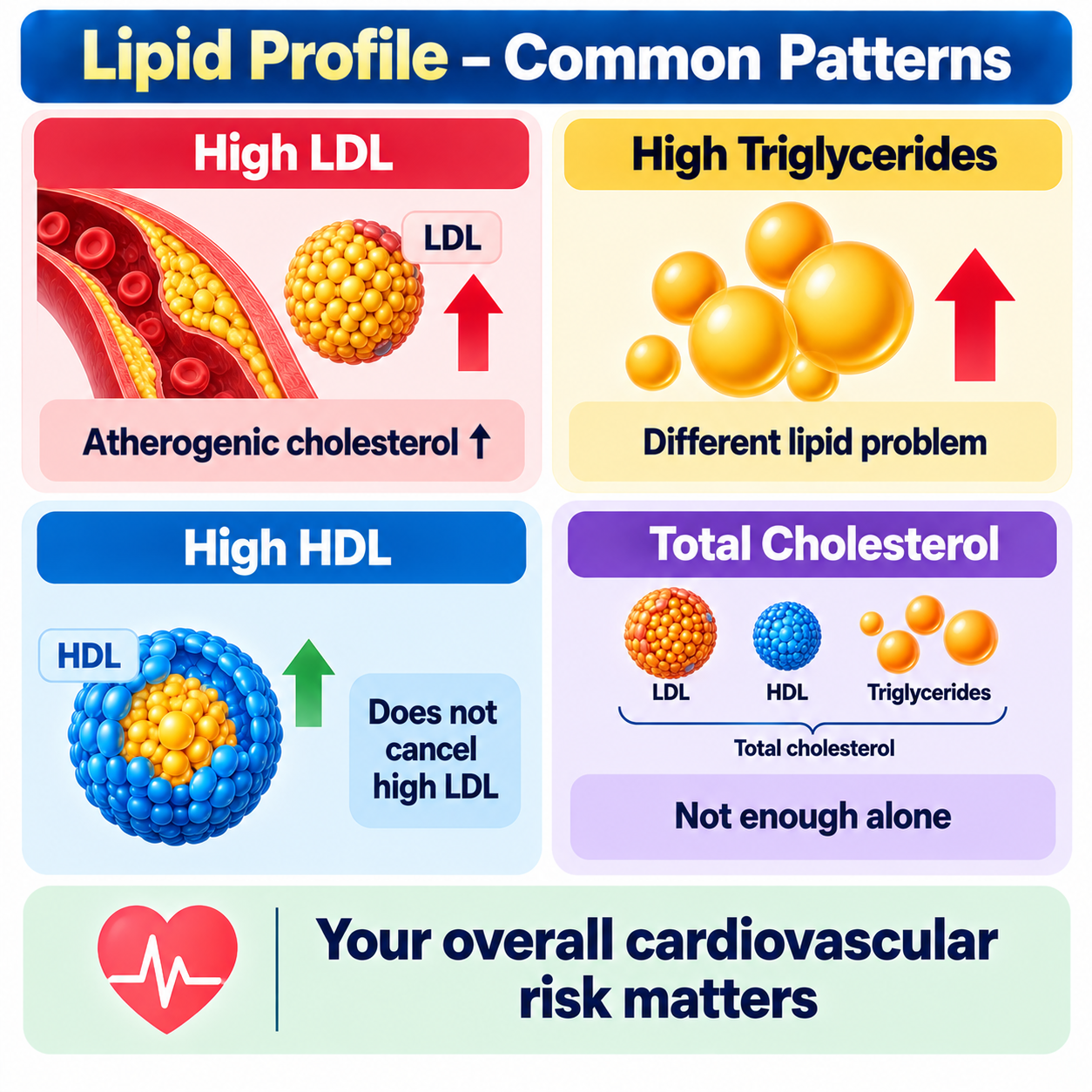
| Pattern | General Meaning |
|---|---|
| High LDL-C | Increased atherogenic cholesterol exposure; significance depends on overall cardiovascular risk |
| High triglycerides | Requires assessment of severity and possible contributing factors |
| Low HDL-C | Associated with cardiovascular risk but should not be interpreted alone |
| High LDL + high triglycerides | Mixed lipid abnormality |
| High total cholesterol but favourable individual components | Total cholesterol alone may not describe the complete risk picture |
| Acceptable total cholesterol with abnormal LDL/non-HDL/TG | Demonstrates why individual components matter |
"Normal" Cholesterol, Reference Ranges and Treatment Targets
Laboratories and health organizations may provide general desirable ranges. These can be useful for screening. However, a laboratory reference or desirable range is not necessarily the same as the treatment target for an individual patient. For example, a person with established cardiovascular disease may need a substantially lower LDL-C than someone with much lower cardiovascular risk.
Reference or Desirable Range vs Treatment Target
A reference or desirable range helps describe how a laboratory result compares with general values or screening categories. A treatment target or goal may be selected according to the person's medical condition and cardiovascular risk. For example, LDL goals can be lower in people with established cardiovascular disease, very high cardiovascular risk, or particular high-risk conditions.
Why Does Overall Cardiovascular Risk Matter?
A lipid profile is one part of cardiovascular-risk assessment. Doctors may also consider age, sex, blood pressure, smoking, diabetes, kidney disease, previous heart attack or stroke, peripheral arterial disease, family history, and other risk factors. This means two people with the same LDL level may not have the same overall risk or treatment plan.
What Is a Cardiovascular Risk Calculator?
A cardiovascular-risk calculator combines several pieces of information to estimate a person's risk of cardiovascular disease over a defined period. Depending on the calculator, inputs may include age, sex, cholesterol, blood pressure, smoking, diabetes, and other factors. A risk calculator provides an estimate — it is not a diagnosis and does not replace clinical assessment.
You can use our Heart Attack Risk Calculator (ASCVD 10-Year Risk), which uses lipid values alongside other risk factors, or the related Heart Age Calculator. Not every calculator is suitable for every patient — check the intended population and age limits before using one.
Diabetes, Kidney Disease, Thyroid and Liver Health
Diabetes can substantially affect cardiovascular risk, so the same cholesterol result may have different clinical importance in a person with diabetes. Triglycerides may also be elevated when diabetes is poorly controlled — see our HbA1c guide for more on diabetes monitoring.
Chronic kidney disease can increase cardiovascular risk and can also be associated with abnormal lipid patterns — see our eGFR and kidney function guide.
An underactive thyroid (hypothyroidism) can contribute to elevated cholesterol, particularly LDL cholesterol, so thyroid testing may sometimes be considered when lipid results are abnormal — see our High TSH guide.
The liver plays a central role in lipid metabolism. Some liver conditions, alcohol-related factors and metabolic conditions can be associated with abnormal lipid results, but a lipid profile should not be used as a liver-function test.
What Should I Do With My Result?
If My LDL Is High
Do not judge the result in isolation. Consider how high the LDL is, whether previous results were also high, whether you already have cardiovascular disease, diabetes, chronic kidney disease, smoking, high blood pressure, a family history of early heart disease, abnormal triglycerides, or existing cholesterol-lowering treatment. Discuss the result with the healthcare professional responsible for your care — the need for treatment depends on the complete risk picture.
If My HDL Is Low
Do not focus only on trying to increase the HDL number. The more useful approach is to assess the overall cardiovascular-risk pattern, including LDL, non-HDL, triglycerides, smoking, blood pressure, diabetes, body weight, physical activity, and other risk factors. Do not start medication or supplements simply to raise HDL based on this article.
If My Triglycerides Are High
First consider how high the result is, whether the test was fasting or non-fasting, whether diabetes is present, alcohol intake, medicines, weight and metabolic health, thyroid function where relevant, and previous triglyceride results. Mild elevation and extreme elevation are not the same clinical situation. Markedly elevated triglycerides should not simply be ignored because LDL appears acceptable.
Does an Abnormal Result Mean I Need Medication?
Not automatically. The decision depends on the lipid abnormality, cardiovascular-risk level, existing cardiovascular disease, diabetes, kidney disease, age, family history, previous treatment, and other clinical information. Some people benefit greatly from lipid-lowering medication; others may initially be managed differently.
My Cholesterol Is Now Normal — Can I Stop My Medicine?
Do not stop prescribed cholesterol-lowering medication because a follow-up result has improved. The improved result may be partly or mainly because the treatment is working. Stopping treatment can allow cholesterol levels to rise again. Any change should be discussed with the healthcare professional managing the treatment.
Does High Cholesterol Mean I Have Been Eating Badly?
No. Diet can influence cholesterol and triglycerides, but lipid levels are also affected by genetics, age, body weight, diabetes, thyroid function, kidney disease, liver/metabolic factors, medicines, and other influences. A markedly elevated LDL result should not automatically be blamed on diet.
Can I Feel High Cholesterol?
Usually not. High LDL and many other lipid abnormalities typically cause no symptoms by themselves. This is why blood testing is useful — do not wait for symptoms before taking a significantly abnormal lipid result seriously.
Why Can My Lipid Profile Change Between Tests?
Lipid results can vary because of fasting versus non-fasting conditions, recent diet, alcohol, weight changes, illness, diabetes control, thyroid function, medicines, treatment adherence, and normal biological variation. A change in one result should therefore be interpreted in context.
Why Might a Lipid Profile Be Repeated?
Repeat testing may be performed to confirm an unexpected result, monitor treatment, assess response to lifestyle changes, reassess very high triglycerides, monitor a known lipid disorder, or reassess cardiovascular risk. The appropriate interval depends on the clinical situation.
When Should I Discuss My Results With a Doctor?
Medical review is particularly appropriate when LDL is clearly elevated, triglycerides are markedly elevated, abnormalities persist, cholesterol is unexpectedly abnormal at a young age, there is a strong family history of early cardiovascular disease, cardiovascular disease is already present, diabetes or chronic kidney disease is present, you already take lipid-lowering medicine but results remain abnormal, or you are unsure how your laboratory values relate to your overall risk.
Is an Abnormal Lipid Profile an Emergency?
Most abnormal cholesterol results are not immediate emergencies. High cholesterol usually affects risk over time. However, very high triglycerides can sometimes require more prompt assessment because of the risk of acute pancreatitis.
Do Not Treat One Cholesterol Number
Do not automatically:
- Start medication because total cholesterol is high
- Stop medication because cholesterol becomes normal
- Assume high HDL cancels high LDL
- Assume low HDL is the only problem
- Ignore high triglycerides because LDL is normal
- Diagnose familial hypercholesterolaemia from one result
- Diagnose cardiovascular disease from a lipid profile
- Take supplements specifically to manipulate one lipid number without medical advice
- Compare your treatment target directly with another person's target
Key Points
- A lipid profile measures important fats and cholesterol-carrying particles in blood, also called a lipid panel or cholesterol test.
- Standard measurements commonly include total cholesterol, LDL-C, HDL-C and triglycerides; non-HDL cholesterol may also be reported.
- Total cholesterol alone does not show the complete lipid pattern.
- LDL-C is an important measure related to atherosclerotic cardiovascular disease; higher exposure to LDL and other atherogenic particles contributes to plaque formation.
- A high HDL result does not cancel a high LDL result. Low HDL should not be treated as an isolated number.
- Triglycerides are different from cholesterol; markedly elevated triglycerides can have implications beyond cardiovascular risk, including pancreatitis.
- Non-HDL cholesterol includes cholesterol carried by LDL and other atherogenic particles.
- Not every lipid profile requires fasting — follow the preparation instructions for your particular test.
- LDL may be calculated rather than directly measured.
- Laboratory reference values and individual treatment targets are not necessarily the same; the desirable LDL level depends partly on cardiovascular-risk level.
- Diabetes, chronic kidney disease and hypothyroidism can all change how a lipid result should be interpreted.
- Lp(a) and ApoB can provide additional inherited or particle-based cardiovascular-risk information and are not normally part of the standard lipid profile.
- Cholesterol abnormalities usually cause no symptoms, and one abnormal lipid value does not determine treatment by itself.
- Do not stop prescribed cholesterol medicine because the laboratory result improves.
Frequently asked questions
Interpreting Your Lipid Profile as a Whole
A lipid profile provides several pieces of information — total cholesterol, LDL, HDL, triglycerides and non-HDL cholesterol — that are most useful when interpreted together rather than as isolated numbers. LDL is an important measure of atherogenic cholesterol, but a high HDL does not cancel it out, and triglycerides carry their own separate significance, including a link to pancreatitis risk when very high.
Reference ranges help with screening, but the treatment target that matters for you depends on your overall cardiovascular risk, not the laboratory range alone. If your lipid profile is abnormal, discuss the complete picture with your doctor so that any decision is based on your full clinical context rather than a single value.