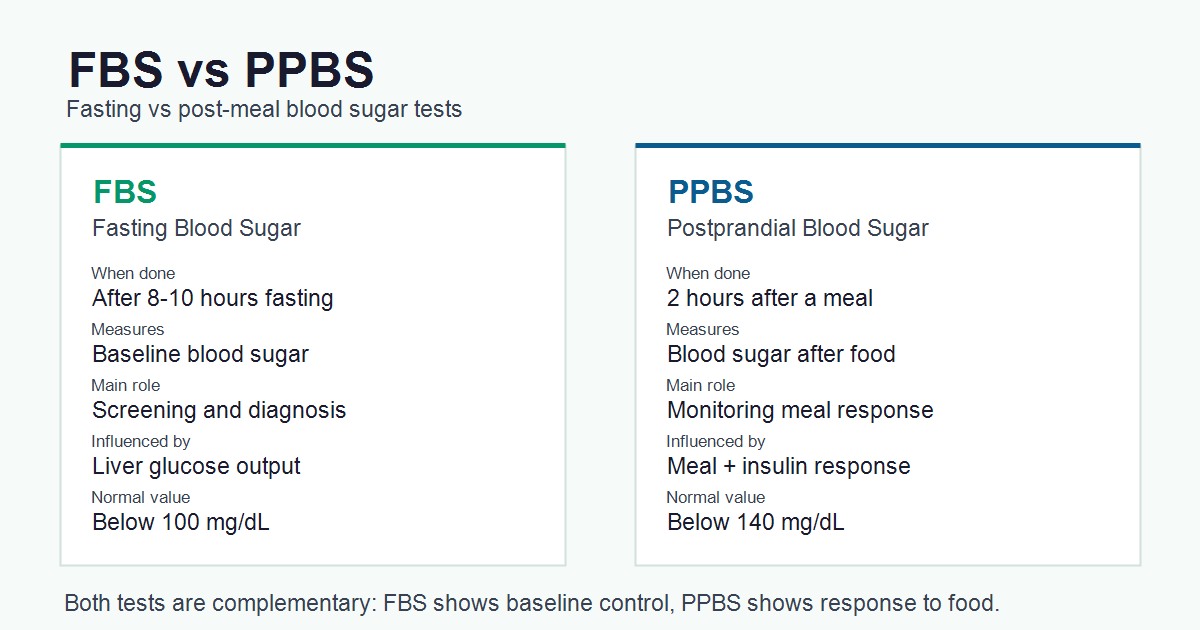
FBS vs PPBS is one of the most common blood sugar test comparisons patients ask about. Blood sugar testing is essential for diagnosing and monitoring diabetes, and two of the most commonly used tests are FBS (Fasting Blood Sugar) and PPBS (Postprandial Blood Sugar).
Many patients are confused about what each test measures, when they should be done, and whether one test is better than the other. This guide explains the difference between FBS and PPBS in a clear, practical way.
FBS vs PPBS – Quick Comparison
| Feature | FBS (Fasting Blood Sugar) | PPBS (Postprandial Blood Sugar) |
|---|---|---|
| When done | After 8-10 hours fasting | 2 hours after a meal |
| What it measures | Baseline blood sugar | Blood sugar after food |
| Main role | Screening and diagnosis | Monitoring meal response |
| Influenced by | Liver glucose output | Meal + insulin response |
What is FBS?
FBS measures your blood sugar after overnight fasting, usually for 8-10 hours. It reflects your baseline glucose level, liver glucose production, and insulin function at rest.
Correct fasting matters. Before doing the test, read our guide on how many hours to fast for FBS.
What is PPBS?
PPBS measures blood sugar 2 hours after a meal. It reflects how your body handles glucose after eating and how well insulin responds to food.
Fasting vs Postprandial Blood Sugar: Key Differences
1. Timing
FBS is checked before food after fasting. PPBS is checked after food, usually 2 hours after the start of a meal unless your doctor or laboratory gives different instructions.
2. What they represent
FBS represents baseline sugar control. PPBS represents post-meal spikes and how your body handles glucose after eating.
3. Early changes in diabetes
In early stages of glucose intolerance, post-meal blood sugar may become abnormal before fasting levels rise. However, FBS is more commonly used for diagnosis because it is more standardized and reproducible.
Is one test better than the other?
Neither FBS nor PPBS is inherently superior. They measure different aspects of blood sugar control, so they are complementary, not interchangeable.
In clinical practice, your doctor may consider FBS, PPBS, HbA1c, symptoms, risk factors, medications, and other test results together.
How are FBS and PPBS used in practice?
FBS is commonly used for:
- Screening and diagnosis
- Routine check-ups
- Checking baseline fasting sugar control
PPBS is commonly used for:
- Monitoring diabetes control
- Identifying post-meal sugar spikes
- Understanding whether diet or medicines are controlling after-meal sugar
In some situations, both values are considered together to get a better understanding of blood sugar patterns.
Common mistakes patients make
- Not fasting properly before FBS
- Checking PPBS at the wrong time instead of around 2 hours after a meal
- Comparing values without understanding what each test represents
Normal FBS and PPBS values
| Test | Normal value |
|---|---|
| FBS | Below 100 mg/dL |
| PPBS | Below 140 mg/dL |
For full ranges, including prediabetes, diabetes, pregnancy, mmol/L values, and HbA1c comparisons, see our normal blood sugar levels guide.
Related blood sugar guides
Frequently asked questions about FBS vs PPBS
FBS and PPBS give different information
FBS and PPBS measure different aspects of blood sugar control. FBS = baseline level. PPBS = response to food.
Both are important, and understanding them together gives a more complete picture of your health.