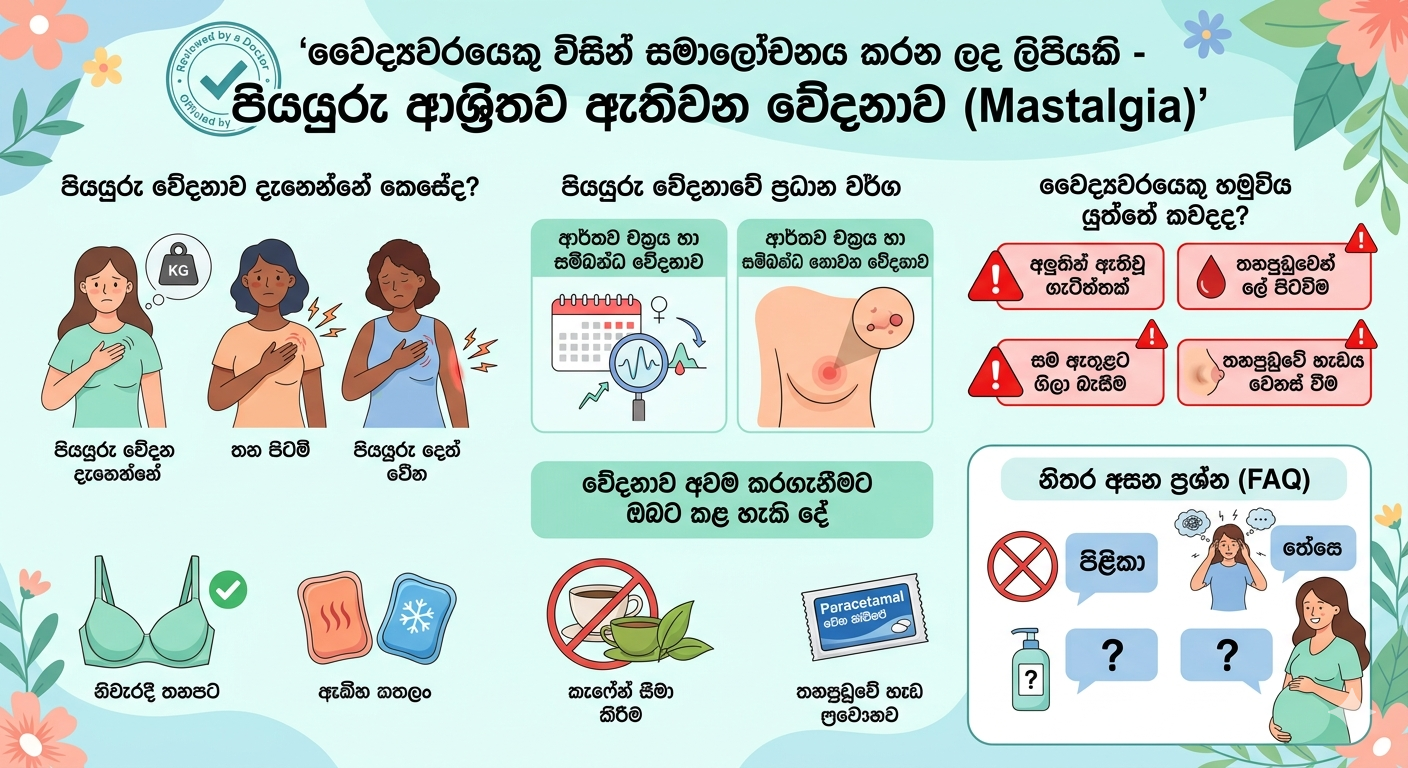
Breast Pain (Mastalgia): Causes, When to Worry & What Helps
Most breast pain is not cancer. Understand the types, common causes, warning signs to watch for, and what actually provides relief — a doctor-reviewed guide for women in Sri Lanka.
👨⚕️ Dr. Seneth Gajasingha — MBBS (Col) · MD (Col)
Breast pain is one of the most common concerns among women — and in most cases, it is benign. Understanding the pattern of your pain helps guide the right response.
Breast pain — medically called mastalgia — is a very common concern among women of all ages. The reassuring fact is that most breast pain is not due to cancer. Understanding the type of pain and its pattern can help you decide what to do next.
Breast pain can feel different from person to person:
😔 Dull, heavy, or aching feeling
⚡ Sharp or burning pain
🔁 Pain in one or both breasts
💪 Pain spreading to armpit or upper arm
✅
Breast pain alone is rarely a sign of a serious condition. However, it is important to recognise when pain needs medical evaluation.
📋 Types
Types of Breast Pain
1. Cyclical Breast Pain (Most Common)
🔄 Linked to the menstrual cycle
📅 Usually worse before periods
⚖️ Often affects both breasts
👩 More common in younger women
⚗️
Cause: Hormonal changes (estrogen and progesterone fluctuations during the menstrual cycle).
2. Non-Cyclical Breast Pain
📍 Not related to periods
🎯 May affect one specific area of the breast
👩🦳 More common after age 30
Possible causes include breast cysts, previous injury, large breast size causing strain, or certain medications.
3. Chest Wall Pain (Often Mistaken for Breast Pain)
🦴 Pain actually comes from muscles or ribs, not the breast itself
🤸 Worse with movement or when pressing on the chest
⚠️
Common chest wall causes include muscle strain and costochondritis (inflammation of the cartilage near the ribs). Many women mistake this for breast pain.
Stress and anxiety can increase overall pain perception and may worsen existing breast discomfort, even when there is no physical breast condition.
❓ Cancer Risk
Does Breast Pain Mean Cancer?
Breast pain alone is rarely a sign of breast cancer. However, you should not ignore symptoms that occur together with the pain.
✅
The vast majority of women with breast pain have a benign (non-cancerous) cause. Pain is actually a less common feature of breast cancer compared to a painless lump.
🏥 Warning Signs
When Should You See a Doctor?
Seek medical advice if you notice any of the following alongside breast pain:
🔵 A new lump in the breast
📍Persistent pain in one specific area that does not improve
💧Nipple discharge — especially if bloody or spontaneous
🔴Skin changes — dimpling, redness, or thickening
🔄New nipple inversion (nipple turning inward)
⚠️
These symptoms need proper evaluation, even though many causes are still benign. Early assessment provides peace of mind and ensures nothing is missed.
🔬 Investigation
How Is Breast Pain Evaluated?
A doctor may recommend one or more of the following to evaluate breast pain:
🩺 Clinical breast examination
🔊 Ultrasound scan (common in younger women)
📷 Mammogram (especially over age 40)
💡
The choice of investigation depends on your age, clinical findings, and the nature of the pain. Your doctor will guide the appropriate steps based on your individual situation.
💊 Relief
What Helps Relieve Breast Pain?
Simple Lifestyle Measures
👙 Wear a well-fitted, supportive bra — especially during exercise
☕ Reduce caffeine intake (helps some women with cyclical pain)
🧊 Apply warm or cold compresses to the affected area
⚖️ Maintain a healthy weight
Pain Relief
💊
Over-the-counter pain relievers
Paracetamol or Ibuprofen can help manage breast pain when taken as directed. Avoid long-term self-medication without medical advice.
Other Options (Doctor-Guided)
⚗️ Hormonal treatments — only in selected cases after medical assessment
🩺 Treatment of underlying conditions (e.g. draining breast cysts)
What Does NOT Work — Common Myths
❌ Herbal "breast tonics" — no strong scientific evidence
❌ Oils and massage claiming to cure or enlarge
❌ Unregulated supplements sold online or in pharmacies
🚨
Do not spend money on unproven remedies. If your pain is persistent or worsening, see a doctor rather than self-treating with herbal or alternative products.
🤱 Pregnancy & Breastfeeding
Breast Pain During Pregnancy and Breastfeeding
Breast tenderness is very common during pregnancy and early breastfeeding, and is caused by hormonal changes. This is normal.
⚠️
Watch for Mastitis
Severe breast pain with redness, warmth, swelling, and fever during breastfeeding may indicate mastitis — an infection of the breast. Early medical treatment is important to prevent it from progressing.
Key Takeaway
✅ Breast pain is common and usually harmless
✅ Most cases are hormone-related or benign
⚠️ Always check for associated warning signs
🏥 When in doubt, get examined early
❓ FAQ
Frequently Asked Questions
No. Breast pain alone is rarely a sign of cancer. Most cases are due to hormonal changes or benign conditions. However, if pain is associated with a lump, nipple discharge, or skin changes, you should see a doctor promptly.
Breast pain before periods is common and is caused by hormonal fluctuations — especially rising estrogen and progesterone levels in the second half of the menstrual cycle. This is called cyclical breast pain and usually improves once menstruation starts.
Yes. Stress and anxiety can increase overall sensitivity to pain and may worsen existing breast discomfort. Managing stress through rest, exercise, and relaxation can help some women with cyclical breast pain.
The most common causes include hormonal changes, breast cysts, ill-fitting bras that do not provide adequate support, muscle strain of the chest wall, and certain medications such as contraceptive pills or hormone replacement therapy.
Simple measures that may help include wearing a well-fitted supportive bra (especially at night if pain is severe), applying a warm or cold compress, reducing caffeine intake, and taking over-the-counter pain relievers such as Paracetamol or Ibuprofen as directed. Avoid long-term self-medication without advice from your doctor.
Consult a doctor if you have: persistent pain in one specific area, a new lump in the breast, nipple discharge (especially if bloody), skin changes such as dimpling, redness, or thickening, or new nipple inversion. These need proper evaluation even though many causes remain benign.
Yes. Breast tenderness is common and expected during pregnancy due to hormonal changes. However, severe pain accompanied by redness, warmth, swelling, and fever — particularly during breastfeeding — may indicate mastitis (breast infection), which requires prompt medical treatment.
Larger breasts may cause more discomfort due to the added weight and strain on the chest and shoulders, particularly if not well supported. However, breast pain can occur in women of any breast size and is not limited to those with larger breasts.
All articles on Health Education are created with the expert input and medical oversight of Dr. Seneth Gajasingha. As an SLMC-registered doctor, he ensures the accuracy, quality and clinical relevance of every article on this platform.
Health Education is proudly supported by Sineth Hospitals. Contact us today to find out about free treatment opportunities available for eligible patients and their families.
The information on this website is for general educational purposes only and is not a substitute for professional medical advice, diagnosis, or treatment. Always consult your doctor or a qualified healthcare provider for personalised medical advice.