Ferritin and Iron Studies Blood Test: High and Low Results Explained
Ferritin and iron studies are blood tests used to help understand the amount of iron available and stored in your body.
An iron-study report may contain several different results, including Ferritin, Serum Iron, Transferrin, TIBC — Total Iron-Binding Capacity, and Transferrin Saturation — TSAT. Not every laboratory reports all of these tests.
These results are related, but they do not all measure the same thing. The most important starting points are:
Why Does the Body Need Iron?
Iron is an essential mineral. One of its best-known roles is helping the body make haemoglobin — the protein inside red blood cells that carries oxygen. Iron is also important for other normal functions in the body.
The body therefore needs enough iron, but excessive accumulation of iron can also be harmful.
What Is Ferritin?
Ferritin is a protein that stores iron. A blood ferritin test helps estimate the body's iron stores. This makes ferritin particularly useful when doctors are investigating possible iron deficiency.
A low ferritin result usually provides strong evidence that the body's iron stores are depleted. However, ferritin has an important limitation:
Therefore, a normal or high ferritin result does not always tell the whole story about iron availability.
What Are Iron Studies?
“Iron studies” or an “iron profile” refers to a group of blood tests used together to assess iron status. Depending on the laboratory, the panel may contain some combination of ferritin, serum iron, transferrin, TIBC, and transferrin saturation. Some laboratories may report additional or slightly different measurements.
What Do the Different Iron Tests Mean?
Use this simple table.
| Test | Simple Meaning |
|---|---|
| Ferritin | Mainly reflects stored iron |
| Serum Iron | Measures iron circulating in the blood at that time |
| Transferrin | Main blood protein that carries iron |
| TIBC | Reflects the blood's capacity to bind and carry iron |
| Transferrin Saturation (TSAT) | Shows how much of the available iron-carrying capacity is occupied by iron |
Why Might a Doctor Request Ferritin or Iron Studies?
These tests may be requested when:
- iron deficiency is suspected;
- haemoglobin is low;
- anaemia is being investigated;
- red blood cell measurements on a Full Blood Count are abnormal;
- tiredness or weakness needs investigation;
- blood loss is suspected;
- iron treatment is being monitored;
- excess iron is suspected;
- ferritin has previously been abnormal;
- or another illness may be affecting iron status.
Ferritin may also be abnormal in people who do not have anaemia.
How Are Ferritin and Iron Studies Performed?
These tests are performed using a blood sample. A healthcare worker usually takes a small amount of blood from a vein in your arm. The same blood sample may be used for several iron-related measurements.
Your doctor may also request other tests at the same time, such as Full Blood Count, haemoglobin, CRP or another inflammation marker, kidney tests, or liver tests. The exact combination depends on why the investigation is being performed.
Do I Need to Fast for Ferritin or Iron Studies?
Preparation can vary according to which iron tests are being performed, laboratory practice, time of testing, and other tests being performed at the same time. Ferritin alone often requires little special preparation. Serum iron can vary during the day and can also be affected by recent iron intake.
Should I Stop Iron Tablets Before an Iron Test?
Do not stop prescribed iron treatment unless the healthcare professional managing your care tells you to do so. Iron supplements can influence some iron-test results, particularly serum iron.
Tell the healthcare professional whether you take iron, the type of iron preparation, other vitamins or supplements, and when you last took them if asked. Follow the laboratory's specific preparation instructions.
How Do I Read an Iron-Studies Report?
Start by identifying which tests are actually present. Look for:
- Ferritin
- Serum Iron
- Transferrin or TIBC
- Transferrin Saturation / TSAT
- Haemoglobin, if a Full Blood Count was also performed
- The laboratory reference range for each result
Do not compare results from different tests as if they use the same units or normal ranges. They measure different things.
What Is a Normal Ferritin Level?
There is no single ferritin number that should be copied onto every patient's report. Reference ranges vary according to factors including laboratory method, age, sex, and clinical context. More importantly, clinical thresholds used to identify iron deficiency can differ depending on the patient's circumstances, particularly when inflammation or chronic illness is present.
What Does a Low Ferritin Result Mean?
Low ferritin usually indicates that the body's iron stores are reduced. In the appropriate clinical setting, a clearly low ferritin result strongly supports iron deficiency.
Iron stores can become depleted before haemoglobin falls enough to cause anaemia. Therefore:
What Can Cause Low Ferritin?
Low ferritin usually reflects depleted iron stores. Possible reasons include blood loss, inadequate iron intake, increased iron requirements, reduced iron absorption, or a combination of these factors.
Examples of situations that may contribute include heavy menstrual bleeding, bleeding from the gastrointestinal tract, pregnancy or other periods of increased iron requirement, diets that do not provide enough usable iron, and conditions that reduce absorption of nutrients.
Can Ferritin Be Low Even if Haemoglobin Is Normal?
Yes. Iron stores can become depleted before anaemia develops. A person may therefore have low ferritin but haemoglobin that remains within the laboratory reference range. This can represent iron deficiency without anaemia.
What Does Low Ferritin With Low Haemoglobin Mean?
When both ferritin and haemoglobin are low, iron-deficiency anaemia becomes an important possibility. Other Full Blood Count measurements can provide additional information. However:
Does Normal Ferritin Rule Out Iron Deficiency?
Not always. Ferritin can rise as part of the body's response to inflammation, infection, and some illnesses. Therefore, a person may have reduced iron availability while ferritin is not low. This is particularly important when inflammation or chronic illness is present.
Doctors may then consider other information such as transferrin saturation, haemoglobin, red blood cell measurements, inflammation markers, and the clinical situation.
What Does a High Ferritin Result Mean?
High ferritin does not automatically mean that the body contains too much iron. Ferritin can increase for several reasons, including inflammation, infection, liver disease, metabolic conditions, alcohol-related factors, some chronic illnesses, iron overload, and other conditions.
The other iron-study results and the patient's clinical situation help determine what the high ferritin may represent.
Why Can Inflammation Raise Ferritin?
Ferritin behaves partly as an acute-phase reactant. This means its blood level can rise during inflammatory responses. As a result, ferritin may become elevated during infection, inflammation, or other illnesses even when excess stored iron is not the main problem.
This is one of the major reasons ferritin should not be interpreted in isolation.
Can Liver Problems Raise Ferritin?
Yes. Ferritin can be elevated in some liver conditions. A high ferritin result therefore does not automatically mean hereditary haemochromatosis, excessive iron intake, or iron poisoning. Doctors may consider liver-related information when ferritin is elevated.
Read Liver Profile Explained.
What Is Serum Iron?
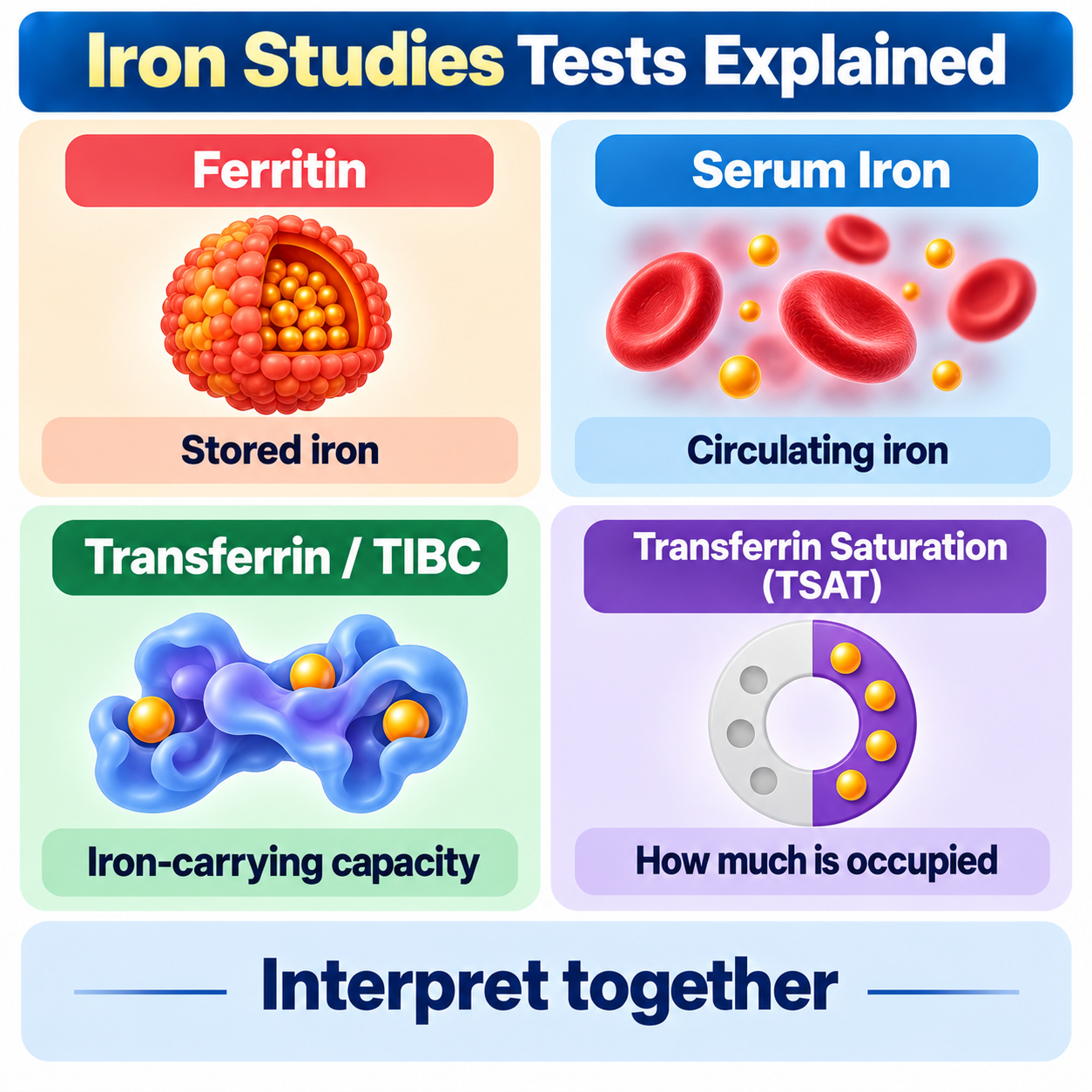
Serum iron measures the amount of iron circulating in the blood, mainly carried by transferrin, at the time the blood sample is taken. It is different from ferritin.
Ferritin — mainly helps assess stored iron. Serum Iron — reflects circulating iron at that time.
Serum iron can vary because of factors such as time of day, recent iron intake, iron supplements, illness, and changes in iron metabolism. Therefore:
Does Low Serum Iron Mean Iron Deficiency?
Not necessarily. Serum iron may be low in iron deficiency. But it can also be low during inflammation, infection, chronic illness, and other situations.
What Does High Serum Iron Mean?
High serum iron can occur for several reasons, including recent iron intake, iron supplements, excess iron in some conditions, and other clinical situations. A single high serum iron result does not diagnose iron overload.
Interpret it together with ferritin, transferrin or TIBC, transferrin saturation, medicines and supplements, and clinical history.
What Is Transferrin?
Transferrin is the main protein that carries iron through the blood. You can think of transferrin as an iron transport protein. Its level can change in different clinical situations.
Some laboratories measure transferrin directly. Others report TIBC — Total Iron-Binding Capacity, which provides related information about the blood's ability to bind and carry iron.
What Is TIBC?
TIBC stands for Total Iron-Binding Capacity. It estimates how much iron the blood's iron-carrying proteins could bind. TIBC and transferrin provide related information.
In uncomplicated iron deficiency, transferrin or TIBC may increase as the body has more unused iron-carrying capacity. However, this pattern is not universal. Inflammation, liver disease, nutritional problems and other conditions can affect transferrin and TIBC.
What Is Transferrin Saturation or TSAT?
Transferrin saturation is usually abbreviated TSAT. It estimates the proportion of available transferrin iron-binding sites that are occupied by iron. In simple terms:
A low TSAT can occur when insufficient iron is available. A high TSAT can occur when more circulating iron is available than expected. But TSAT still needs to be interpreted with other results.
What Does Low Transferrin Saturation Mean?
Low TSAT means a relatively small proportion of the available iron-carrying capacity is occupied by iron. This can occur with iron deficiency, restricted iron availability during inflammation or chronic illness, and other situations.
What Does High Transferrin Saturation Mean?
High TSAT means a greater proportion of transferrin's iron-binding sites are occupied by iron. Persistently high TSAT can be an important clue when doctors are considering iron overload. However:
The complete iron profile, repeat testing where appropriate, medical history and additional investigations may be needed.
How Are Ferritin and Iron Studies Interpreted Together?
Use this patient-friendly table.
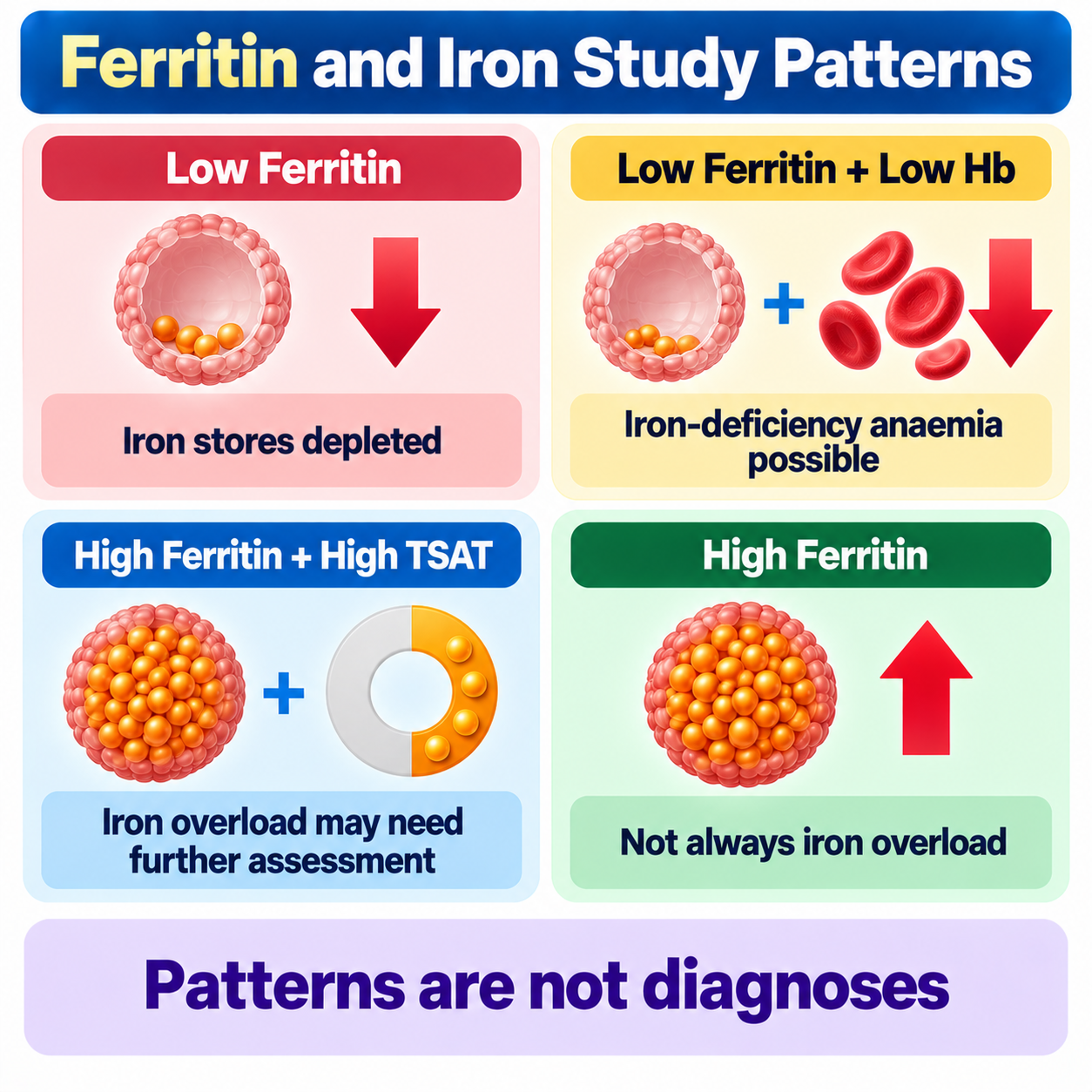
| Pattern | General Meaning |
|---|---|
| Low ferritin | Iron stores are likely depleted |
| Low ferritin + low haemoglobin | Iron-deficiency anaemia becomes an important possibility |
| Low ferritin + normal haemoglobin | Iron deficiency can exist before anaemia develops |
| Normal/high ferritin + low serum iron or low TSAT during inflammation | Iron availability may still be reduced; ferritin can be affected by inflammation |
| High ferritin + high TSAT | Iron overload becomes one consideration and may need further assessment |
| High ferritin without high TSAT | Several non-iron-overload causes should also be considered |
Is Iron Deficiency the Same as Anaemia?
No. These are related but different concepts.
Iron deficiency — means the body's available iron stores are reduced. Anaemia — means the haemoglobin concentration is below the appropriate range.
A person can have iron deficiency without anaemia — iron stores are depleted, but haemoglobin has not yet fallen below the relevant range. A person can also have anaemia without iron deficiency, because anaemia has many possible causes.
How Does a Full Blood Count Help?
A Full Blood Count — FBC or CBC — provides information about haemoglobin, red blood cell count, red blood cell size, and other blood-cell measurements. When iron deficiency progresses to anaemia, changes may appear in the red blood cell measurements.
However, no single FBC value proves iron deficiency. Iron studies and the clinical context help determine the cause.
What Does MCV Have to Do With Iron Deficiency?
MCV is a measurement on the Full Blood Count that describes the average size of red blood cells. Iron-deficiency anaemia often eventually produces smaller red blood cells and therefore a low MCV. However:
Why Does Inflammation Make Iron Tests Harder to Interpret?
Inflammation can change several parts of iron metabolism. During inflammation, ferritin may rise, serum iron may fall, transferrin may change, and iron can become less available for red blood cell production.
This means the simple pattern seen in uncomplicated iron deficiency may not always appear. Doctors may use ferritin, TSAT, Full Blood Count, CRP or other inflammation markers, and the clinical context together. This is why one isolated iron result can sometimes be misleading.
Why Might CRP Be Checked With Ferritin?
CRP — C-reactive protein — is a blood marker that can rise during inflammation. If ferritin is normal or high but iron deficiency is still being considered, evidence of inflammation can help explain why ferritin may be difficult to interpret. CRP does not directly measure iron.
The CRP & ESR Result Reader may help you understand an inflammation marker result alongside your iron studies.
Does High Ferritin Mean Iron Overload?
No. This is one of the most important misconceptions to correct. High ferritin can occur with inflammation, infection, liver disease, metabolic conditions, alcohol-related factors, chronic illness, and iron overload.
When iron overload is being considered, doctors may pay particular attention to transferrin saturation, ferritin, repeat results, family history, liver information, and other investigations.
Does High Ferritin Mean I Have Haemochromatosis?
No. Hereditary haemochromatosis is one possible cause of excessive iron accumulation, but high ferritin has many other causes. Persistently increased transferrin saturation may increase suspicion of iron overload in an appropriate clinical setting. Further testing may then be considered.
Does Low Ferritin Mean I Am Not Eating Enough Iron?
Not necessarily. Dietary iron intake is one possible factor, but iron deficiency can also result from blood loss, increased requirements, poor absorption, or combinations of these.
Why Does Blood Loss Cause Iron Deficiency?
Blood contains iron inside haemoglobin. Repeated or significant blood loss therefore removes iron from the body. Possible sources include heavy menstrual bleeding, bleeding from the stomach or intestine, repeated blood donation, and other forms of blood loss.
The likely cause varies with age, sex, symptoms, medical history, and clinical circumstances.
Can Heavy Periods Cause Low Ferritin?
Yes. Heavy or prolonged menstrual bleeding is a common reason for iron loss. A person may first develop low iron stores and later develop iron-deficiency anaemia if losses continue. Persistent heavy bleeding itself may require assessment.
Can Pregnancy Affect Iron Requirements?
Yes. Iron requirements increase during pregnancy. Pregnant patients are assessed using pregnancy-appropriate clinical guidance and laboratory interpretation. Pregnant patients should follow the advice of their maternity healthcare team.
Why Might Ferritin or Iron Studies Be Repeated?
Repeat testing may be useful when a result is unexpected, iron deficiency needs confirmation or monitoring, treatment is being monitored, inflammation or illness may have affected the original result, high ferritin persists, high transferrin saturation requires reassessment, or the results do not fit the clinical situation.
The appropriate timing depends on the reason for testing.
What Other Tests Might Be Needed?
Depending on the pattern, doctors may consider tests such as Full Blood Count, CRP or another inflammation marker, kidney function, liver tests, vitamin B12, folate, tests for possible blood loss, or other investigations. Not every patient needs all of these tests. Further testing should be based on the clinical question.
What Should I Do if My Ferritin Is Low?
First consider:
- Is haemoglobin also low?
- Was a Full Blood Count performed?
- Are there symptoms of anaemia?
- Is there a possible source of blood loss?
- Are menstrual periods heavy?
- Are you pregnant?
- Could there be a problem with absorption?
- Are you already taking iron?
- Has ferritin been low before?
A low ferritin result often deserves attention because it commonly reflects depleted iron stores. But the next step is not simply “take iron forever.” The cause of the iron deficiency may also need to be identified.
What Should I Do if My Ferritin Is High?
Do not immediately assume iron overload. Check whether the report also contains transferrin saturation, serum iron, transferrin or TIBC, liver tests, or inflammation markers.
Also consider whether you are currently unwell, have a recent infection or inflammatory condition, have known liver disease, take iron supplements, have previously had high ferritin, or have a family history of an iron-overload disorder.
What Should I Do if My Serum Iron Is Low?
Do not diagnose iron deficiency from serum iron alone. Look at ferritin, TSAT, haemoglobin, Full Blood Count, inflammation, and the clinical situation. A low serum iron result can occur during inflammation even when ferritin is not low.
Should I Take Iron Tablets if My Iron Result Is Low?
Do not start long-term iron treatment solely because one result — particularly serum iron — is low. Iron treatment may be appropriate when iron deficiency is established, but the cause matters, the amount required varies, treatment duration varies, and excessive iron can be harmful.
Should I Stop Iron if Ferritin Is High?
Do not automatically stop prescribed iron treatment because of one high ferritin result. Ferritin can rise because of inflammation or illness.
If you are receiving iron and ferritin is unexpectedly high, discuss why you are taking iron, the dose and duration, other iron-study results, and your clinical situation with the healthcare professional managing treatment.
Should I Change My Diet Because Ferritin Is High or Low?
Do not make major dietary restrictions or take large amounts of iron solely because of one laboratory result. Diet can influence iron balance, but many abnormal ferritin results have causes that cannot be corrected simply by changing food.
Should I Donate Blood Because My Ferritin Is High?
No. Do not use blood donation as self-treatment for a high ferritin result. High ferritin does not automatically mean excess body iron. Therapeutic removal of blood is used for selected diagnosed conditions under medical supervision.
When Should I Discuss Ferritin or Iron Studies With a Doctor?
Medical review is particularly appropriate when:
- ferritin is clearly low;
- ferritin remains high on repeated testing;
- haemoglobin is low;
- TSAT is persistently abnormal;
- there is unexplained tiredness or weakness;
- heavy menstrual bleeding is present;
- blood loss is suspected;
- there are gastrointestinal symptoms;
- iron deficiency keeps returning;
- you are pregnant;
- you have liver disease;
- you have chronic inflammatory disease;
- or you are taking iron but the results remain abnormal.
When Can Anaemia or Blood Loss Require Urgent Medical Assessment?
Most abnormal ferritin or iron-study results are not emergencies by themselves. Seek prompt medical assessment if abnormal results occur with concerning symptoms such as:
- severe shortness of breath;
- chest pain;
- fainting or collapse;
- severe weakness;
- a very rapid heartbeat with significant symptoms;
- vomiting blood;
- passing black, tar-like stools;
- obvious heavy ongoing bleeding;
- or another rapidly worsening illness.
Do Not Treat One Iron Number
Do not automatically:
- start iron because serum iron is low;
- take high-dose iron because ferritin is low without considering the cause;
- stop prescribed iron because ferritin is high;
- diagnose iron-deficiency anaemia from ferritin alone;
- diagnose iron overload from high ferritin alone;
- diagnose haemochromatosis from high ferritin;
- donate blood to lower ferritin;
- severely restrict dietary iron;
- assume all anaemia is iron deficiency;
- or assume normal ferritin always excludes iron deficiency.
Related blood test guides
Key Points
- Ferritin mainly reflects stored iron. Iron studies may include ferritin, serum iron, transferrin, TIBC and transferrin saturation.
- Not every laboratory's iron-study panel contains exactly the same tests. Serum iron and ferritin do not measure the same thing.
- Serum iron varies and should generally not be interpreted alone. Low ferritin usually supports depleted iron stores.
- Iron deficiency can exist before anaemia develops. Iron deficiency and anaemia are not the same thing; not every anaemia is caused by iron deficiency.
- Normal ferritin does not exclude iron deficiency in every clinical situation. Ferritin can rise during inflammation, infection and illness.
- High ferritin does not automatically mean iron overload or haemochromatosis.
- Transferrin is the main iron-carrying protein in blood. TIBC reflects iron-binding capacity.
- TSAT indicates how much of the available iron-carrying capacity is occupied by iron. Low TSAT can indicate reduced iron availability.
- Persistently high TSAT can be an important clue when iron overload is being considered.
- Full Blood Count and haemoglobin help determine whether anaemia is present. Low MCV can occur with iron-deficiency anaemia but does not prove iron deficiency.
- Blood loss, including heavy menstrual bleeding, is an important cause of iron deficiency.
- High ferritin has many possible causes. One abnormal iron result does not establish the diagnosis.
- Do not start or stop iron treatment based solely on an online interpretation.